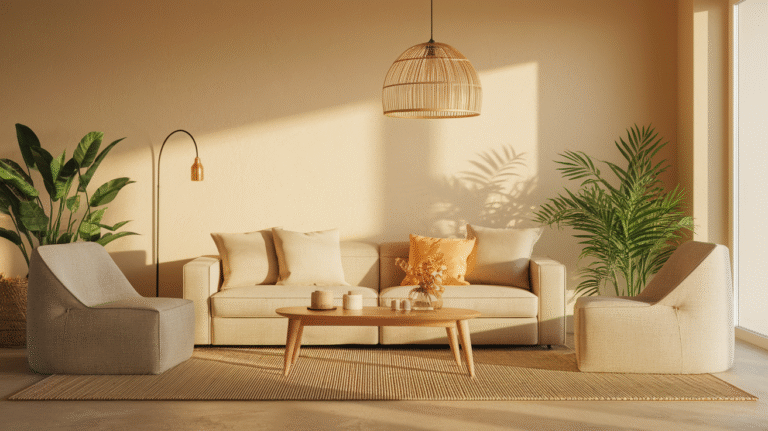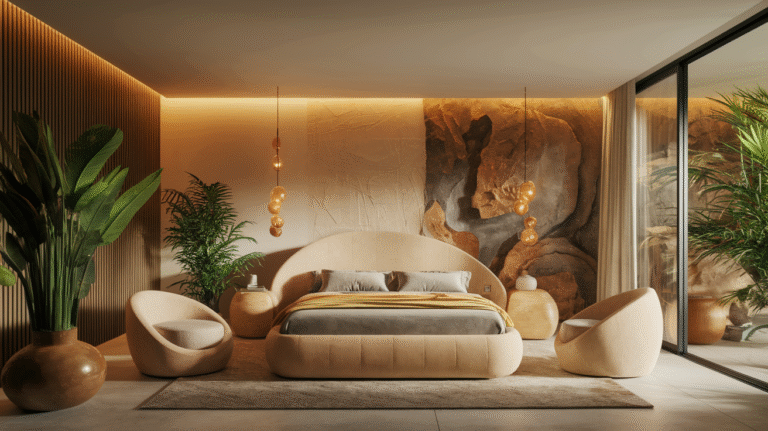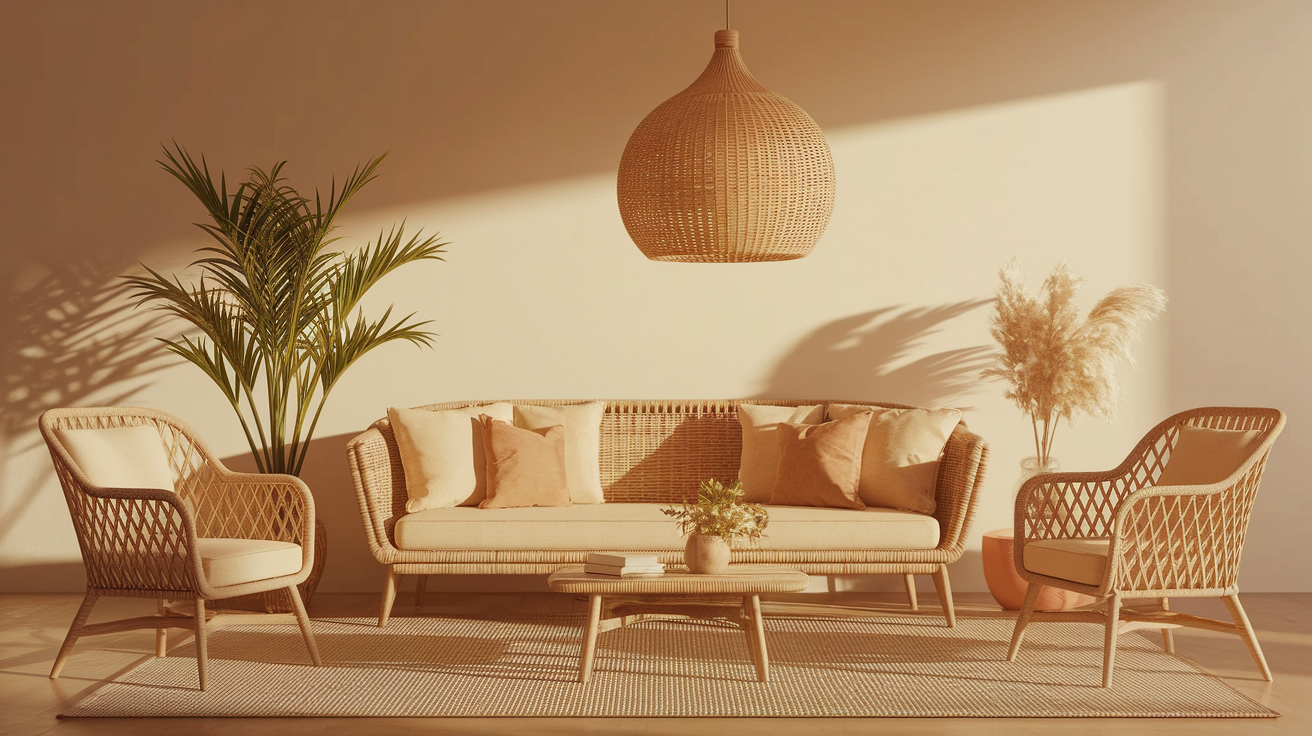
You’ve probably scrolled past those impossibly serene interiors on Pinterest—the ones that make you pause and exhale.
Clean lines, warm textures, and a sense of calm that practically radiates through the screen. That’s Japandi style, and it’s not just another design trend that’ll fade in six months.
Japandi blends Japanese minimalism with Scandinavian coziness, creating spaces that feel both zen and welcoming.
Think of it as the perfect marriage between Tokyo’s refined simplicity and Copenhagen’s hygge warmth. And here’s the secret ingredient that ties it all together: rattan.
Rattan isn’t just trendy—it’s the ultimate material for achieving authentic Japandi style. This natural, sustainable material adds warmth and organic texture without cluttering your minimalist space.
Whether you’re working with a studio apartment or a sprawling home, rattan pieces bring that essential connection to nature that both Japanese and Scandinavian design philosophies celebrate.
In this guide, you’ll discover practical, actionable ideas to transform your space with Japandi rattan elements.
We’re covering everything from statement furniture pieces to subtle accents, room-by-room strategies, and styling tips that work for any budget. No complicated renovations required—just simple, effective changes that deliver real impact.
Ready to create a home that feels like a daily retreat? Let’s dive in.
Understanding the Japandi Rattan Aesthetic
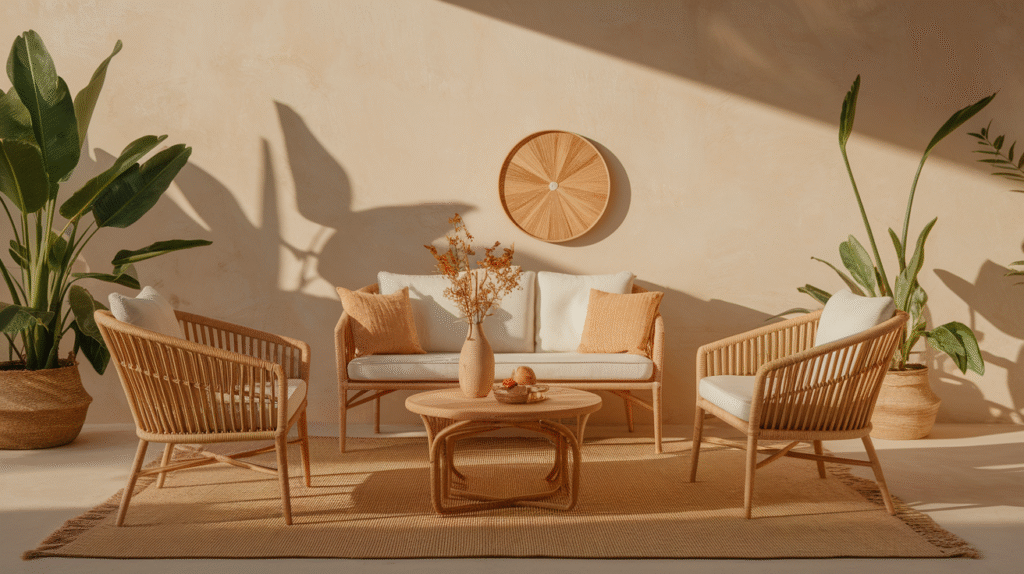
What Makes Japandi Style So Special
Japandi isn’t just throwing together IKEA furniture with a bonsai tree. This design approach rests on solid principles: minimalism, functionality, and natural beauty working in harmony.
The Japanese concept of wabi-sabi teaches us to embrace imperfection and find beauty in natural materials that age gracefully.
Meanwhile, Scandinavian hygge focuses on creating cozy, comfortable spaces that promote well-being.
When these philosophies merge, you get interiors that are both calming and livable—spaces that look stunning in photos but actually function for real life.
This style has serious staying power because it addresses what we actually need in our homes. Research shows that cluttered spaces increase cortisol levels and stress.
Japandi design counters this with intentional simplicity—every piece serves a purpose, and nothing feels excessive. You’re not sacrificing comfort for aesthetics or vice versa. You’re getting both.
Why Rattan Is the Perfect Japandi Material
Rattan checks every box for Japandi design. This fast-growing palm material is sustainable and eco-friendly, aligning with both cultures’ respect for nature.
Unlike plastic or metal, rattan brings immediate warmth to minimalist spaces without overwhelming them.
The honey and natural wood tones of rattan complement the Japandi color palette perfectly.
It adds essential texture and visual interest while maintaining the clean, uncluttered aesthetic.
You can use rattan for major furniture pieces like chairs and bed frames, or incorporate it through lighting and small accents—it’s genuinely versatile.
Both Japanese and Scandinavian design prioritize organic materials that create a connection to the natural world. Rattan delivers this in spades. The woven patterns add subtle complexity to simple forms, and the material’s slight variations and imperfections embody wabi-sabi principles beautifully.
The Color Palette and Mood
Japandi spaces revolve around a carefully curated neutral palette. Think soft whites, warm beiges, gentle grays, and natural wood tones. These colors create a serene backdrop that lets your rattan pieces shine without competing for attention.
Rattan’s natural honey tones act as the perfect bridge between cooler Scandinavian grays and warmer Japanese woods. This material brings depth and warmth that prevents minimalist spaces from feeling cold or sterile. You’re creating layers of neutral tones that feel rich and inviting rather than boring.
The overall mood you’re cultivating is one of calm balance. These spaces promote wellbeing and mindfulness—they’re designed to be sanctuaries from our overstimulated world. When you walk into a well-executed Japandi space, you should feel your shoulders relax and your breathing slow. That’s the goal.
Essential Rattan Furniture Pieces for Your Japandi Space
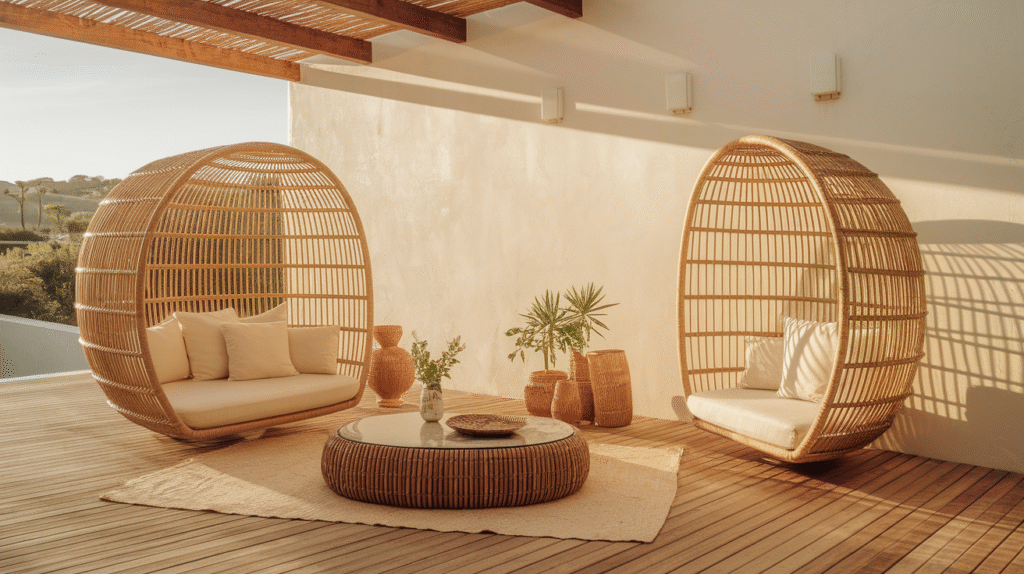
Living Room Must-Haves
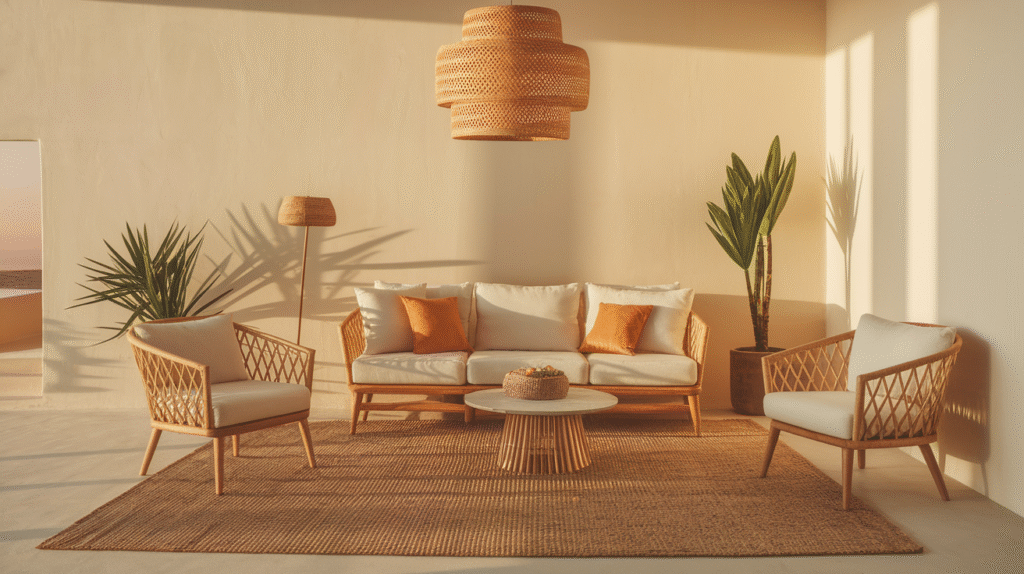
Your living room sets the tone for your entire home, so choose rattan pieces that make a statement while maintaining simplicity. Rattan lounge chairs with low-profile designs are absolute game-changers. Look for pieces with clean lines and add cushions in neutral linen or cotton for comfort. These chairs become sculptural focal points that invite relaxation without overwhelming your space.
Coffee tables with rattan bases perfectly balance form and function. Pair natural rattan weaving with simple wood or glass tops for a piece that grounds your seating area. The woven base adds visual interest at eye level when you’re seated, while the smooth top keeps the surface practical for drinks and books.
Media consoles and sideboards with rattan webbed cabinet doors solve the eternal problem of hiding electronics and clutter while maintaining aesthetic appeal. These pieces provide essential storage without the visual weight of solid doors. The rattan webbing creates texture and lets you display carefully chosen items inside while concealing less attractive necessities.
Pro tip: Don’t go overboard. Mix your rattan pieces with solid wood furniture for perfect balance. If you have a rattan chair, pair it with a solid wood sofa. If your coffee table features rattan, keep your side tables simple wood or ceramic. This approach prevents the space from feeling too busy or themed.
Bedroom Rattan Additions
Your bedroom should be your ultimate sanctuary, and rattan helps create that serene atmosphere effortlessly. Rattan bed frames or headboards make stunning focal points that feel organic and calming. Unlike upholstered headboards that can feel heavy, rattan keeps things light and airy while still providing visual interest behind your bed.
Bedside tables in compact rattan designs keep your essentials within reach without cluttering your space. Look for pieces with simple silhouettes—maybe one drawer and an open shelf. These nightstands add texture at eye level when you’re lying in bed, contributing to that cozy, natural atmosphere.
For clothing storage, consider open rattan wardrobes or basket systems. These solutions keep your bedroom feeling relaxed and airy rather than closed off. Rattan baskets on open shelving let you organize clothes, linens, and accessories while maintaining visual consistency. This approach works especially well in smaller bedrooms where traditional wardrobes feel oppressive.
Style your rattan bedroom pieces with neutral linens in linen, cotton, or organic materials. Keep decorative elements minimal—maybe one ceramic vase with a single stem, or a small plant in a simple pot. The rattan provides all the texture and interest you need, so resist the urge to add more.
Dining and Workspace Solutions
Rattan dining chairs transform ordinary meals into special moments. These pieces combine comfort with sculptural beauty, and they’re lighter weight than solid wood chairs, making them easy to move. Look for designs that balance the woven rattan seat or back with simple wooden or metal frames. Four to six matching rattan dining chairs around a simple wooden table creates an inviting space that feels both casual and elegant.
Bar stools for kitchen islands in rattan add casual elegance to everyday spaces. These pieces soften the typically hard surfaces of kitchens—all that stone, tile, and metal—without sacrificing durability. Backless rattan stools with footrests work beautifully for quick breakfasts or homework sessions.
For home offices, rattan desk chairs bring natural texture without sacrificing ergonomics. Many modern designs combine rattan backs with cushioned seats and adjustable mechanisms. You get the aesthetic benefits of natural materials plus the comfort you need for productive work sessions.
Quick styling tip: Pair all these rattan seating options with simple wooden tables for a cohesive look. The combination of rattan’s texture with wood’s solidity creates perfect Japandi balance. Add a simple linen table runner or ceramic tableware to complete the scene.
Amazing Rattan Lighting and Decorative Accents
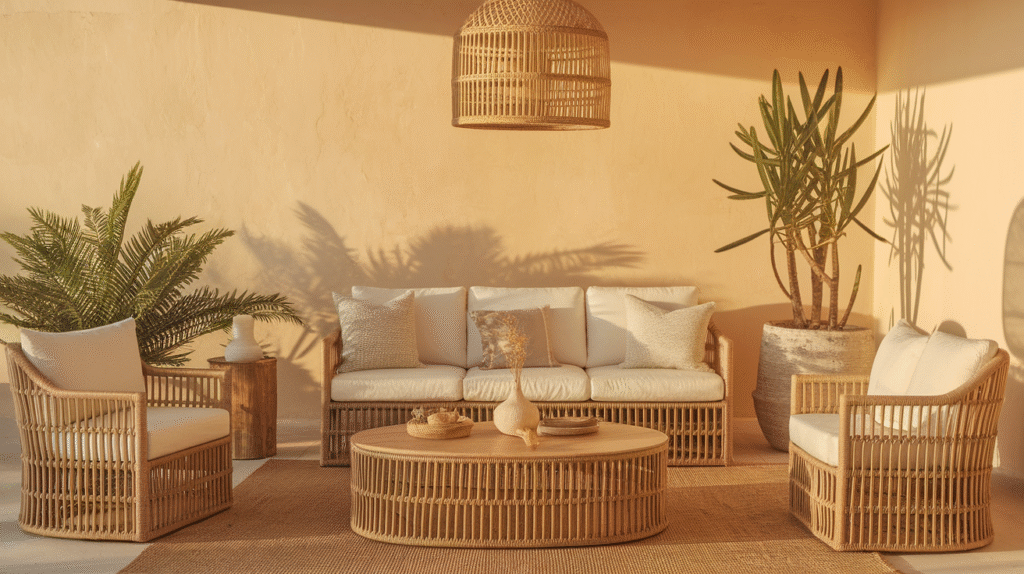
Statement Lighting That Transforms Your Space
Lighting makes or breaks any interior, and rattan fixtures deliver both function and art. Pendant lights with woven rattan shades are absolute showstoppers. When illuminated, they cast beautiful, intricate shadows on walls and ceilings, creating ambiance that shifts throughout the day. Hang a large rattan pendant over your dining table or kitchen island for instant impact. The organic patterns soften the hard edges of modern spaces while providing essential task lighting.
Floor lamps in rattan serve as functional sculpture. These tall pieces draw the eye upward, making rooms feel more spacious. Position a rattan floor lamp in a reading corner with a simple chair, or use one to illuminate a dim corner that needs visual interest. The vertical lines of floor lamps balance the horizontal planes of furniture, creating dynamic visual flow.
Table lamps with rattan shades or bases work perfectly on nightstands, side tables, or desks. These pieces provide intimate, localized lighting that creates cozy pockets within larger rooms. The warm glow filtered through rattan feels infinitely more inviting than harsh overhead lighting.
Proven placement strategies: Layer your lighting at different heights. Combine a rattan pendant (high), floor lamp (medium), and table lamp (low) to create depth and flexibility. This approach lets you adjust the mood for different activities while maintaining minimalist principles—you’re using fewer fixtures overall, but placing them strategically.
Remember, Japandi design values quality over quantity. Choose one or two statement rattan lighting pieces per room rather than filling every corner. The negative space around your fixtures makes them more impactful.
Wall Decor and Shelving
Rattan mirrors add dimension without adding clutter. Round rattan-framed mirrors work beautifully in entryways, bathrooms, or bedrooms. The circular shape and natural texture soften walls without requiring multiple pieces. Geometric rattan frames—hexagons or rectangles—create visual interest while maintaining clean lines. Mirrors also reflect light, making spaces feel larger and brighter, which aligns perfectly with both Japanese and Scandinavian design goals.
Floating shelves with rattan backing let you display essentials with intentional simplicity. These shelves provide practical storage while the rattan backing adds texture and warmth to walls. Use them in kitchens for everyday dishes, in bathrooms for towels and toiletries, or in living rooms for books and small plants. The key is displaying only what you need and love—no random knickknacks cluttering the visual field.
Wall-mounted baskets function as both storage and art. Arrange three to five rattan baskets in varying sizes on a wall to create an organic gallery. Use them to hold mail, keys, or small plants. This approach solves storage needs while adding three-dimensional texture to flat walls.
The art of negative space is crucial here. Knowing when less is more separates good Japandi design from cluttered spaces with natural materials. Leave plenty of blank wall space around your rattan pieces. The breathing room makes each element more impactful and maintains that essential sense of calm.
Small Accents That Make a Big Difference
Storage baskets in various sizes organize with style in every room. Use large rattan baskets for blankets in the living room, medium ones for bathroom towels, and small versions for office supplies. These practical pieces hide everyday clutter while contributing to your overall aesthetic. Stack them, line them on shelves, or tuck them under console tables.
Planters and plant stands in rattan bring greenery into your Japandi sanctuary while maintaining material consistency. Rattan planters work for everything from small succulents to large fiddle leaf figs. Plant stands elevate your greenery to different heights, creating visual interest and bringing nature to eye level throughout your space.
Trays and decorative bowls corral items while adding texture. Use a large rattan tray on your coffee table to group remotes, coasters, and a small plant. Place a rattan bowl on your entryway console for keys and sunglasses. These pieces create intentional zones for everyday items, preventing surfaces from looking messy.
Room dividers in woven rattan create zones in open spaces without blocking light. These screens work beautifully in studio apartments or open-plan homes where you need to define areas without building walls. The semi-transparent nature of rattan weaving maintains visual flow while providing psychological separation.
The simple way to avoid clutter while showcasing your favorite pieces: limit yourself to three to five rattan accents per room. Choose pieces in varying sizes and functions, then resist adding more. This restraint keeps your space feeling curated rather than crowded.
Complete Room-by-Room Implementation Guide
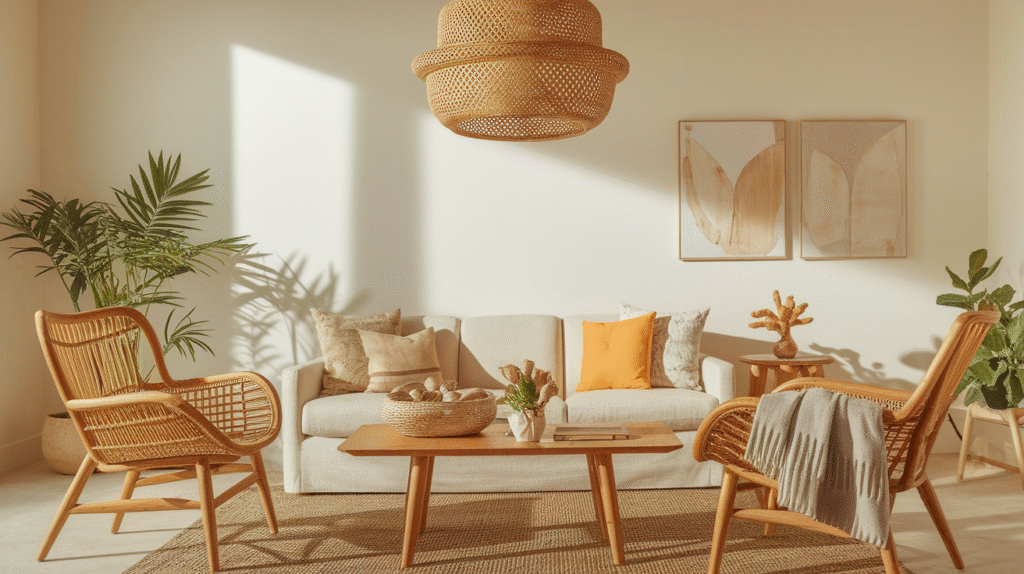
Creating Your Japandi Living Room
Start with a neutral base—this is non-negotiable. Paint walls in soft white, warm beige, or gentle gray. Choose flooring in natural wood tones or light stone. Select your large furniture pieces (sofa, main seating) in solid, neutral fabrics. This foundation lets your rattan pieces shine without competing for attention.
Add two to three key rattan pieces as focal points. Maybe that’s a stunning lounge chair, a coffee table with a rattan base, and a pendant light. These pieces should feel intentional, not random. They create visual triangles that guide the eye around the room naturally.
Layer with natural textiles to add warmth and comfort. Throw linen cushions on your sofa in cream, oatmeal, or soft gray. Drape a chunky knit blanket over the arm. Add a wool or jute rug to define your seating area. These textiles soften the space and make it inviting for actual living, not just photographing.
Include greenery in simple ceramic or rattan planters. Plants are essential in Japandi design—they bring life, improve air quality, and connect your interior to nature. Choose low-maintenance varieties like snake plants, pothos, or fiddle leaf figs. Keep planters simple and cohesive in style.
Quick wins for this weekend: Swap out one existing piece for rattan. Replace your current coffee table with a rattan-based version, or switch a traditional chair for a rattan lounge chair. This single change often provides enough impact to shift the entire room’s aesthetic, proving you don’t need a complete overhaul to achieve Japandi style.
Designing a Peaceful Japandi Bedroom
Keep surfaces clear and minimal—this is where Japandi bedroom design starts. Remove everything from your nightstands except essentials: a lamp, maybe a book, and a small plant or simple vase. Clear your dresser top completely or limit it to one beautiful object. This visual calm directly impacts sleep quality and morning mood.
Choose one statement rattan piece rather than multiple small ones. A rattan headboard creates a stunning focal point that draws the eye without overwhelming. Alternatively, a rattan chair in the corner provides a spot for reading or laying out tomorrow’s clothes. The singular focus keeps the space serene.
Use rattan baskets for hidden storage. Slide them under the bed for out-of-season clothes, stack them in your closet for accessories, or place them on shelves for folded items. This approach keeps clutter out of sight while maintaining aesthetic consistency throughout the room.
Effective color blocking with neutrals and natural wood tones creates visual interest without patterns or bright colors. Layer different shades of beige, cream, and gray through your bedding, curtains, and rug. Add warmth with natural wood nightstands or a wooden bench at the foot of the bed. The rattan pieces bridge these tones beautifully.
Creating the ultimate sleep sanctuary in simple steps: Start with blackout curtains or shades in natural fabric. Invest in quality bedding in breathable natural fibers. Add your chosen rattan piece. Include one or two plants. Remove electronics or hide them in rattan baskets. Keep lighting soft and layered. This formula works every time.
Kitchen and Dining Spaces
Open shelving with rattan baskets for pantry items solves the eternal kitchen storage problem. Replace upper cabinets with simple floating shelves (or remove cabinet doors), then organize dry goods, snacks, and cooking supplies in matching rattan baskets. This approach makes items easy to access while keeping the space looking intentional rather than cluttered.
Rattan pendant lights over dining tables or islands become the room’s jewelry. These fixtures define the dining zone and provide essential task lighting for meal prep and eating. Choose a size that’s proportional to your table—the fixture should be about half to two-thirds the table’s width for proper visual balance.
Natural placemats and trivets in rattan add everyday elegance without requiring special occasions. These pieces protect your table while contributing to your overall aesthetic. They’re practical items you use daily, making them perfect Japandi choices—beautiful and functional.
Balancing functionality with aesthetic appeal is crucial in kitchens, where you actually need to cook and clean. Don’t sacrifice storage or work surfaces for design. Instead, use rattan to organize and beautify necessary items. The baskets holding your onions and potatoes become decorative elements. The pendant light illuminating your workspace becomes art.
Bathroom and Smaller Spaces
Rattan storage solutions for towels and toiletries work beautifully in bathrooms. Wall-mounted rattan baskets hold rolled towels, creating a spa-like display. Small rattan trays on the counter corral daily-use items like soap, lotion, and toothbrushes. Larger rattan baskets under the sink organize cleaning supplies and extra products.
Small accent pieces won’t overwhelm tight spaces. In a small bathroom, one rattan mirror and two storage baskets provide enough natural texture without making the room feel cluttered. In a tiny entryway, a single rattan tray for keys and a wall-mounted basket for mail suffice.
Moisture-resistant rattan options exist for humid environments. Look for pieces with protective finishes or synthetic rattan designed for bathroom use. Natural rattan works fine in well-ventilated bathrooms, but avoid placing pieces directly in shower spray zones.
Perfect solutions for renters or those on a budget: Focus on small, portable rattan accents that move with you. Baskets, trays, mirrors, and table lamps require no installation and cost significantly less than furniture. These pieces deliver impressive impact for minimal investment, and you can take them to your next home.
Conclusion
Bringing It All Together
Japandi rattan style combines the best of Japanese and Scandinavian design, creating spaces that feel both serene and livable. You’re not choosing between beauty and function—you’re getting both through intentional design choices and natural materials.
The essential principle underlying everything we’ve covered is quality over quantity, function over excess. Every piece in your home should serve a purpose, whether practical or bringing you genuine joy. Rattan furniture and accents check both boxes effortlessly, providing storage, seating, and lighting while adding warmth and organic texture.
Here’s the liberating truth: you don’t need a complete renovation or unlimited budget to achieve this style. Start small—even one rattan piece can transform your space. That single lounge chair or pendant light shifts the entire room’s energy, proving that strategic choices matter more than wholesale changes.
Your Action Plan
Choose one room to begin your Japandi transformation. Maybe it’s your bedroom because you want better sleep, or your living room because that’s where you spend evenings. Focus your energy rather than trying to tackle your entire home simultaneously.
Select one to three rattan pieces that fit your budget and space. Be strategic—choose items that solve existing problems while adding aesthetic value. Need better lighting? Add a rattan pendant. Struggling with clutter? Invest in rattan storage baskets. Lacking seating? Find that perfect rattan chair.
Focus on natural materials, clean lines, and intentional simplicity throughout your choices. When shopping, ask yourself: Does this piece serve a clear purpose? Does it bring me genuine pleasure? Does it work with what I already own? If the answer to all three is yes, you’ve found the right piece.
Remember the wabi-sabi philosophy: imperfection is beautiful. Your home doesn’t need to look like a magazine spread. The slight variations in rattan weaving, the natural aging of materials, the lived-in comfort of your space—these elements make your home authentically yours.
Final Inspiration
This style grows with you—it’s easy to adapt and evolve as your needs change. Add pieces gradually, swap items as you discover what works, and trust your instincts. Japandi design isn’t rigid rules; it’s guiding principles that support how you actually live.
You’re creating a home that feels both calming and inspiring, a sanctuary from the chaos of modern life. Every time you walk through your door, you should feel tension leaving your body. That’s the power of thoughtful design with natural materials.
Embrace the journey toward a more mindful, beautiful living space. Start this weekend with one simple change—maybe that rattan basket you’ve been eyeing, or swapping your current lamp for a natural fiber version. Small steps create big transformations when guided by clear vision.
Your Japandi rattan home awaits. The peaceful, balanced space you’ve been dreaming about is absolutely achievable, one intentional choice at a time.