You know that feeling when you walk into a space and instantly exhale? That’s the power of Japandi design—and plants are the secret ingredient that brings it all together.
I’m talking about more than just throwing a fiddle leaf fig in the corner and calling it a day. Japandi interior plants create a specific kind of calm that makes your home feel like a retreat from the chaos outside.
And here’s the best part: this approach actually works for people with packed schedules who can barely remember to water themselves, let alone a houseplant.
The Japandi style merges Japanese minimalism with Scandinavian coziness, creating spaces that are both functional and soul-soothing.
When you add the right plants to this mix, you’re not just decorating—you’re building an environment that actively reduces stress and boosts productivity.
Research shows that natural elements in your living space can lower cortisol levels by up to 15%. That’s not just pretty design; that’s a legitimate mental health strategy.
But let’s be honest: most plant advice assumes you have unlimited time, unlimited space, and unlimited patience for finicky greenery.
This guide takes a different approach. You’ll discover exactly which plants thrive on minimal attention, where to place them for maximum impact with minimum effort, and how to maintain them in less time than your daily coffee run.
Whether you’re working from home and need better focus, trying to create a calmer bedroom environment, or simply want your space to feel more intentional, Japandi plants deliver results.
No complicated care routines. No cluttered surfaces. Just strategic greenery that makes your life better without adding to your to-do list.
What Makes Japandi Plants Different (And Why Busy People Love Them)
The Philosophy Behind the Greenery
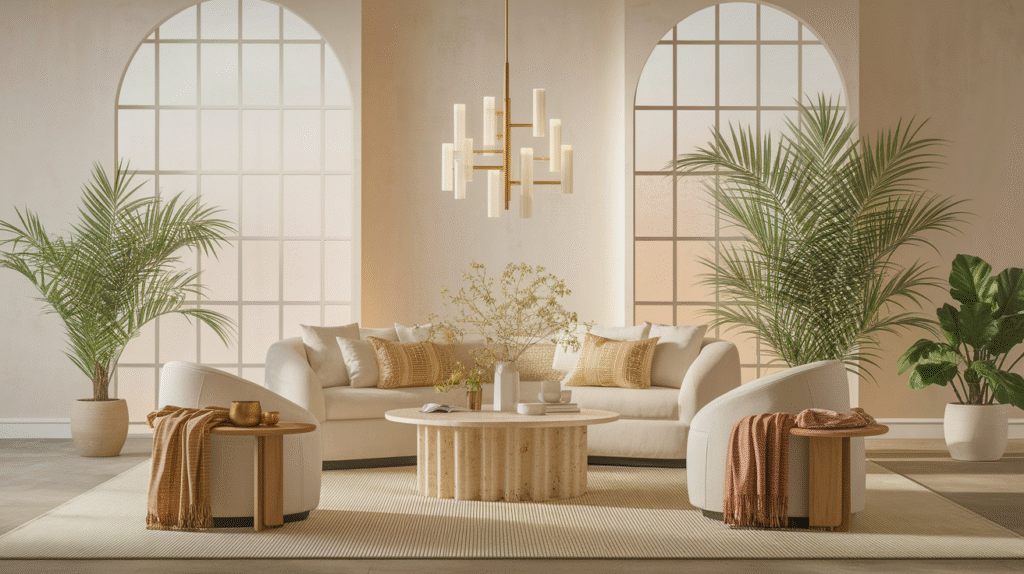
Japandi isn’t just another design trend that’ll be outdated next season. It’s built on two powerful philosophies: the Japanese concept of wabi-sabi (finding beauty in imperfection) and the Scandinavian principle of hygge (creating cozy, functional spaces).
When you apply these ideas to plants, something remarkable happens—you stop obsessing over perfect Instagram-worthy arrangements and start enjoying actual living greenery.
This approach embraces plants with natural, unforced shapes. A slightly asymmetrical monstera? That’s not a flaw—that’s character.
A snake plant with leaves growing in different directions? Perfect. The wabi-sabi mindset eliminates the pressure to create magazine-perfect displays, which means you’re far more likely to stick with plant ownership long-term.
The “less is more” principle solves a problem you might not realize you have: decision fatigue.
When you commit to intentional plant selection—choosing three stunning specimens instead of fifteen random ones—you eliminate the mental clutter that comes with maintaining a jungle.
Studies from Cornell University confirm that reducing visual complexity in your environment directly improves decision-making ability. Your brain has limited processing power, and every cluttered surface drains a little bit of it.
Minimalist spaces with strategic greenery also create measurable mental clarity. A 2019 study published in the Journal of Environmental Psychology found that people working in rooms with intentionally placed plants showed 12% better concentration than those in plant-free spaces.
But here’s the crucial detail: rooms with too many plants showed the same decline as rooms with no plants.
The Japandi approach hits that sweet spot—enough nature to benefit your brain, not so much that it becomes visual noise.
Why This Style Works for Your Hectic Schedule
The plants that work in Japandi design are specifically the low-maintenance varieties. We’re talking about species that evolved in harsh conditions and actually prefer benign neglect.
Snake plants store water in their leaves and can go three weeks without watering. ZZ plants have rhizomes that hold moisture, making them nearly indestructible. These aren’t plants that punish you for having a busy week—they’re designed to survive it.
Simple, organized placement eliminates the constant rearranging trap that many plant owners fall into. In Japandi design, each plant has a specific purpose and position. You’re not shuffling pots around every weekend trying to find the “right” spot. You place a statement plant in a corner once, and it stays there, anchoring the room. This approach respects your time while creating consistency that your brain finds calming.
For work-from-home professionals, this setup delivers natural stress relief without demanding attention. A pothos trailing down a bookshelf behind your desk provides visual interest during Zoom calls without distracting you during deep work. The greenery exists in your peripheral vision, offering psychological benefits without pulling focus from your tasks.
The Productivity Boost You Didn’t Know You Needed
Strategic greenery improves focus during deep work sessions in ways that surprised researchers. A University of Exeter study found that employees working in environments with plants showed 15% higher productivity than those in sparse offices. The mechanism? Plants provide micro-breaks for your eyes. When you’re staring at a screen for hours, glancing at natural shapes and colors gives your visual cortex a reset, allowing you to return to work with renewed concentration.
The connection between natural elements and reduced overwhelm is powerful and measurable. Hospital patients with views of trees recovered faster from surgery than those facing brick walls. The same principle applies to your home office. When work feels crushing, looking at a thriving monstera reminds your nervous system that growth happens gradually, naturally—not through forced intensity.
Creating visual breaks helps prevent burnout in your workspace. Japandi design uses plants as intentional pause points. A small bonsai on your desk serves as a natural reminder to breathe and recalibrate between tasks. These aren’t decorative afterthoughts—they’re functional tools for maintaining mental stamina throughout long workdays.
The Most Effective Japandi Plants for Real Life
Ultimate Low-Maintenance Champions
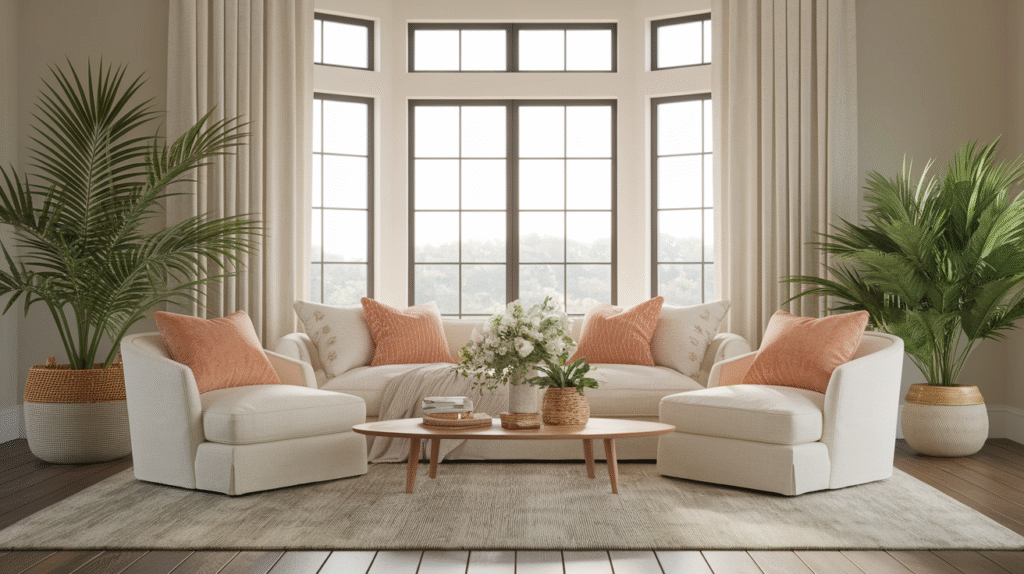
Snake plants (Sansevieria) earn their reputation as the busy professional’s best friend. These architectural beauties survive weeks of neglect, tolerate low light, and actually prefer dry soil.
I’ve personally forgotten to water mine for three weeks during a work crunch, and it looked exactly the same—thriving and unbothered. Snake plants also convert CO2 to oxygen at night, making them ideal bedroom companions.
Place them in simple ceramic pots in neutral tones, and they deliver that clean Japandi aesthetic without demanding anything in return.
ZZ plants take low-maintenance to another level. They thrive in low light conditions that would kill most houseplants, making them perfect for corners or rooms without abundant windows.
Their glossy leaves catch light beautifully, creating visual interest even in dimmer spaces. The rhizomes store water efficiently, so you can water them every three weeks and they’ll flourish.
For renters in apartments with limited natural light, ZZ plants solve the “I want greenery but my space is dark” problem completely.
Pothos plants are efficient growers that adapt to almost any environment. They work in bright indirect light or shadier spots, tolerate irregular watering, and grow quickly enough to provide that satisfying sense of progress.
Trailing pothos looks stunning in hanging planters or cascading from shelves, adding vertical interest without consuming floor space.
The heart-shaped leaves bring softness to the clean lines of Japandi design, creating balance between structure and organic flow.
Statement Plants That Stay Simple
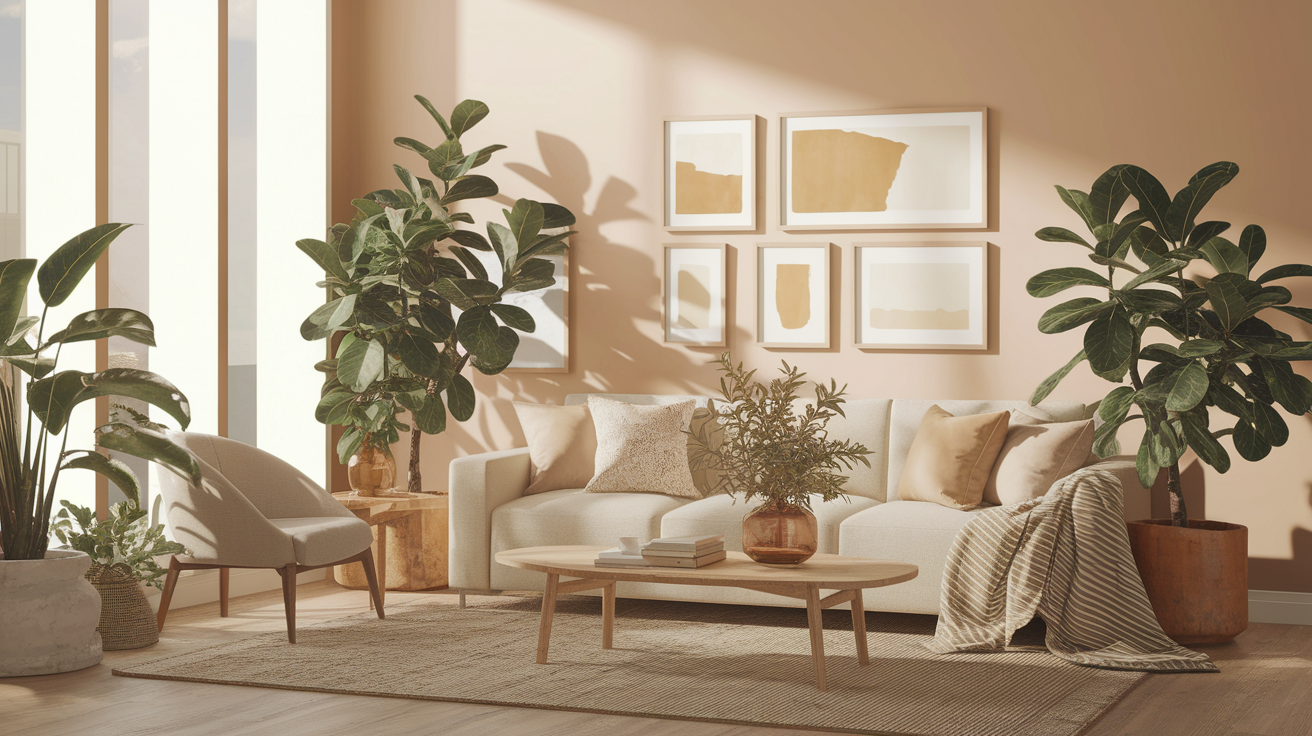
A single fiddle leaf fig delivers more visual impact than ten small plants scattered around a room. This is the “less is more” principle in action.
Fiddle leaf figs have dramatic, sculptural leaves that create an instant focal point. Yes, they have a reputation for being finicky, but the secret is consistency.
Find a bright spot away from direct sun, water when the top two inches of soil are dry, and leave it alone.
The key word is “leave it alone”—these plants hate being moved or fussed over, which actually makes them perfect for the Japandi approach.
Monstera deliciosa brings drama without the complicated care routine. Those iconic split leaves develop naturally as the plant matures, giving you an evolving piece of living art.
Monsteras tolerate a range of light conditions and tell you clearly when they need water—leaves start to droop slightly.
They’re surprisingly forgiving for time-strapped plant parents who check in weekly rather than daily.
A mature monstera in a simple terracotta pot becomes the centerpiece of a living room, eliminating the need for additional decoration.
Bamboo delivers instant zen without intensive maintenance. Lucky bamboo (which is actually a type of Dracaena) grows in water or soil, making it incredibly flexible for different spaces.
The vertical lines of bamboo stalks embody the clean, uncluttered aesthetic of Japandi design.
Group three or five stalks in a shallow container with river rocks for an arrangement that looks intentional and requires minimal care—just keep the water fresh and provide indirect light.
Small-Space Solutions for Organized Living
Peace lilies are compact, air-purifying champions that literally tell you when they need water. When they’re thirsty, the leaves droop dramatically—water them, and within hours they perk back up. This clear communication eliminates guesswork, making them ideal for beginners or anyone who struggles with plant care timing. Peace lilies thrive in low to medium light and produce elegant white blooms periodically, adding a touch of softness to minimalist spaces without creating visual clutter.
String of pearls adds personality without cluttering surfaces. These trailing succulents feature spherical leaves that cascade gracefully from shelves or hanging planters. They’re drought-tolerant and prefer to dry out between waterings, making them perfect for people who travel frequently or simply forget. The unique texture creates visual interest while maintaining the clean, organized feel essential to Japandi design.
Bonsai alternatives deliver the streamlined look without intensive maintenance. While traditional bonsai requires significant skill and time, plants like jade trees or dwarf schefflera offer similar aesthetic benefits with far less effort. These compact plants have naturally interesting shapes and can be lightly pruned to maintain form. Place one on a floating shelf or side table for a zen focal point that doesn’t demand daily attention.
Strategic Placement: Organize Your Space with Purpose
Living Room & Workspace Arrangements
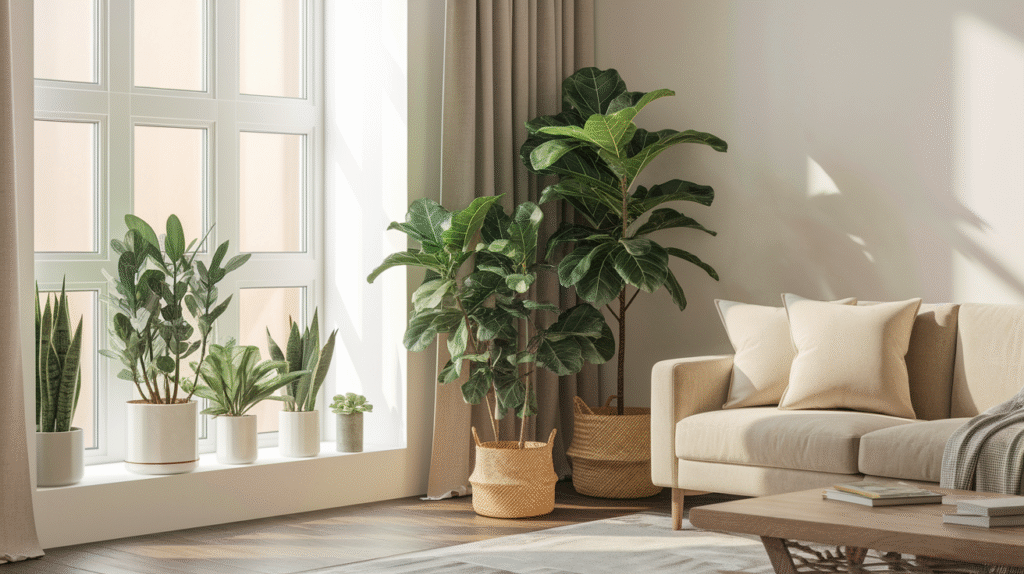
The proven corner plant strategy maximizes impact while minimizing floor space consumption. Large statement plants like fiddle leaf figs or monstera thrive in corners where they receive light from multiple angles. This placement creates visual anchors that define the room’s boundaries without blocking pathways or creating obstacles. A single corner plant can make a room feel complete, eliminating the urge to add more decorative elements that might create clutter.
Using plants as natural room dividers establishes better work-life boundaries in open-concept spaces. A tall snake plant or bamboo arrangement positioned between your workspace and living area creates psychological separation without the permanence of a wall. This strategy works brilliantly for studio apartments or homes where the dining table doubles as a desk. The greenery signals to your brain that you’re transitioning between zones, helping you mentally shift from work mode to relaxation.
Window placement requires working with your existing light rather than fighting it. Bright indirect light near windows suits most Japandi plants perfectly. Position plants 3-6 feet from south or west-facing windows, or directly in front of north or east-facing windows. This approach ensures your plants receive adequate light without the leaf-scorching intensity of direct sun. Group plants with similar light requirements together for efficient care—you can water and check on them all at once during your weekly routine.
Bedroom Greenery for Better Rest
Air-purifying plants support quality sleep when chosen strategically. Snake plants and peace lilies actively filter toxins while producing oxygen, creating cleaner air for restful sleep. The key is keeping it minimal—one or two plants maximum. A single snake plant on a nightstand or dresser provides benefits without creating the visual complexity that can interfere with relaxation. The clean lines and upright growth of snake plants complement the serene, uncluttered feel essential for quality rest.
The one-plant rule for bedrooms prevents clutter that disrupts sleep. Bedrooms should feel like sanctuaries, and too many elements—even beautiful plants—can create subconscious stress. Choose one statement plant that you genuinely love, place it thoughtfully, and resist the urge to add more. This restraint is core to Japandi philosophy and delivers measurable benefits for sleep quality.
Effective placement enhances calm without creating visual noise. Position your bedroom plant where you can see it from bed but not so close that it’s the first thing you see when you wake. A corner spot or dresser top works perfectly. Avoid placing plants on bedside tables where they might get knocked over during nighttime movements or create subtle anxiety about watering damage near electronics.
Bathroom & Kitchen Integration
High-humidity plants thrive in bathrooms where you already spend time. Pothos, ferns, and peace lilies love the moisture from showers and baths, making these naturally humid spaces ideal locations. A trailing pothos on a bathroom shelf or a peace lily on the counter creates spa-like ambiance while requiring minimal extra care—the shower humidity does half the work for you. This efficient approach leverages existing environmental conditions rather than fighting them.
Vertical solutions create organized, space-efficient greenery in compact areas. Wall-mounted planters or floating shelves with trailing plants maximize vertical space in kitchens and bathrooms where counter real estate is precious. String of pearls or small pothos in wall planters add life to these functional spaces without interfering with daily activities. The vertical arrangement maintains the clean, uncluttered surfaces essential to Japandi design.
Countertop plants in kitchens must not interfere with meal prep. Small herbs like basil or mint in simple containers near the sink provide both visual appeal and practical function. They’re easy to maintain (you’re already at the sink multiple times daily), and they serve a purpose beyond decoration. This dual-function approach—beauty plus utility—is fundamentally Japandi. Avoid placing plants near the stove where heat and grease will damage them, and keep counters mostly clear to maintain that essential sense of organized calm.
Streamlined Care Routines That Fit Your Calendar
The 5-Minute Weekly Plant Check
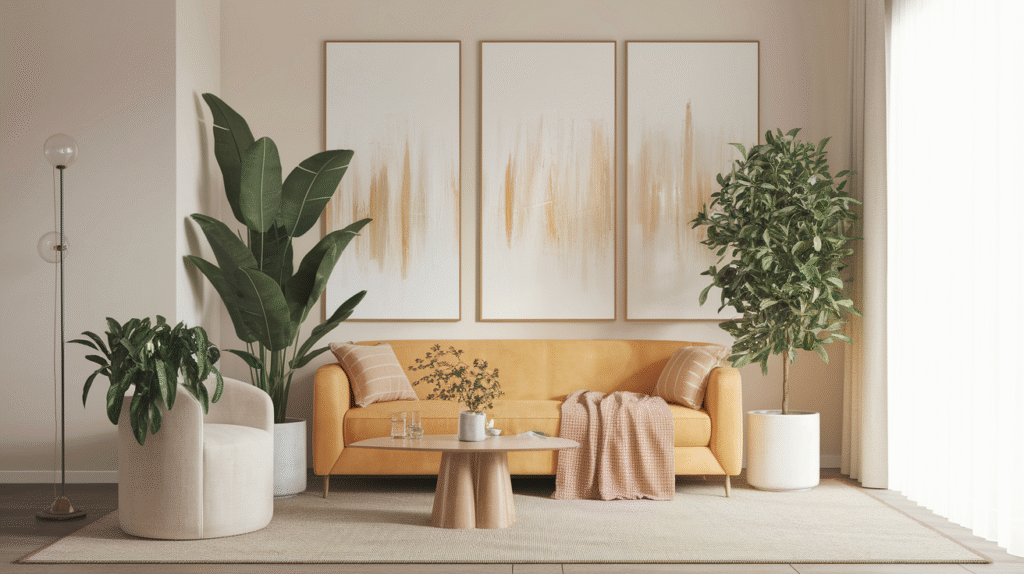
Your simple visual inspection takes less time than brewing coffee. Every week, spend five minutes looking at each plant. Check for yellowing leaves (usually overwatering), brown tips (often underwatering or low humidity), or drooping (needs water). This quick scan catches problems early when they’re easy to fix. You’re not conducting a botanical survey—you’re just noticing obvious changes. This proactive approach prevents small issues from becoming plant emergencies that require hours of research and intervention.
Create an efficient watering schedule using your phone’s existing reminders. Set a weekly alarm for “plant check” and actually stick to it. During this check, touch the soil—if the top inch is dry, water thoroughly until it drains from the bottom. If it’s still moist, skip watering. This simple touch test eliminates guesswork and prevents the overwatering that kills most houseplants. For low-maintenance Japandi plants, weekly checks are plenty—many will only need water every other week.
Group plants by needs for organized, batch maintenance. Put all your low-light, drought-tolerant plants together, and place moisture-loving plants in another zone. This organization means you’re not running around your home checking twenty different locations. You visit two or three spots, assess needs, and move on with your day. This efficiency makes plant care sustainable rather than burdensome.
Monthly Maintenance Made Manageable
Quick dusting techniques take less time than scrolling social media. Once a month, wipe large leaves with a damp cloth or give smaller plants a gentle shower. Dust blocks light absorption and makes plants less efficient. This five-minute task keeps your greenery looking fresh and functioning optimally. Do it while listening to a podcast or during a phone call—it requires minimal focus and delivers visible results.
Fertilize strategically with “set it and forget it” products. Slow-release fertilizer spikes or granules provide nutrients for months without requiring you to remember monthly feeding schedules. Insert them into soil every three to six months (depending on the product), and you’re done. This approach eliminates the mixing, measuring, and remembering that makes fertilizing feel complicated. Most Japandi plants are slow growers that don’t need aggressive feeding anyway—they thrive on this minimal approach.
Pruning basics keep plants looking intentional, not overgrown. Once a month, remove any dead or yellowing leaves and trim back excessive growth. Use clean scissors and make cuts just above a leaf node. This simple maintenance prevents plants from becoming unruly while encouraging healthy new growth. The goal isn’t perfection—it’s maintaining the clean, purposeful shape that defines Japandi aesthetics.
Troubleshooting Without the Drama
The ultimate cheat sheet simplifies problem-solving: Yellow leaves usually mean overwatering—reduce frequency. Brown tips often indicate low humidity—mist occasionally or move to a bathroom. Drooping means the plant needs water—give it a thorough drink. These three issues cover 90% of houseplant problems. You don’t need to become a botanist; you need to recognize these basic signals and respond appropriately.
Know when to let go and replace struggling plants without guilt. Wabi-sabi embraces imperfection and impermanence. If a plant isn’t thriving despite your efforts, it’s okay to compost it and try something else. This isn’t failure—it’s learning what works in your specific environment. Some plants simply don’t match your space’s conditions, and forcing it creates stress for both you and the plant. Replace it with a more suitable variety and move forward.
Time-saving tools make plant care genuinely sustainable. A moisture meter ($10) eliminates guessing about watering needs. A small spray bottle for misting takes seconds to use. A watering can with a narrow spout prevents spills and allows precise watering. These simple tools don’t require storage space or significant investment, but they reduce the friction that makes plant care feel difficult. When care is easy, you actually do it consistently.
Create Your Calm: Starting Your Japandi Plant Journey Today
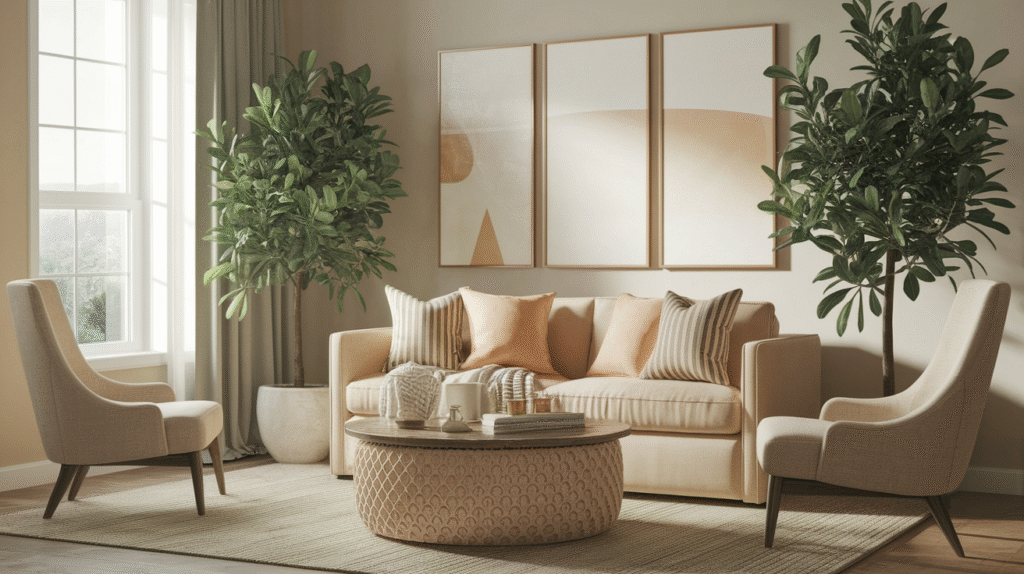
You don’t need to transform your entire home this weekend. Start with one to three low-maintenance plants that genuinely fit your schedule and space. A snake plant for your bedroom, a pothos for your living room, and maybe a ZZ plant for that dim corner—that’s a complete, functional Japandi plant setup. These three plants deliver all the psychological and aesthetic benefits without overwhelming you with care requirements or visual clutter.
Strategic placement creates natural organization and better focus throughout your day. Position plants where they serve a purpose: calming your bedroom, anchoring your living space, or providing visual breaks in your workspace. Each plant should have a clear reason for being where it is. This intentionality prevents the scattered, cluttered look that undermines the Japandi aesthetic and its mental health benefits.
Embrace the streamlined care routine that respects your time and energy. Five minutes weekly for checks, five minutes monthly for maintenance—that’s ten minutes total per month for a home filled with living greenery that reduces stress and boosts productivity. This isn’t another obligation draining your schedule; it’s a sustainable practice that gives back far more than it takes.
The beauty of Japandi interior plants lies in their simplicity. You’re not creating a botanical garden or competing with influencers who have teams maintaining their spaces. You’re bringing intentional, functional greenery into your home in a way that actually works for your real life. The plants thrive on minimal care, the placement stays organized, and you get to enjoy the proven benefits of natural elements in your daily environment.
Start simple. Choose plants that match your actual schedule, not your aspirational one. Place them strategically where they’ll deliver maximum benefit with minimum effort. Follow the streamlined care routine that takes minutes, not hours. That’s the complete formula for successful Japandi plant styling—and it’s exactly what busy people need to create homes that feel like sanctuaries instead of just another place where stuff accumulates.
Your calmer, more focused space is three plants away. Pick your favorites, position them purposefully, and watch how strategic greenery transforms not just your home, but how you feel in it every single day.