You know that feeling when you step into a high-end spa and everything just melts away? The calm washes over you, your shoulders drop, and suddenly you can breathe again.
What if I told you that same tranquil energy can exist in your own home—and you don’t need a massive budget or a complete renovation to create it?
Enter Japandi design: the stunning fusion of Japanese minimalism and Scandinavian functionality.
This design philosophy isn’t just another trendy aesthetic—it’s a lifestyle approach that outdoor enthusiasts and nature lovers instinctively understand.
Think about it: when you’re standing on a mountain trail, surrounded by towering trees and natural stone, you experience pure, uncluttered beauty. That’s exactly what Japandi brings indoors.
The magic happens when Japanese wabi-sabi (embracing imperfection and natural beauty) meets Scandinavian hygge (cozy, functional comfort).
Both design traditions celebrate nature, simplicity, and craftsmanship. They strip away the unnecessary and honor what’s essential—just like packing for a backcountry camping trip.
Why does this matter for creating your spa retreat? Because outdoor lovers already get it. You understand that nature doesn’t need embellishment.
A weathered piece of driftwood, a smooth river stone, the grain in aged wood—these elements tell stories without shouting.
When you bring this philosophy into your bathroom, bedroom, or dedicated spa space, you’re not just decorating. You’re creating a basecamp for daily renewal.
This guide walks you through every essential element of Japandi spa design, from selecting natural materials to arranging plants that thrive indoors.
Whether you’re working with a sprawling master bathroom or a compact apartment corner, these principles adapt beautifully.
You’ll discover budget-friendly DIY projects, learn which beginner-friendly plants create that forest-floor atmosphere, and understand how to layer lighting for ultimate relaxation.
Ready to embark on this interior adventure? Let’s explore how to craft your personal sanctuary—one natural element at a time.
Essential Elements of Japandi Spa Design: Your Beginner-Friendly Guide
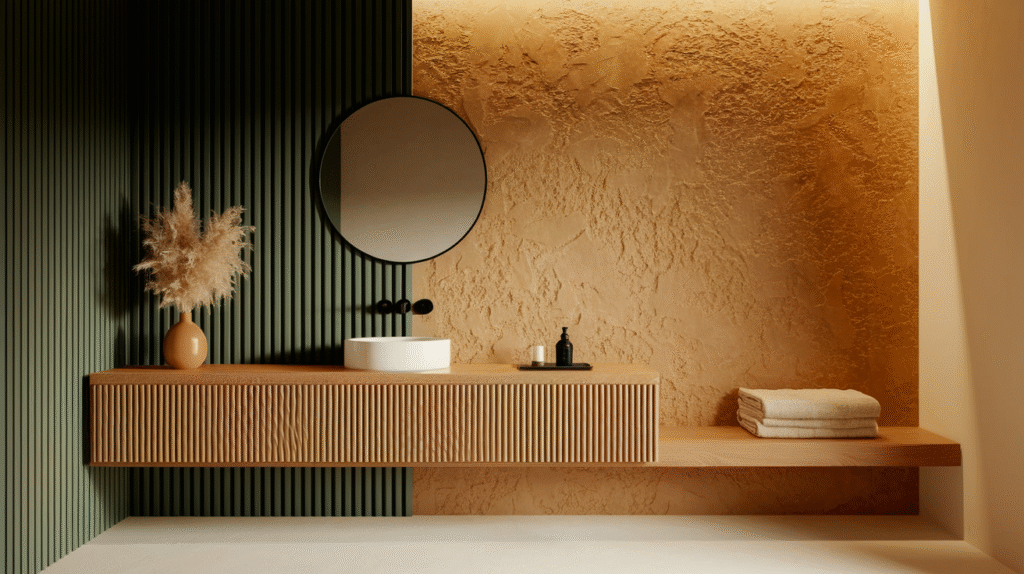
Creating a Japandi spa interior starts with understanding the core elements that make this style so powerfully calming. These aren’t complicated design rules—they’re simple principles rooted in nature.
Natural Materials That Echo the Great Outdoors
Walk into any Japandi space and you’ll immediately notice the materials. Wood dominates—not glossy, over-processed lumber, but pieces that celebrate their natural character. Bamboo brings vertical interest and sustainability. Stone adds grounding weight. Linen provides soft texture. These materials work together like elements in a thriving ecosystem.
Here’s what makes this approach brilliant: you’re already familiar with these materials from your outdoor adventures. That smooth stone you find in a creek bed? That’s the same aesthetic you want in your spa’s pebble floor. The weathered wood on a mountain cabin? That’s the exact vibe for your bathroom vanity or bench.
Handcrafted pieces elevate this further. A ceramic soap dish with subtle imperfections tells a story. A wooden bath tray with visible grain patterns connects you to the forest. These aren’t mass-produced items—they’re unique, like the perfect walking stick you discovered on a trail. The beauty lies in their individuality.
Sustainability matters here too. Japandi design honors nature by choosing eco-conscious materials. Bamboo grows incredibly fast, making it renewable. Reclaimed wood gives new life to old structures. Natural stone lasts generations. When you select sustainable materials, you’re practicing the same leave-no-trace ethics you follow outdoors.
The Ultimate Color Palette for Tranquility
Forget bold accent walls and vibrant pops of color. Japandi spa spaces embrace the palette you’d find on a misty morning hike: soft grays, warm beiges, gentle greens, and natural browns. These earth tones create instant calm because they’re hardwired into our connection with nature.
Think about layering colors like you’d observe in a mountain landscape. The base is neutral—sandy beige walls or pale gray tile. Mid-tones come from wood furniture in honey or walnut shades. Darker accents appear in black-framed mirrors or charcoal stone features. Subtle greens from plants add life without overwhelming.
The key is avoiding harsh contrasts. You want gentle transitions, like watching the sun move across a valley. A cream wall flows into light wood flooring, which meets a slightly darker wood vanity. Everything connects seamlessly. This doesn’t mean boring—it means sophisticated restraint.
Natural white plays a crucial role too. Not stark hospital white, but the soft white of linen, the creamy white of natural wool, the warm white of unbleached cotton. These whites bring brightness without sterility, light without harshness.
Decluttering for Mental Clarity
Here’s where outdoor enthusiasts have a natural advantage. You already know the backpacker’s philosophy: carry only what serves multiple purposes or brings genuine value. Apply this same thinking to your spa space.
Japandi design demands editing. That collection of half-empty shampoo bottles? Gone. The decorative items that just collect dust? Out. Keep only what’s essential and beautiful—preferably items that are both. A handmade ceramic container that holds cotton swabs is functional and gorgeous. A simple wooden stool serves as seating and towel storage.
Creating breathing room transforms a space. Just like you need open trail to feel freedom outdoors, your spa interior needs empty space to feel peaceful. Don’t fill every surface. Let walls breathe. Allow negative space to work its magic. This intentional emptiness isn’t about deprivation—it’s about making room for calm to settle in.
Storage solutions should hide clutter while maintaining the minimalist aesthetic. Built-in niches, concealed cabinets, and simple baskets keep necessities accessible but invisible. Everything has its place, creating the same organized efficiency as a well-packed backpack.
Key Design Features That Bring Nature Inside
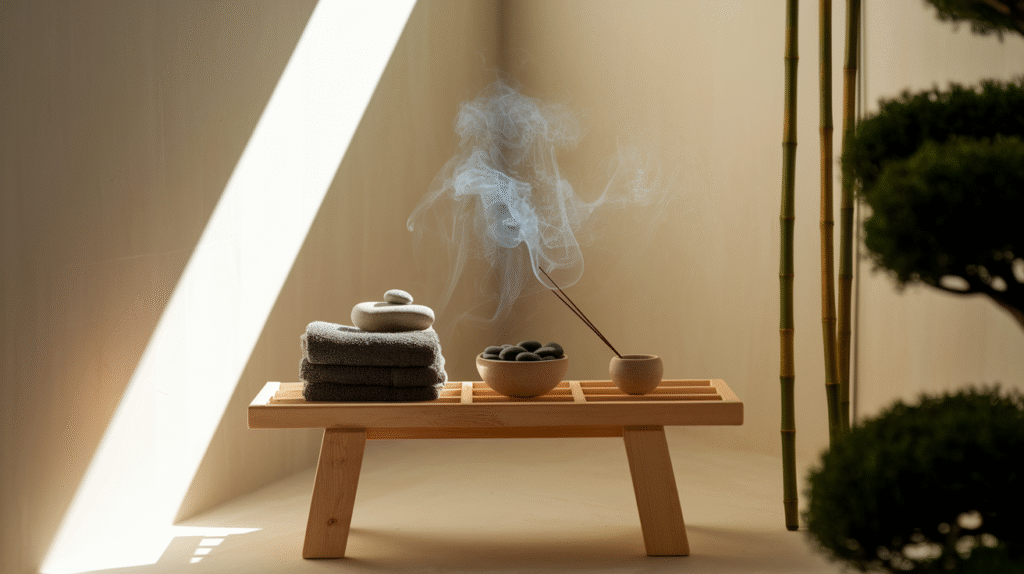
Now that you understand the foundational elements, let’s explore the specific features that transform an ordinary bathroom into a Japandi spa sanctuary. These design choices create immersive experiences that rival any high-end wellness retreat.
Natural Lighting: Your Indoor Sunrise
Light makes or breaks a spa atmosphere. Natural daylight is your most powerful design tool—and it’s completely free. Maximize every window, even small ones. Remove heavy curtains that block light. If privacy concerns exist, install shoji screens or frosted glass that diffuses light beautifully while maintaining privacy.
Large windows positioned near your soaking tub create breathtaking bathing experiences. Imagine soaking in warm water while watching clouds drift past or trees sway in the breeze. This connection to the outdoors brings that same expansive feeling you get standing on a scenic overlook.
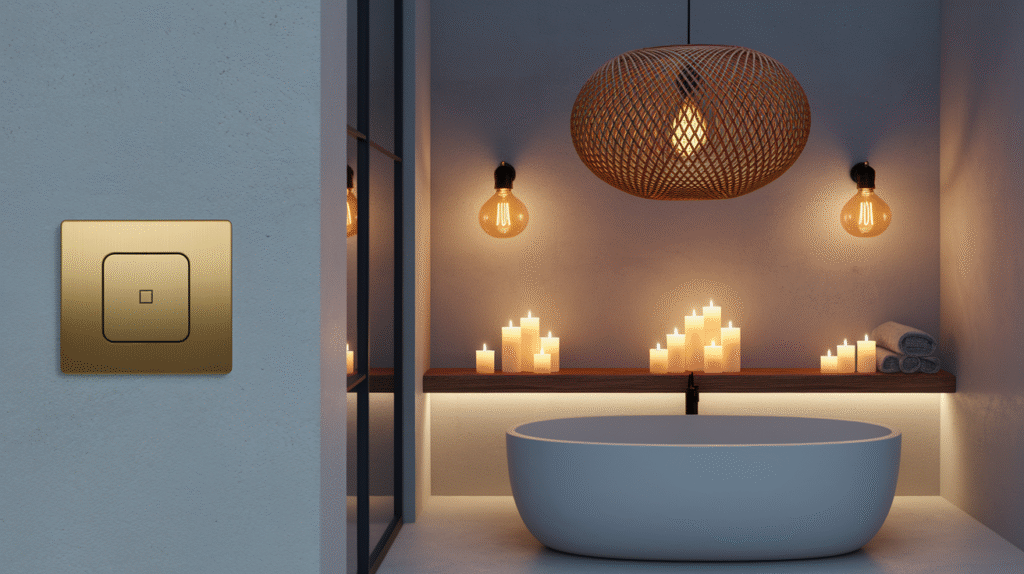
When natural light isn’t sufficient, layer your artificial lighting thoughtfully. Overhead fixtures should offer soft, diffused illumination—think paper lanterns or natural fiber pendant lights rather than harsh recessed lighting. Wall sconces at eye level provide flattering, gentle light perfect for evening relaxation.
Dimmers are non-negotiable. You want complete control over ambiance, just like you’d control the brightness of your campfire. Bright light for morning routines, medium light for general use, dim light for evening soaks. This flexibility lets you match lighting to your mood and the time of day.
Candles add another layer of natural light. Their flickering warmth creates instant coziness. Choose unscented candles or those with subtle natural fragrances like cedar or eucalyptus. Place them safely on stone surfaces or in hurricane lanterns for that campfire glow without the smoke.
Organic Textures and Surfaces
Texture brings Japandi spaces to life. You’re creating a sensory experience, not just a visual one. Every surface you touch should feel natural and intentional.
Stone accent walls deliver dramatic impact. A feature wall of stacked stone behind your tub evokes mountain faces and canyon walls. River rock arranged in vertical patterns creates stunning focal points. These installations require some investment, but the effect is transformative—and permanent.
Wooden slat features bring forest energy indoors. Vertical slats on one wall create rhythm and movement, like sunlight filtering through trees. Horizontal wood planking adds warmth to ceilings. Cedar or teak work beautifully in humid spa environments because they naturally resist moisture and develop gorgeous patinas over time.
Ceramic and pottery pieces embrace wabi-sabi perfectly. Handmade vessels with irregular shapes, natural clay colors, and subtle imperfections add character. A ceramic vase holding bamboo stalks, stoneware soap dispensers, or a pottery tray for bath essentials—these pieces feel authentic and grounded.
Textiles matter too. Natural linen towels feel luxurious against skin and look elegant hanging on simple wooden hooks. Cotton waffle-weave bath mats provide texture underfoot. Avoid synthetic materials—they clash with the natural aesthetic and don’t feel as good.
Water Features and Spa Elements
Water is central to any spa experience. How you incorporate it determines whether your space feels like a basic bathroom or a true sanctuary.
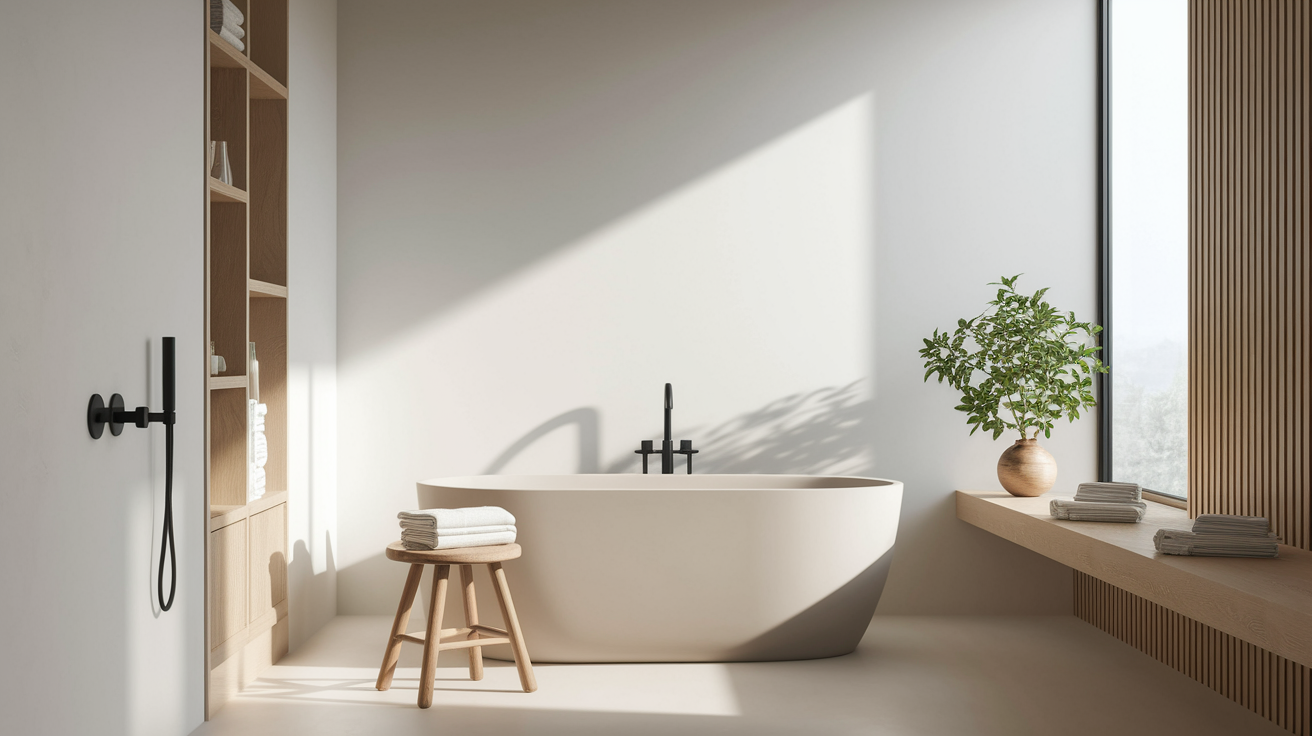
Soaking tubs are the heart of Japandi spa design. Deep Japanese-style ofuro tubs let you immerse completely, but any freestanding tub works if positioned thoughtfully. Place it near windows for views, or against a stone wall for dramatic effect. The tub itself should be simple—clean lines, natural materials like wood or stone, no ornate details.
If you have space and budget, a minimalist steam room takes your spa to the next level. Cedar-lined walls, a simple wooden bench, and clean glass doors create authentic spa experiences. The wood releases natural aromatics when heated, filling the space with forest scents.
Pebble floors bring the outdoors in literally. River stones set in mortar create textured surfaces that massage your feet while providing excellent traction when wet. Use them as shower floors, around tubs, or in dedicated wet areas. The varied colors and shapes of natural stones add organic visual interest.
Even small water features contribute to the atmosphere. A bamboo fountain in the corner provides gentle trickling sounds that mask household noise. A simple stone basin with a bamboo spout creates a traditional Japanese aesthetic. These elements engage your hearing, deepening the sensory experience.
Essential Plants and Greenery for Your Spa Sanctuary
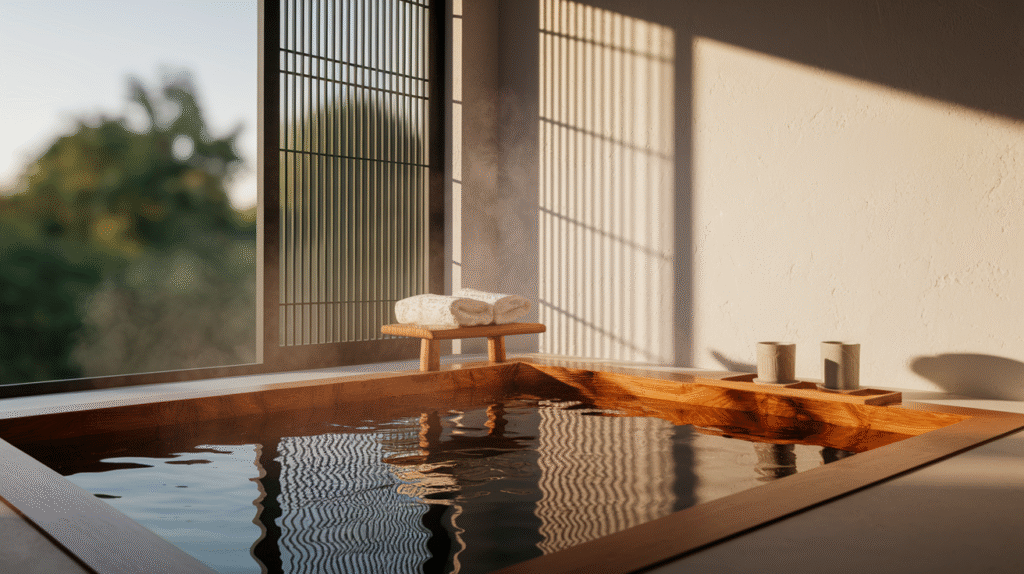
No Japandi spa is complete without living plants. They purify air, add natural beauty, and create that essential connection to the outdoors. The good news? You don’t need a green thumb to succeed with these beginner-friendly choices.
Beginner-Friendly Plants That Thrive Indoors
Bamboo tops the list for obvious reasons. Lucky bamboo (despite its name, it’s actually dracaena) grows happily in water or soil, requires minimal light, and brings instant Japandi credentials. Arrange several stalks in a simple glass vase filled with pebbles for an elegant, low-maintenance display.
Bonsai trees add sculptural beauty and centuries of tradition. While traditional bonsai requires dedication, modern varieties like ficus or jade make excellent beginner options. Place a small bonsai on a floating shelf or wooden stand where it becomes a living art piece. Water weekly, provide indirect light, and enjoy watching it slowly develop character.
Peace lilies thrive in bathrooms because they love humidity. Their glossy leaves and occasional white blooms add elegance without demanding constant attention. They tolerate low light, making them perfect for bathrooms without windows. Plus, they’re excellent air purifiers—a functional benefit that aligns perfectly with Japandi practicality.
Ferns bring that forest-floor atmosphere you’re craving. Boston ferns, maidenhair ferns, or bird’s nest ferns all appreciate bathroom humidity. Their delicate fronds soften hard surfaces and add movement. Hang them in simple macramé holders or place them on wooden stools for varied heights.
Air plants (tillandsia) are the ultimate minimalist choice. They don’t need soil—just air, light, and occasional misting. Display them in geometric wooden holders, nestle them among stones, or suspend them in glass orbs. They’re perfect for small spaces where traditional potted plants won’t fit.
Strategic Plant Placement
Think about plant placement like discovering scenic viewpoints on a trail. You want strategic moments of natural beauty, not overwhelming jungle density.
Create focal points with larger statement plants. A tall bamboo palm in the corner draws the eye upward, making ceilings feel higher. A mature snake plant next to your tub provides vertical interest and architectural form. These anchor pieces ground the space.
Use smaller plants to define zones without walls. A row of small potted plants on a shelf separates the vanity area from the bathing area visually. Ferns on a wooden bench mark the transition from dry to wet zones. This subtle division maintains the open feel while creating distinct functional areas.
Vertical gardens maximize space in compact bathrooms. Mount a simple wooden frame with horizontal slats, then attach small pots or planters at various heights. Fill them with trailing pothos, compact ferns, or air plants. This living wall becomes stunning artwork that happens to purify your air.
Don’t forget the power of single, perfectly placed plants. One gorgeous bonsai on a floating shelf can be more impactful than a dozen scattered plants. Quality over quantity—another principle outdoor enthusiasts understand instinctively.
Natural Aromatics and Sensory Elements
Plants do more than look beautiful—they engage all your senses, creating a fully immersive spa experience.
Essential oils from plants native to Japanese and Scandinavian landscapes amplify the connection to nature. Eucalyptus hung in your shower releases aromatic oils when steam hits it, opening your sinuses and creating that spa scent instantly. Cedar blocks placed in drawers or on shelves emit subtle woody fragrance. Hinoki cypress oil in a diffuser brings authentic Japanese forest bathing indoors.
Fresh herbs work beautifully too. A small pot of lavender on your windowsill provides calming scent and pretty purple blooms. Mint releases refreshing aroma when you brush against it. Rosemary adds herbal notes and grows happily in bright bathrooms.
Sound elements complete the sensory experience. A small bamboo fountain provides gentle water sounds that mask household noise and create instant tranquility. Wind chimes near an open window bring outdoor music inside. Even the rustle of bamboo leaves when you walk past adds subtle natural sound.
Texture matters here too. Run your hands over moss in a terrarium, feel the smooth leaves of a jade plant, touch the delicate fronds of a fern. These tactile experiences ground you in the present moment—exactly what spa time should accomplish.
Practical DIY Tips: Create Your Epic Spa Retreat
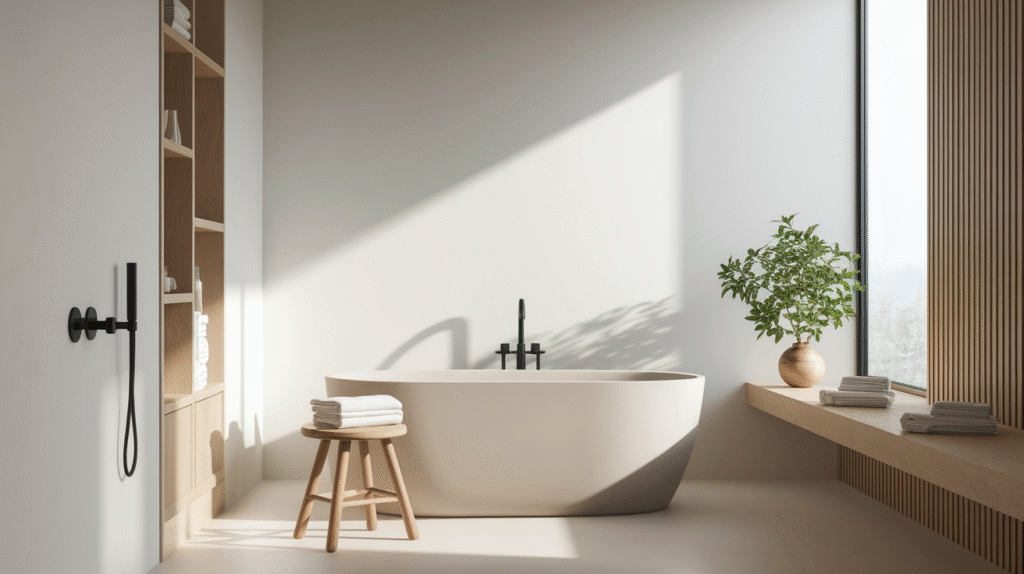
You’ve explored the principles and elements. Now let’s get practical. These DIY approaches help you create your Japandi spa without requiring a contractor or blowing your budget.
Budget-Friendly Starting Points for Beginners
Start with what you have. You don’t need to gut your bathroom and start over. Begin by decluttering ruthlessly. Remove everything that doesn’t serve a clear purpose or bring you joy. This costs nothing and immediately shifts the energy.
Next, source natural materials locally. Visit salvage yards for reclaimed wood pieces. Check stone suppliers for remnant pieces perfect for small projects. Thrift stores often have bamboo items, wooden stools, and ceramic vessels at fraction of retail costs. Think of this as foraging for design elements—you’re hunting for treasures.
DIY bamboo screens make excellent privacy solutions or decorative room dividers. Purchase bamboo fencing from garden centers, build a simple wooden frame, and attach the bamboo. This project takes an afternoon and costs under $100, but delivers major visual impact.
Stone arrangements require no construction skills. Collect smooth river stones (legally—check local regulations) or purchase them from landscape suppliers. Arrange them in wooden trays, around plant bases, or in shallow ceramic bowls filled with water. These natural compositions bring outdoor energy inside instantly.
Minimalist shelving is surprisingly easy to build. Purchase simple wooden boards (cedar or pine), apply natural oil finish, and mount them with concealed brackets. These floating shelves display plants, candles, and essential items while maintaining clean lines.
Furniture Selection and Arrangement
Low-profile seating changes the entire feel of a space. A simple wooden bench positioned near your tub serves multiple purposes: seating while you dry off, towel storage, plant display, or meditation spot. Choose pieces with clean lines and natural finishes—no ornate details or painted surfaces.
Multi-functional furniture is essential in smaller spaces. An ottoman with hidden storage holds extra towels while providing seating. A wooden ladder leans against the wall, holding towels while adding vertical interest. A simple stool serves as side table, plant stand, and extra seating.
Natural wood platforms create spa-like luxury. A teak bath mat elevates your shower experience. A wooden platform beside your tub holds candles and a book. These pieces connect directly to Japanese bathing traditions where wood and water coexist beautifully.
Arrangement matters as much as selection. Create conversation areas even in bathrooms. Position a comfortable chair near a window with a small side table for tea. This transforms your spa from purely functional to a place you want to linger. Leave generous space around each piece—remember, breathing room creates calm.
Lighting and Ambiance Control
Layered lighting gives you complete control over atmosphere. Start with ambient lighting—soft overhead illumination that lights the entire space. Paper pendant lights or natural fiber drum shades diffuse light beautifully and fit the Japandi aesthetic perfectly.
Add task lighting at the vanity. Wall-mounted sconces on either side of your mirror provide even, flattering light for grooming tasks. Choose fixtures with clean lines and natural materials like wood, bamboo, or ceramic.
Accent lighting highlights special features. Small LED strips under floating shelves create subtle glow. A spotlight on your statement plant adds drama. Candles in various heights create layered ambient light that shifts and flickers naturally.
Install dimmers on every light switch. This single upgrade delivers enormous flexibility. Bright light for morning routines, medium for general use, low for evening relaxation. You control the mood completely, just like adjusting your campfire’s intensity.
Natural fiber lampshades soften all light sources. Rattan, bamboo, or linen shades filter harsh bulbs into gentle, diffused glow. They add texture while serving a practical function—the perfect Japandi combination.
Safety and Practical Considerations
Creating a beautiful spa means nothing if it’s not safe and functional. These practical considerations ensure your sanctuary remains comfortable and hazard-free.
Moisture-resistant materials are non-negotiable in wet areas. Teak and cedar naturally resist water damage and develop beautiful patinas. Seal all wood properly with natural oils designed for humid environments. Stone and tile obviously handle moisture well, but ensure proper installation with appropriate waterproofing.
Ventilation is as essential as fresh air on the trail. Proper exhaust fans prevent mold and preserve your natural materials. If your bathroom lacks windows, invest in a quality fan that exchanges air efficiently. Run it during and after showers to protect your investment.
Non-slip surfaces prevent accidents. Textured stone tiles, teak bath mats, and pebble floors all provide excellent traction when wet. Avoid glossy tiles in wet areas—they’re beautiful but dangerous. Safety doesn’t compromise aesthetics when you choose natural materials with inherent texture.
Accessibility features blend seamlessly into Japandi design. A wooden bench in the shower serves everyone while providing essential seating for those who need it. Grab bars in brushed bronze or black matte finish look intentional rather than institutional. Plan for aging in place—your future self will thank you.
Proper storage for cleaning supplies keeps them accessible but invisible. Built-in cabinets, under-sink storage, or simple baskets with lids hide necessities. You need these items, but they don’t need to clutter your visual space.
Bringing Your Japandi Spa Vision to Life
You’ve now got the complete roadmap for creating your own Japandi spa sanctuary. Let’s recap the essential elements that make this design approach perfect for nature lovers and outdoor enthusiasts like you.
Natural materials form your foundation—wood, bamboo, stone, and linen connect your indoor space to the outdoor environments you love. These aren’t just decorative choices; they’re expressions of your values and your connection to nature. When you choose sustainable, handcrafted pieces, you’re honoring the same leave-no-trace ethics you practice on the trail.
The neutral color palette creates instant calm because it mirrors the landscapes that feed your soul. Earth tones, natural whites, and subtle greens work together like elements in a thriving ecosystem. No harsh contrasts, just gentle transitions that let your mind settle.
Decluttering and minimalism aren’t about deprivation—they’re about intentional living. Keep only what’s essential and beautiful, just like packing for a backcountry trip. This editing process creates breathing room, and in that space, calm takes root.
Strategic design features—maximized natural light, organic textures, thoughtful water elements—transform ordinary bathrooms into sanctuaries. Each choice either brings you closer to nature or pulls you away from it. Choose wisely, and your space becomes a daily retreat.
Plants and greenery aren’t optional extras—they’re essential elements that purify air, add beauty, and create living connections to the outdoors. Start with beginner-friendly choices like bamboo, peace lilies, or air plants. As your confidence grows, expand your indoor garden.
Here’s the beautiful truth: you don’t need to implement everything at once. Creating your Japandi spa is like planning the ultimate expedition—it requires vision, patience, and respect for the journey. Start with one element that speaks to you. Maybe it’s decluttering and creating breathing room. Maybe it’s adding your first bamboo plant. Maybe it’s installing dimmers so you can control your lighting.
Each small change builds momentum. That single plant leads to another. Decluttering one shelf inspires you to tackle the whole room. Installing one wooden element makes you crave more natural materials. Before you know it, you’ve created a space that genuinely restores you.
Remember, imperfection is part of the beauty. Wabi-sabi teaches us that weathered, aged, and slightly irregular items tell better stories than pristine, perfect ones. Your spa doesn’t need to look like a magazine spread. It needs to feel like home—your personal basecamp for daily renewal.
Start your interior adventure today. Choose one element from this guide and implement it this week. Notice how it changes the energy of your space. Pay attention to how you feel when you spend time there. Let that positive change motivate your next step.
Your Japandi spa sanctuary is waiting. All the elements you need—natural materials, calming colors, strategic lighting, living plants—are within reach. You already understand these principles from your time outdoors. Now bring that same appreciation for natural beauty, simplicity, and authenticity into your home.
What will your first step be? Share your Japandi spa journey with fellow nature lovers and outdoor enthusiasts. We’d love to hear which elements resonate most with your personal style and how you’re adapting these principles to your unique space. After all, the best adventures—whether on mountain trails or in interior design—are always better when shared.