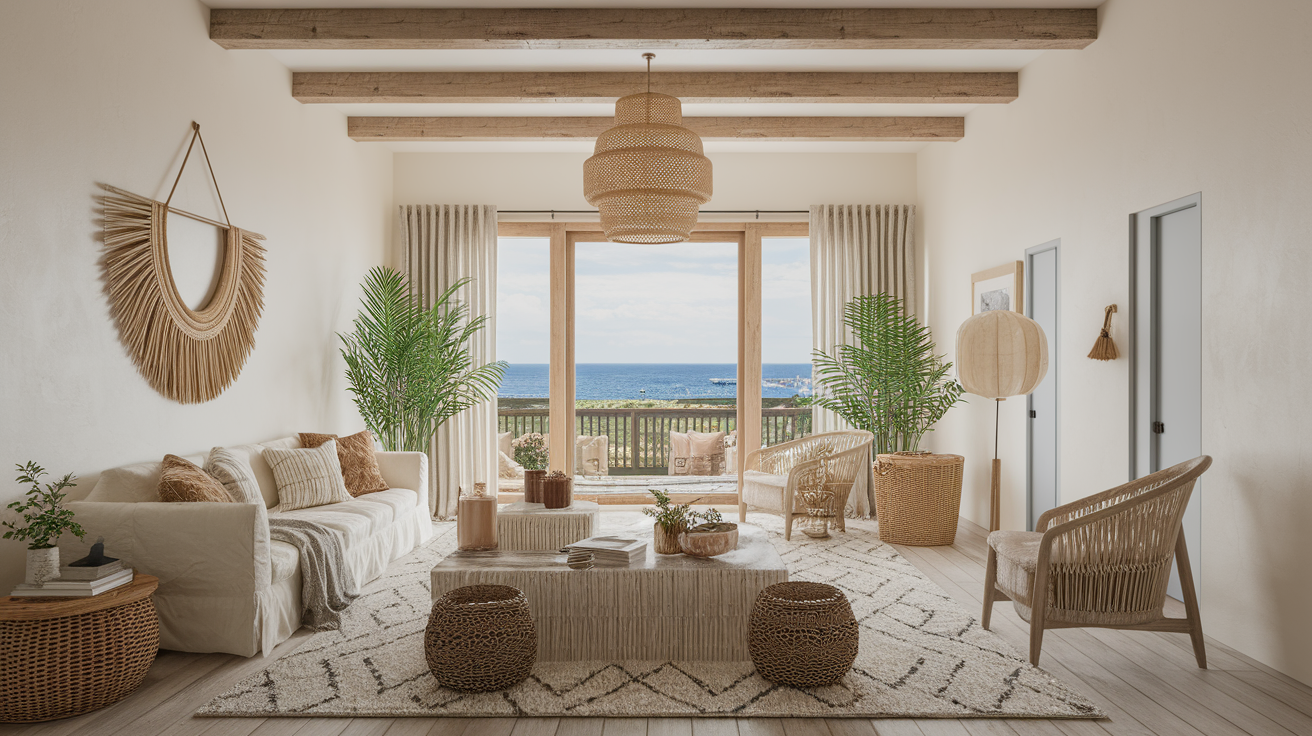
You’re scrolling through Instagram, admiring those effortlessly chic boho rooms with layered textures, lush plants, and that perfect lived-in vibe.
Then you look at your own space—bland walls, boring furniture, and a rental agreement that forbids anything permanent. Sound familiar?
Here’s the truth: Boho style isn’t just for homeowners with unlimited budgets and the freedom to knock down walls. It’s actually the most forgiving, budget-friendly design approach you’ll find.
There’s no such thing as “wrong” in boho decor—that vintage chair from your grandmother? Perfect.
That slightly mismatched throw pillow collection? Exactly what you need. The beauty of bohemian design lies in its acceptance of imperfection and its celebration of personal expression.
This guide delivers stunning boho room ideas that work in any space, regardless of size or rental restrictions.
You’ll discover actionable, budget-friendly tips you can implement this weekend without breaking the bank or your lease.
We’re talking real solutions for real spaces—the kind that transform your room from “meh” to magazine-worthy without requiring an interior designer’s budget.
Ready to create a space that feels like you? Let’s dive into the world of boho decor, where thrifted treasures meet intentional design, and your personality becomes the star of the show.
Understanding the Boho Aesthetic: More Than Just a Trend
What Makes Boho Style Unique
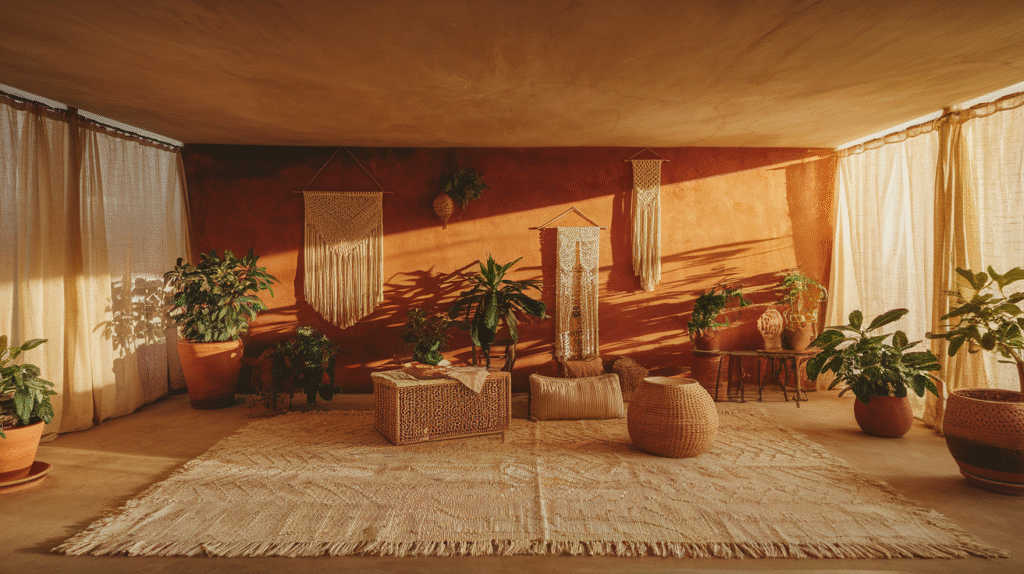
Boho style emerged from the bohemian lifestyle of artists, writers, and free spirits who rejected conventional living.
They mixed global influences from their travels with vintage finds and handmade pieces, creating spaces that told stories rather than following rulebooks.
This history matters because it explains why boho decor feels so personal and authentic—it was never meant to be cookie-cutter perfect.
The key characteristics that define boho style include layered textures that create visual depth, natural materials like wood and rattan that bring the outdoors in, vintage finds that add character and history, and most importantly, personal expression that makes your space uniquely yours.
Unlike minimalist or modern styles that demand precision and matching sets, boho actively encourages mixing patterns, combining eras, and displaying your collections.
What makes this particularly exciting for budget-conscious decorators? Boho style actually prefers thrifted pieces and DIY projects over expensive retail furniture.
That worn leather chair with the perfect patina? More valuable in boho design than a pristine new piece.
Those handmade macramé wall hangings? More authentic than mass-produced art. Your budget limitations become creative advantages in this style.
Core Elements of Boho Decor
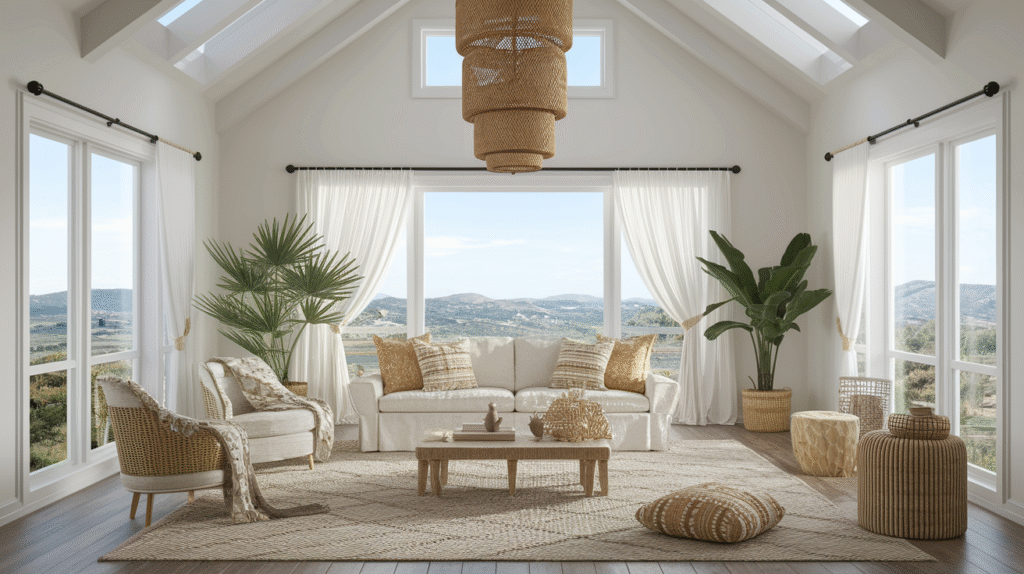
Color palettes in boho spaces typically draw from nature. Think earthy neutrals like cream, tan, and warm browns that create a calming foundation.
Layer in jewel tones—deep emerald, sapphire blue, or rich burgundy—for drama and sophistication.
Warm terracotta and rust shades add that sun-baked, global influence that defines the aesthetic.
The beauty of this palette? You can start neutral and add pops of color gradually as you find pieces you love.
Texture matters more in boho design than in any other style. Macramé adds intricate detail and handmade charm.
Rattan brings organic shapes and natural warmth. Woven fabrics like kilim rugs and embroidered textiles create visual interest.
Natural fibers including jute, seagrass, and linen add subtle texture that registers subconsciously, making spaces feel more inviting.
The “more is more” philosophy applies here, but with intention—each texture should complement rather than compete with the others.
Understanding these core elements gives you a framework for making decisions. When you’re thrifting or shopping, you’ll recognize pieces that fit the aesthetic.
When you’re arranging your space, you’ll know which textures to combine for maximum impact. This knowledge transforms random decorating into intentional design.
Why Boho Works for Every Space
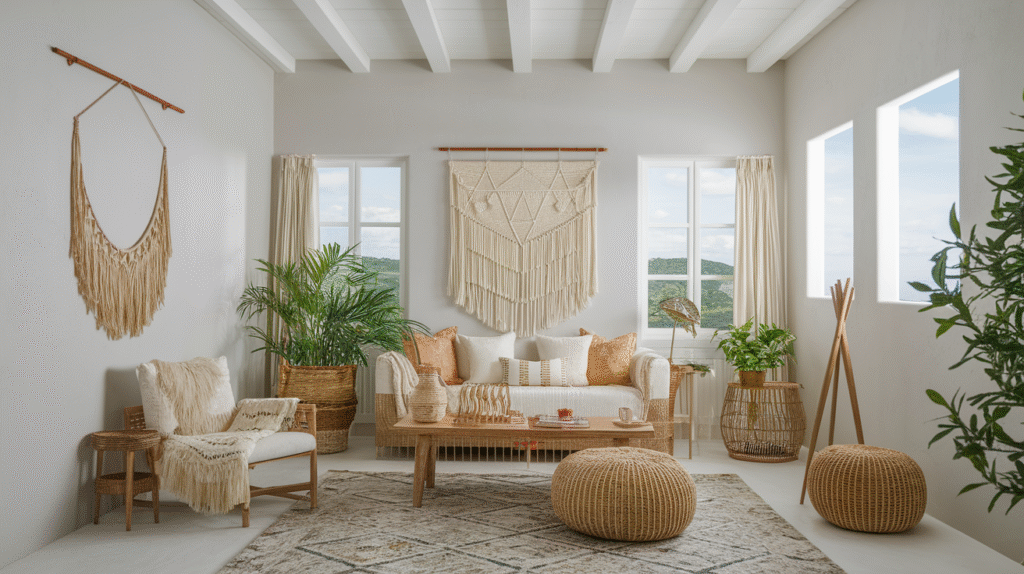
Boho style adapts beautifully whether you’re decorating a 300-square-foot studio or a sprawling house.
In small apartments, the layered approach actually makes spaces feel cozier rather than cramped.
The vertical elements—hanging plants, wall tapestries, and tall shelving—draw the eye upward, making ceilings feel higher.
In larger homes, boho’s eclectic nature helps you define distinct zones without rigid room divisions.
For renters, boho decor is a gift. Most elements are completely removable and temporary. Tapestries hang with command strips.
Plants sit in portable planters. Rugs layer over existing flooring. Furniture moves easily. You can create a stunning transformation without losing your security deposit or violating lease terms. This rental-friendly nature means you’re never stuck with permanent choices you might regret.
Perhaps the best feature of boho style? It grows with you organically. You don’t need to complete your space in one shopping trip or stick to a rigid plan. Found a gorgeous vintage mirror at an estate sale next month? It’ll fit right in.
Want to swap out throw pillows seasonally? The eclectic nature accommodates constant evolution. Your space becomes a living reflection of your journey, not a static museum display.
Budget-Friendly Boho Textiles That Create Instant Impact
Layered Rugs for Dramatic Effect
Layering rugs delivers one of the most dramatic transformations you can achieve in boho decor, and it’s surprisingly affordable.
Start with a large, neutral base rug—jute and seagrass rugs from discount retailers often cost under $100 and provide the perfect foundation.
Then layer a smaller, patterned rug on top. This technique defines spaces in open-concept apartments, adds warmth to cold floors, and creates visual interest that elevates the entire room.
The beauty of layered rugs? You’re not searching for one perfect (expensive) rug. Instead, you’re combining two or three affordable pieces to create something unique.
Check vintage shops for Persian-style runners with worn patinas—these imperfections add character in boho spaces.
Online marketplaces often have sellers offering handwoven rugs directly from artisans at prices that undercut retail stores.
Discount retailers carry surprisingly chic options if you shop seasonally when new collections arrive.
Mixing patterns and textures requires a light touch, but follow this guideline: vary the scale of patterns.
If your base rug has a tight weave with small details, your top rug should feature larger, bolder patterns. Combine geometric designs with organic florals.
Pair flat-weave kilims with plush, high-pile rugs for textural contrast. The key is creating conversation between pieces rather than competition.
Stand back and assess—your eye should move comfortably across the layers, not get stuck on jarring clashes.
Throw Pillows and Cushions: The Easy Update
Throw pillows offer the fastest, most affordable way to refresh your space seasonally or whenever you crave change.
Creating a chic pillow arrangement starts with varying sizes—combine standard 18-inch squares with oversized 24-inch pillows and smaller 12-inch accent pillows.
Mix patterns fearlessly: pair tribal prints with velvet solids, combine embroidered florals with geometric designs, and add textured pieces like chunky knit or macramé-trimmed pillows.
DIY pillow covers from vintage scarves or fabric remnants cost almost nothing and add one-of-a-kind character to your space.
Visit thrift stores and look for silk scarves with intricate patterns—you can sew basic envelope-style pillow covers in under an hour with minimal sewing skills.
Fabric stores often have remnant bins where gorgeous textiles sell for a fraction of their original price.
This approach gives you custom pieces that nobody else owns, which perfectly captures the boho spirit.
Color coordination in boho spaces follows a simple rule: establish a cohesive palette with three to five main colors, then allow variations within those families.
If you’re working with terracotta, cream, and deep teal, your pillows can include burnt orange, rust, ivory, sage green, and navy—all related to your core colors but varied enough to create interest.
Metallics like gold and copper act as neutrals in boho design, tying disparate colors together beautifully.
Tapestries and Wall Hangings
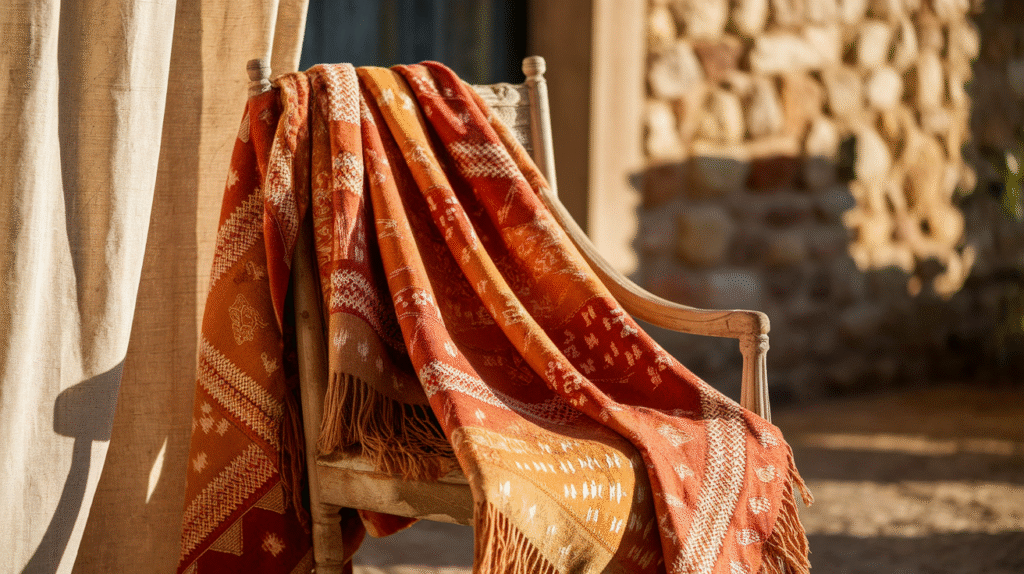
Tapestries solve the biggest challenge renters face: boring, blank walls that you can’t paint or permanently alter.
Large-scale tapestries create instant drama and completely transform the feel of a room. Hang them with command strips or removable hooks—the fabric’s weight distributes across multiple hanging points, so you won’t damage walls.
This rental-friendly approach means you can have that statement wall you’ve been craving without risking your security deposit.
Macramé wall hangings have become iconic in boho spaces, and you have two affordable options.
Buy ready-made pieces from artisan marketplaces for $20-50, supporting small makers while getting authentic handmade decor.
Or dive into DIY—macramé requires only cotton cord (about $15 for enough to make several pieces) and basic knot-tying skills you can learn from free YouTube tutorials.
A simple wall hanging takes 2-3 hours to create, and the meditative process of knotting becomes its own reward.
Textiles add softness that hard surfaces can’t provide. They absorb sound, making rooms feel quieter and more intimate.
They introduce organic shapes and flowing lines that contrast beautifully with rigid furniture and architectural elements.
They create focal points that draw the eye upward, making rooms feel larger and more thoughtfully designed.
For under $50, you can hang a stunning tapestry that transforms your entire bedroom or living area—that’s the kind of budget-friendly impact that makes boho decor so accessible.
Bringing Nature Indoors: Plants and Natural Elements
The Power of Plants in Boho Spaces
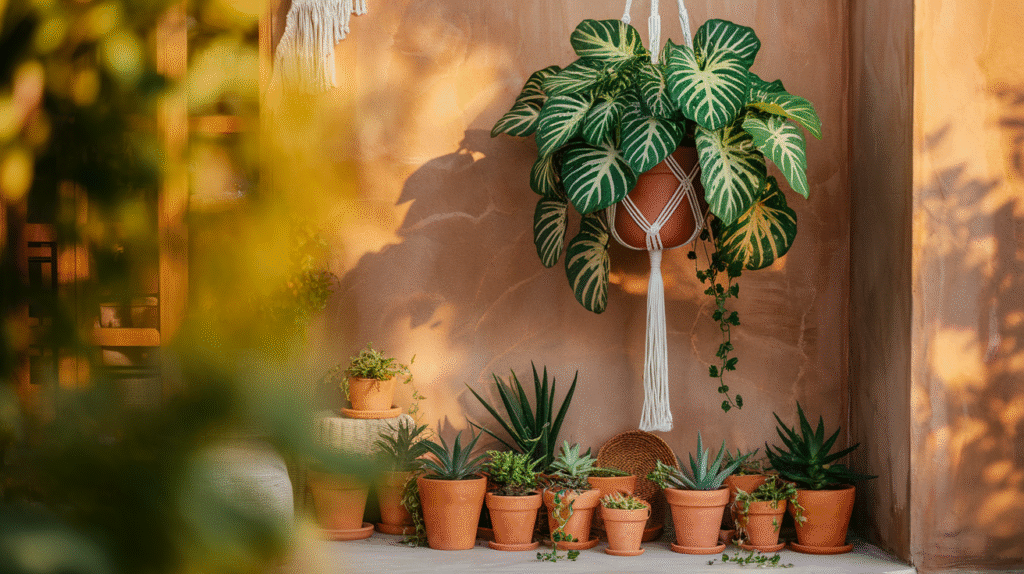
Plants breathe life into boho rooms—literally and figuratively. They purify air, add vibrant green tones that complement earthy palettes, and create that lush, jungle-inspired atmosphere that defines the style.
But here’s what matters for beginners: you don’t need a green thumb to succeed. Focus on low-maintenance varieties that forgive occasional neglect and thrive in various light conditions.
Pothos ranks as the ultimate beginner plant. It tolerates low light, survives if you forget to water it for a week, and grows trailing vines that look stunning cascading from shelves or hanging planters.
Snake plants (also called mother-in-law’s tongue) practically thrive on neglect—they prefer infrequent watering and adapt to almost any light level.
Succulents and cacti need minimal water and add sculptural interest with their geometric shapes and varied textures.
Creating a stunning plant display works on any budget. Start with a few larger statement plants—a fiddle leaf fig or monstera creates dramatic impact (buy small specimens that will grow rather than expensive mature plants).
Add medium-sized plants at different heights using plant stands, shelves, or hanging planters. Fill in with small succulents and trailing plants.
This varied approach creates visual interest and makes your collection look intentional rather than random.
Shop local nurseries during seasonal sales, check grocery store floral sections for affordable options, and propagate cuttings from friends’ plants to grow your collection for free.
Natural Materials and Organic Touches
Rattan and wicker furniture bring instant boho credibility to any space. These natural materials add warmth, texture, and that global-inspired aesthetic without the weight and expense of solid wood furniture.
Check thrift stores and estate sales for vintage rattan chairs, side tables, and shelving units—pieces from the 1970s often need just a quick cleaning to look fresh again.
New rattan furniture has become more affordable as the style has gained popularity, with many retailers offering peacock chairs, hanging egg chairs, and rattan coffee tables at accessible price points.
Driftwood, branches, and dried flowers cost nothing if you collect them yourself, yet they add effortless organic beauty to your decor.
Display a collection of interesting branches in a large floor vase. Arrange dried pampas grass or eucalyptus in vintage bottles on shelves.
Hang a substantial piece of driftwood as wall art or use it as a curtain rod for an unexpected twist.
These natural elements connect your indoor space to the outdoors and add sculptural interest that changes with the seasons.
Jute, seagrass, and bamboo accessories complete the natural material palette. Jute baskets provide attractive storage for everything from throw blankets to magazines.
Seagrass belly baskets work as planters or catch-all storage. Bamboo serving trays, coasters, and organizers add consistent natural texture throughout your space.
These accessories typically cost under $20 each but create cohesion when repeated across a room, making your space feel curated rather than randomly decorated.
Creating Your Indoor Jungle
Grouping plants at different heights creates visual drama and makes even a modest collection look impressive.
Use a tall plant stand or bookshelf for your highest plants—this draws the eye upward and makes ceilings feel taller.
Place medium-height plants on side tables, desks, or window sills at eye level when seated.
Arrange small plants on coffee tables or clustered on the floor in corners. This varied height approach mimics how plants grow in nature and creates depth in your space.
DIY plant stands from thrifted items cost almost nothing and add character. Stack vintage suitcases or wooden crates to create tiered displays.
Use an old ladder as a leaning shelf for multiple plants. Flip a wooden stool upside down for an instant modern plant stand.
These creative solutions look intentional and add personality while keeping your budget intact.
The slight imperfections and vintage character of repurposed items actually enhance the boho aesthetic rather than detracting from it.
Caring for plants doesn’t need to overwhelm your schedule. Group plants with similar watering needs together—your succulents in one area, your tropical plants in another.
Set a phone reminder to check plants weekly rather than trying to remember randomly. Use moisture meters (under $10) to eliminate guessing about when to water.
Choose self-watering planters for plants you tend to forget. The goal is enjoying your green companions, not creating a stressful maintenance routine that makes you resent them.
Furniture and Layout Ideas for Cozy Boho Vibes
Low-Profile Seating for Relaxed Living
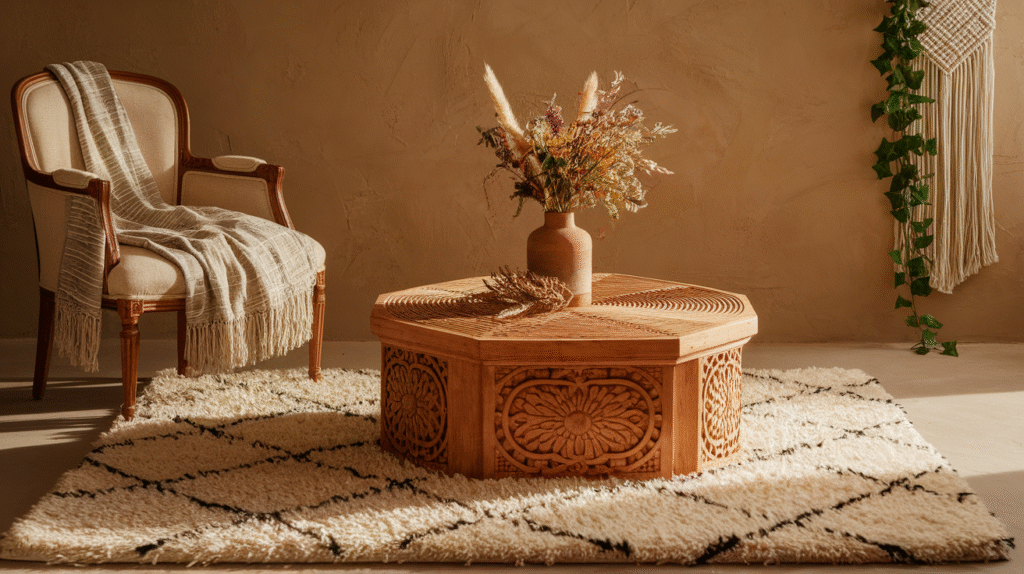
Floor cushions, poufs, and meditation pillows create that relaxed, globally-inspired seating arrangement that defines boho living spaces.
These low-profile options encourage casual gathering, make rooms feel more spacious by keeping sight lines open, and provide flexible seating that you can rearrange instantly. Stack large floor cushions against walls for lounge-style seating.
Cluster poufs around a low coffee table for intimate conversation areas. Layer meditation cushions with throw pillows for comfortable floor seating that works for movie nights or game nights.
Thrifted furniture makeovers transform boring pieces into boho statement furniture for minimal investment.
Sand down that dated wooden dresser and apply a warm walnut stain for rich, natural beauty.
Paint a basic side table in deep terracotta or sage green to complement your color palette. Add new hardware—leather pulls or brass knobs—to completely change a piece’s character.
These simple updates cost under $30 per piece but deliver custom furniture that looks far more expensive than it was.
Mixing vintage and modern pieces creates that elegant, collected-over-time look that makes boho spaces feel authentic rather than staged.
Pair a mid-century modern sofa with a vintage Moroccan pouf. Combine a sleek glass coffee table with a rustic wooden bench.
Place a contemporary floor lamp next to a Victorian-era armchair. This juxtaposition of eras creates visual interest and tells a story about your personal style evolution.
The key is finding common elements—similar wood tones, complementary colors, or repeated shapes—that tie disparate pieces together.
Multi-Functional Furniture for Small Spaces
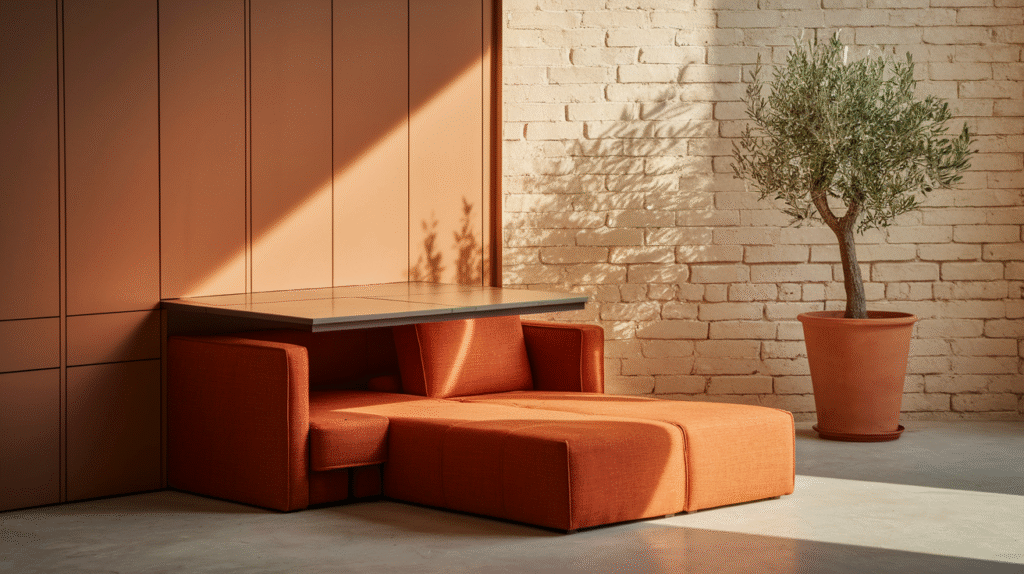
Storage ottomans and trunks serve double duty in boho spaces, providing both seating and hidden storage while adding texture and character.
A large woven ottoman becomes a coffee table when topped with a tray, extra seating when guests arrive, and storage for throw blankets year-round.
Vintage trunks offer substantial storage while adding that traveled, worldly aesthetic that defines boho style.
Look for pieces with interesting hardware, worn leather, or unique shapes that become conversation starters rather than just functional furniture.
Folding screens work magic in small spaces, creating room division without permanent walls while adding decorative impact.
Use a carved wooden screen to separate sleeping and living areas in a studio apartment. Place a woven rattan screen to hide storage areas or create a dressing space in a bedroom.
These portable dividers add vertical interest, introduce new textures, and solve practical problems while remaining completely rental-friendly.
Bonus: they’re easy to find at thrift stores and often need only minor repairs or a fresh coat of paint.
Ladder shelves and open shelving maximize vertical space while providing display and storage opportunities.
Ladder-style shelves lean against walls without requiring mounting, making them perfect for renters.
Open shelving creates breathing room in small spaces—closed cabinets can make rooms feel cramped, while open shelves keep things feeling airy.
Style these shelves with a mix of practical items (baskets for storage, books, plants) and decorative objects (small sculptures, candles, framed photos) to create displays that are both functional and beautiful.
Creating Intimate Conversation Areas
Arranging furniture to encourage connection transforms a room from just a space into a gathering place. Pull seating pieces closer together than feels initially comfortable—conversation areas work best when people sit 4-6 feet apart, not 10 feet across a room. Angle chairs slightly toward each other rather than lining them up against walls. Create multiple small seating areas in larger rooms rather than one big arrangement—this makes spaces feel cozier and gives people options for different types of interaction.
Area rugs define zones in open-concept or studio apartments without requiring walls or permanent dividers. Place a large rug under your seating area to create a living room zone. Use a smaller rug under your dining table to define eating space. A sheepskin or small vintage rug beside your bed creates a distinct sleeping zone. These visual boundaries help your brain recognize different functional areas, making even small spaces feel organized and intentional rather than chaotic.
The art of “cocooning” means making spaces feel cozy without crossing into cramped territory. Layer soft textures—throw blankets, plush pillows, soft rugs—to create tactile comfort. Use warm lighting instead of harsh overhead lights to soften the atmosphere. Bring furniture slightly away from walls to create intimate groupings rather than perimeter arrangements. Add plants and textiles to soften hard edges and absorb sound. These elements work together to create spaces that feel like warm embraces, inviting you to settle in and stay awhile.
Lighting That Sets the Perfect Boho Mood
Warm, Ambient Lighting Solutions
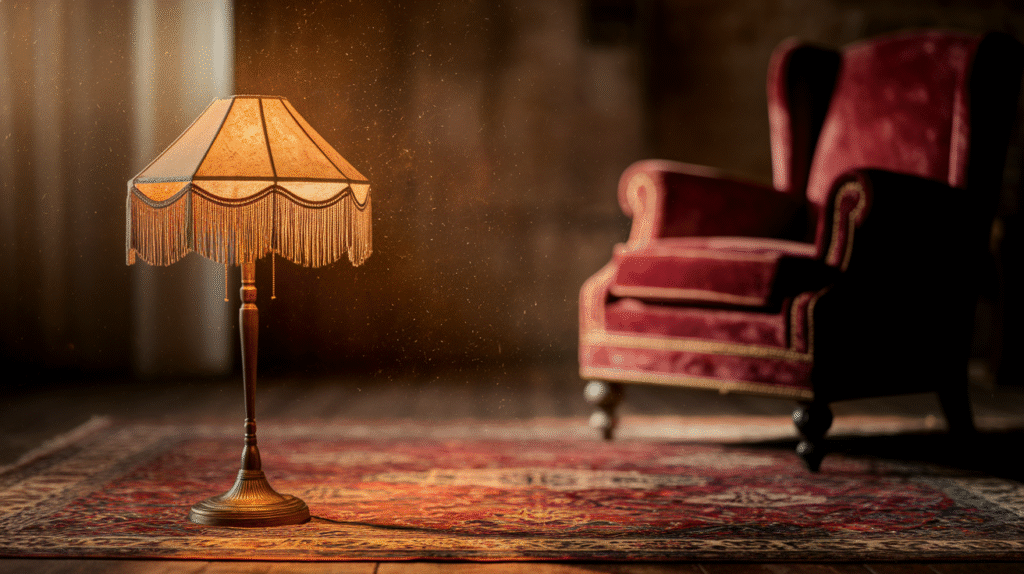
String lights and fairy lights deliver instant atmosphere for minimal investment—we’re talking $10-20 for transformative impact. Drape them along walls in gentle swoops for a dreamy, romantic glow. Weave them through a headboard or along a bookshelf for subtle accent lighting. Hang them in a canopy over your bed for an enchanted, cozy sleeping space. The warm, diffused light they provide softens harsh architectural elements and creates that magical, lived-in feeling that defines boho spaces.
Paper lanterns and woven pendant lights create stunning focal points while providing functional illumination. Paper lanterns in varying sizes clustered at different heights add sculptural interest and soft, diffused light. Woven pendant lights made from rattan, bamboo, or seagrass cast beautiful shadow patterns while introducing natural texture. These fixtures typically cost $30-80 and can be installed as plug-in options (more on that in the next section) or hardwired if you own your space. The organic shapes and natural materials perfectly complement the boho aesthetic while serving a practical purpose.
Salt lamps and candles provide cozy, natural glow that enhances the warm, inviting atmosphere you’re creating. Salt lamps emit a peachy-pink light that feels soothing and adds mineral texture as a decorative object. Cluster candles in varying heights on a tray for a romantic centerpiece. Use pillar candles in hurricane vases for safe, dramatic impact. LED candles offer the same flickering ambiance without fire risk if you have pets or small children. This layered lighting approach creates depth and allows you to adjust the mood for different times of day or activities.
Rental-Friendly Lighting Updates
Plug-in pendant lights revolutionize rental lighting by providing custom fixtures without requiring an electrician or permanent installation. These ingenious solutions include a long cord that plugs into any outlet and a decorative cord cover that runs up the wall and across the ceiling. You can hang a stunning rattan pendant light over your dining table or a woven fixture in your bedroom without touching a single wire. Swag hooks and command strips support the cord, and everything removes cleanly when you move. This rental-friendly solution costs $40-100 and completely transforms your lighting.
Floor and table lamps with natural materials anchor your lighting plan while reinforcing the boho aesthetic. Look for lamps with wooden bases, ceramic bodies in earthy glazes, or rattan shades that filter light beautifully. Tripod floor lamps made from wood add sculptural interest and adjustable task lighting. Arc floor lamps reach over seating areas to provide overhead-style lighting without ceiling installation. These portable lighting solutions give you complete control over your space’s illumination while remaining easy to move or take with you.
Smart bulbs and dimmer switches offer adjustable ambiance without changing any fixtures. Smart bulbs screw into existing lamps and allow you to control brightness and sometimes color temperature from your phone. Some models let you program lighting schedules or create scenes for different moods. Plug-in dimmer switches work with any lamp, giving you instant control over light levels. These technologies cost $10-30 per bulb or switch but deliver professional-level lighting control that adapts to your needs throughout the day.
Layering Light for Depth and Drama
Combining overhead, task, and accent lighting creates the kind of sophisticated, layered illumination that makes spaces feel professionally designed. Overhead lighting (ceiling fixtures or tall floor lamps) provides general illumination for moving through the space. Task lighting (desk lamps, reading lights) focuses on specific activities. Accent lighting (string lights, candles, spotlights on art) highlights architectural features or decorative elements. This three-layer approach eliminates harsh shadows, creates visual interest, and allows you to adjust lighting for different activities or times of day.
Strategic placement matters especially in small spaces where every element needs to work harder. Place a floor lamp behind a reading chair to provide task lighting while also illuminating the corner and making the room feel larger. Use uplighting (lamps that shine upward) to bounce light off ceilings and create the illusion of height. Position accent lights to highlight your best features—a gallery wall, a plant collection, or a beautiful textile. Avoid placing all lights at the same height, which creates flat, uninteresting illumination.
Decorative light fixtures create shadow play that adds drama and visual texture to your walls and ceilings. Woven pendant lights cast intricate shadow patterns that change as natural light shifts throughout the day. Moroccan-style pierced metal lanterns create beautiful dappled light effects. Even simple paper lanterns with interesting cutouts add decorative shadows. This interplay of light and shadow adds dimension to flat surfaces and creates ever-changing visual interest that keeps your space feeling dynamic rather than static.
Wall Decor and Personal Touches Without Damage
Gallery Walls and Art Displays
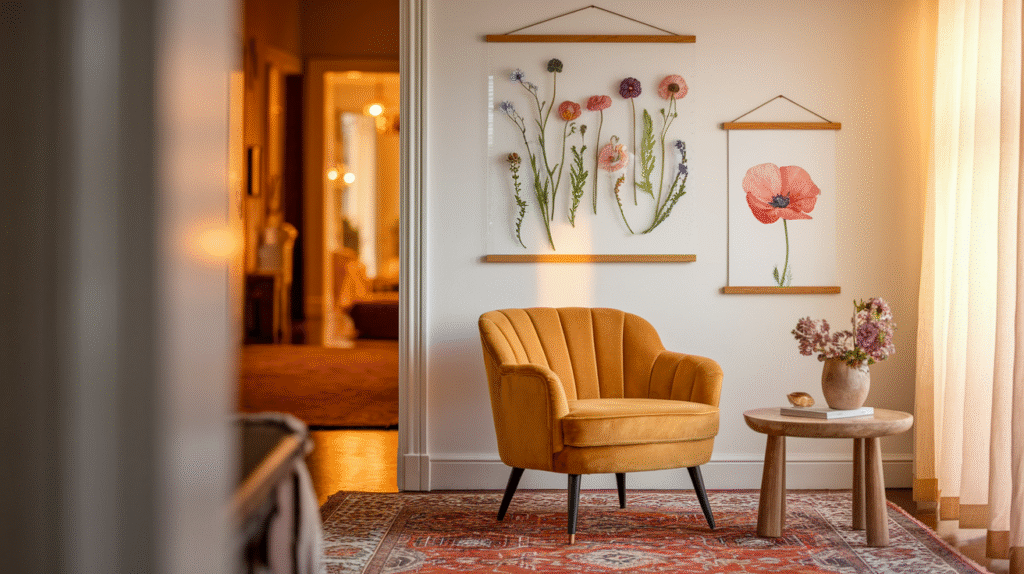
Creating a chic gallery wall with command strips and removable hooks gives you the custom art display you crave without the permanent commitment or wall damage. Start by laying out your arrangement on the floor—photograph it so you remember the placement. Use command strips rated for the weight of each frame (check the package). Hang the center piece first at eye level (about 57-60 inches from the floor), then work outward. This approach lets you create stunning, salon-style walls that you can change seasonally or take with you when you move.
Mixing frames, mirrors, and three-dimensional objects creates depth and interest that flat art alone can’t achieve. Combine vintage gold frames with modern black frames and natural wood frames for eclectic appeal. Intersperse small mirrors to reflect light and add sparkle. Include three-dimensional elements like small woven baskets, macramé pieces, or shadow boxes with collected objects. Vary the sizes dramatically—pair large statement pieces with tiny accent frames. This mixed-media approach feels curated and personal rather than matchy-matchy.
Budget-friendly art sources abound if you know where to look. Download printable art from Etsy for $3-8, then print at your local copy shop or home printer. Thrift stores offer vintage prints, interesting frames, and unexpected treasures for under $10. Frame pages from old books, vintage botanical prints, or maps for sophisticated wall art. Use your own photography—those vacation shots you love deserve to be displayed. Create abstract art yourself with canvas and acrylic paint (it’s easier than you think). The goal is filling your walls with images and objects that resonate with you, not impressing anyone with expensive pieces.
Mirrors for Light and Space
Mirrors transform small rooms by reflecting natural light and creating the illusion of expanded space. Place a large mirror opposite a window to bounce daylight throughout the room, effectively doubling your natural light. Lean an oversized floor mirror against a wall in a corner to make the room feel twice as large. Hang a mirror at the end of a narrow hallway to create depth. These strategic placements work optical magic that makes your space feel more open and brighter without any structural changes.
Vintage mirror finds offer character and affordability that new mirrors can’t match. Estate sales and thrift stores regularly feature ornate vintage mirrors with gorgeous frames for $20-50. The aged glass with slight imperfections adds character that brand-new mirrors lack. Sunburst mirrors from the 1960s-70s bring retro charm. Moroccan-style mirrors with intricate frames add global flair. Even if the frame needs work, a quick coat of spray paint in gold, black, or a bold color transforms a dated piece into a statement item.
Creative hanging solutions for renters include leaning large mirrors against walls rather than hanging them (this works especially well with floor mirrors), using command strips designed specifically for mirrors, or creating a gallery wall of smaller mirrors that distribute weight across multiple hanging points. For heavier vintage mirrors, use picture-hanging strips rated for the weight, following package directions carefully. These solutions let you enjoy the light-enhancing, space-expanding benefits of mirrors without risking your security deposit.
Personal Collections as Decor
Displaying travel souvenirs, vintage finds, and meaningful objects makes your space authentically yours. That collection of pottery from your trip to Mexico? Display it on open shelving. Vintage cameras from flea markets? Arrange them on a bookshelf. Meaningful objects from family members? Give them prominence on a mantel or side table. These personal items tell your story and create conversation starters that mass-produced decor never could. The boho aesthetic celebrates this kind of personal curation—your collections become the art.
Floating shelves provide perfect platforms for rotating displays that keep your space feeling fresh. Install floating shelves (or use removable options for rentals) at varying heights on a wall. Style them with a mix of books, small plants, decorative objects, and personal treasures. Change the display seasonally or whenever you acquire new pieces. This flexibility keeps your decor feeling current and allows you to showcase different aspects of your personality over time. The key is editing—less is more when it comes to small objects, so choose your favorites rather than displaying everything.
The boho principle that your story makes your space unique gives you permission to break traditional decorating rules. That quirky collection of vintage teacups? Display them. Those concert posters from your favorite bands? Frame them. That weird but wonderful sculpture you couldn’t resist? Give it a place of honor. Boho style celebrates the eclectic, the unexpected, and the personal. Your space should reflect who you are, not what a magazine says you should like. This authenticity creates spaces that feel genuinely welcoming because they’re genuinely you.
Creating Your Perfect Boho Sanctuary
Boho decor delivers exactly what budget-conscious decorators and renters need: stunning style without permanent commitment or expensive investment. This forgiving, mix-and-match aesthetic welcomes thrifted treasures, DIY projects, and personal collections while creating spaces that feel warm, inviting, and completely unique.
Start with textiles—layer rugs, pile on throw pillows, and hang a statement tapestry. These affordable elements create instant impact and set the foundation for your boho transformation. Add plants next, starting with low-maintenance varieties that bring life and color to your space. Then focus on lighting, layering warm, ambient sources that create the cozy atmosphere you’re craving. These three elements—textiles, plants, and lighting—deliver the most dramatic transformation for the least investment.
Mix textures fearlessly, combining smooth with rough, soft with structured, natural with metallic. Embrace imperfection—that slightly worn vintage chair or the handmade macramé with uneven knots adds character that perfect pieces lack. Let your personality shine through every choice, from the colors you select to the objects you display. Your space should feel like a warm embrace that welcomes you home, not a sterile showroom that intimidates you.
You don’t need to complete your boho transformation overnight. This style actually improves when it evolves organically over time. Each thrifted find, each plant you propagate, each DIY project you complete adds another layer to your story. Start with one area—perhaps a cozy reading nook with floor cushions and string lights, or a bedroom refresh with layered textiles and hanging plants. These manageable projects build momentum and confidence.
This weekend, visit your local thrift store with fresh eyes. Look for natural materials, interesting textures, and pieces with character. Grab a few throw pillows in colors that speak to you. Pick up a vintage mirror or a rattan basket. These small additions start your transformation without overwhelming your budget or your space.
Your boho space is waiting to emerge. It doesn’t require perfection, just intention. It doesn’t demand a huge budget, just creativity. It doesn’t need to match anyone else’s vision, just yours. Small changes create dramatic impact when layered thoughtfully—that’s the magic of boho style.
Ready to transform your space? Start today. Choose one corner, one wall, one area to reimagine. Add a plant, hang a tapestry, layer a rug. Watch how these simple changes shift the entire energy of your room. Share your transformation journey with friends who need inspiration, and remember: your space should tell your story. Boho style gives you permission to be creative, eclectic, and authentically you. That’s not just good design—that’s good living.