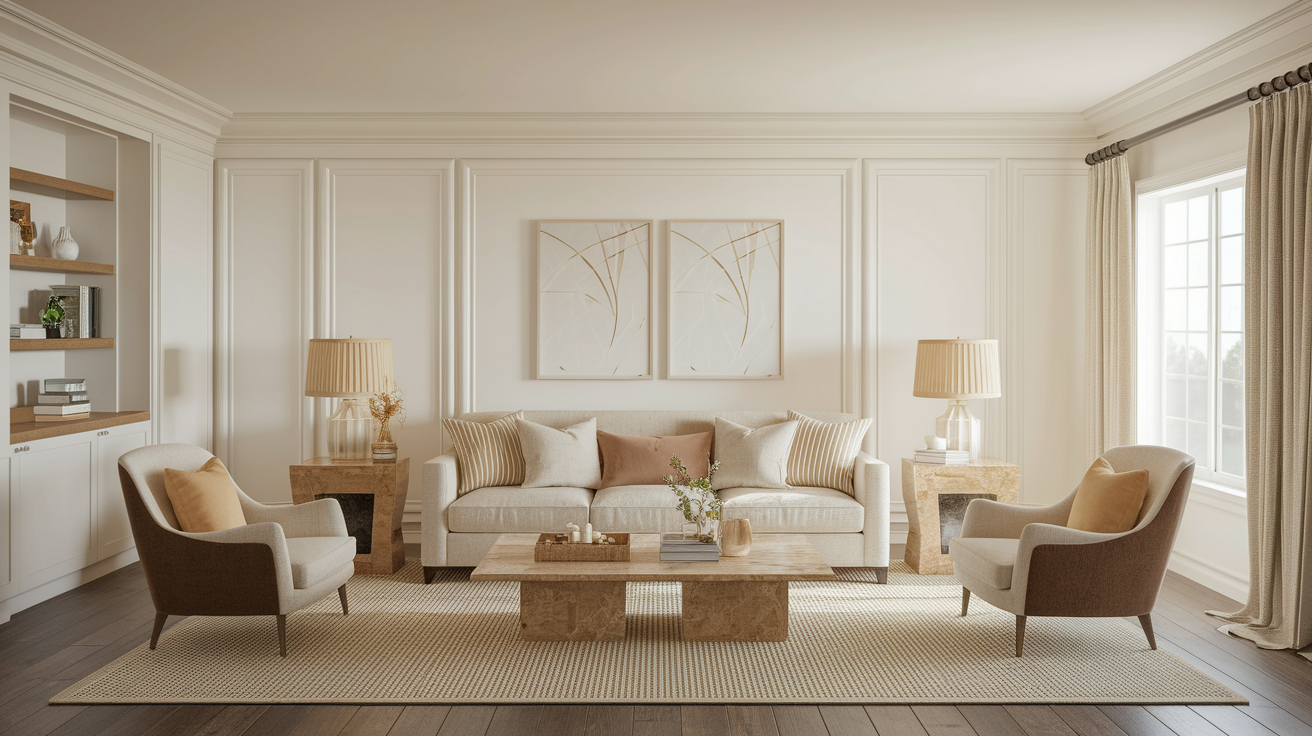
Your living room should be more than just a place to collapse after a long day—it should be a sanctuary that recharges your soul without draining your wallet.
If you’re tired of cold minimalism that feels sterile or cluttered traditional spaces that overwhelm you, the Japandi transitional mash-up delivers the perfect middle ground.
This design approach isn’t another fleeting trend that’ll look dated in two years. It’s a thoughtful fusion of Japanese minimalism, Scandinavian warmth, and transitional flexibility that creates spaces as practical as they are stunning.
Whether you’re renting a studio apartment or redesigning your forever home, this style adapts to your life—not the other way around.
Let me show you how to create a living room that feels like a breath of fresh air, costs less than you’d expect, and never goes out of style.
Understanding the Japandi Transitional Mash-Up (What Makes It Different)
The Perfect Marriage: Japanese Minimalism Meets Scandinavian Warmth
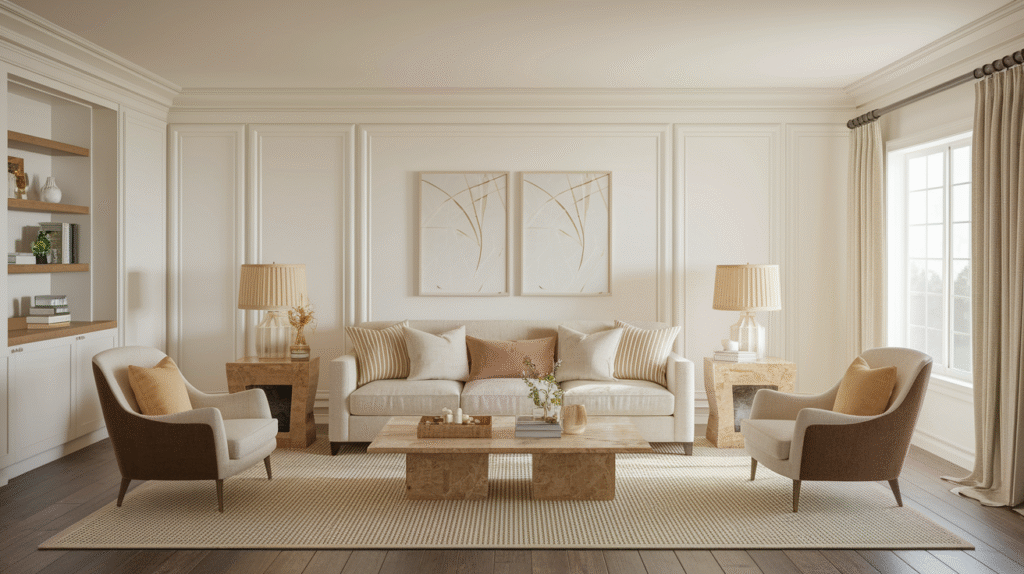
Japandi isn’t just minimalism with a few plants thrown in. It’s the deliberate blending of two design philosophies that complement each other beautifully.
Japanese design brings wabi-sabi—the art of finding beauty in imperfection and impermanence.
That handmade ceramic bowl with the slightly uneven glaze? That’s wabi-sabi. The vintage wooden stool with natural wear patterns? Also wabi-sabi.
Scandinavian design contributes hygge—that untranslatable Danish concept of cozy contentment.
Think chunky knit throws, warm lighting, and spaces that invite you to curl up with a book. When you combine these philosophies, you get rooms that feel calm yet inviting, minimal yet lived-in.
The transitional element bridges modern and traditional aesthetics, which means you’re not locked into one rigid style. You can mix that sleek modern sofa with a vintage side table your grandmother gave you. This flexibility makes the style perfect for renters who can’t make permanent changes or homeowners who want to evolve their space gradually without starting from scratch every few years.
Key Design Elements That Define the Look
The Japandi transitional aesthetic relies on specific materials and forms that create visual harmony. Natural materials form the foundation—light woods like oak and ash, bamboo accents, linen upholstery, wool textiles, and stone elements. These materials age gracefully, developing character over time rather than looking worn out.
Your color palette stays firmly in neutral territory: warm grays that feel sophisticated, sandy beiges that add warmth, soft whites that brighten without glaring, and muted earth tones like sage, terracotta, and charcoal.
This doesn’t mean boring—these colors create a serene backdrop that lets your carefully chosen pieces shine.
Furniture in this style sits low to the ground, creating visual calm and making ceilings feel higher.
Clean lines dominate, but you’ll also find organic curves that soften the look. A sofa with straight arms might pair with a round coffee table.
A rectangular bookshelf balances against curved ceramic vases. This interplay between geometric and organic shapes keeps spaces interesting without feeling chaotic.
Why Japandi Transitional Works for Every Budget
Here’s the best part: this style actually saves you money. The “less is more” philosophy means you’re buying fewer pieces, which lets you invest in quality items that last.
One beautiful solid wood coffee table beats five cheap particle board tables you’ll replace every few years.
The timeless aesthetic protects your investment. While trendy styles like farmhouse chic or industrial loft date themselves quickly, Japandi transitional looks current year after year. You won’t need to redecorate when design magazines move on to the next big thing.
DIY opportunities abound in this style. Thrift stores become treasure troves when you’re hunting for simple wooden furniture you can refinish, vintage ceramics, or natural fiber textiles.
That dated oak dresser for $30? Sand it down, apply natural oil, and you’ve got a piece that fits perfectly.
The style celebrates imperfection and authenticity, so handmade attempts look intentional rather than amateur.
Creating Your Foundation: Color, Materials & Textures
The Japandi Transitional Color Palette Made Easy
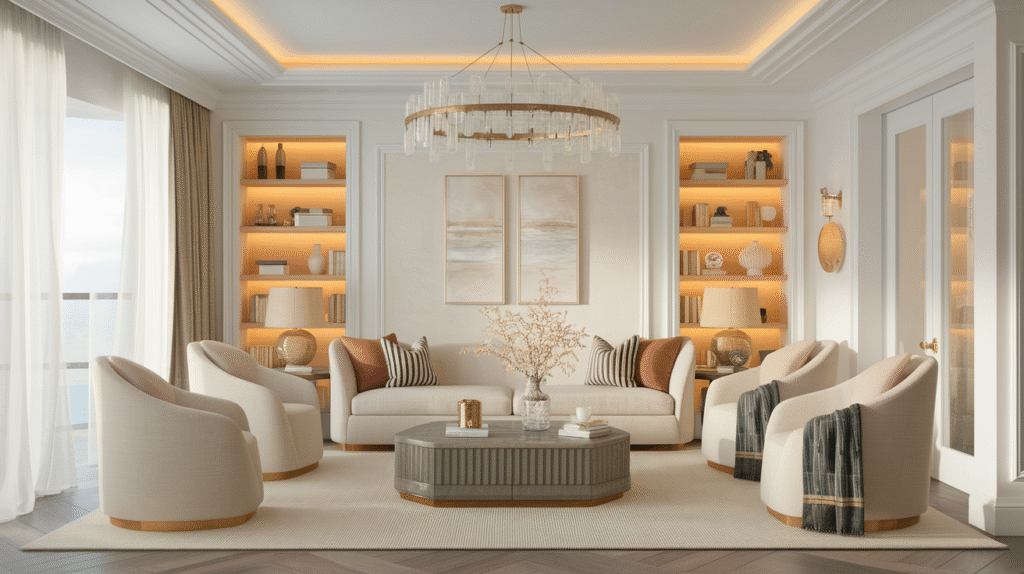
Start with warm whites on your walls—not stark builder white, but creamy, slightly off-white tones that feel welcoming.
If you’re renting and can’t paint, large-scale artwork or a neutral area rug establishes your color story just as effectively.
Your base colors should cover about 70% of your space: soft grays, sandy beiges, and those warm whites.
These create the calm foundation that makes the style work. For 20% of your space, introduce secondary neutrals like charcoal gray or warm taupe through larger furniture pieces or curtains.
The final 10% brings in muted accent colors—dusty rose pillows, a sage green throw, terracotta pottery, or a piece of abstract art with subtle color.
This 70-20-10 rule keeps your budget in check because you’re not repainting entire rooms or replacing major furniture when you want a refresh. Swap out that 10% of accent pieces, and your room feels completely different for under $200.
Layering Natural Materials for Instant Warmth
Wood tones anchor Japandi spaces, but mixing different woods intimidates many people. Here’s the secret: stick to similar undertones.
Light oak, ash, and maple all have warm, golden undertones that play well together. If you prefer cooler tones, walnut and teak work beautifully.
The key is avoiding extreme contrasts—don’t mix honey oak with dark espresso in the same sightline.
Textile layering transforms cold minimalism into cozy elegance. Start with a foundation like a linen sofa in oatmeal or gray. Add wool cushions in complementary neutrals—maybe charcoal and cream.
Drape a chunky knit throw over one arm. Place a jute or wool area rug underfoot. Each layer adds warmth and texture without visual clutter because everything stays in your neutral palette.
Stone and ceramic accents bring organic texture affordably. A ceramic vase from a local potter costs $30-50 and becomes a focal point.
River rocks in a wooden bowl add natural elements for free if you live near water. Concrete planters from home improvement stores deliver that stone aesthetic for $15-20.
These materials connect your space to nature, which both Japanese and Scandinavian design prioritize.
Texture Combinations That Create Cozy Elegance
The magic happens when you pair contrasting textures deliberately. Place a smooth ceramic vase on a rough-hewn wooden shelf.
Drape soft linen curtains next to walls with subtle texture. Set a sleek metal lamp on a woven basket side table. These contrasts create visual interest while maintaining the calm aesthetic.
Matte finishes dominate Japandi spaces—flat paint, unglazed ceramics, natural wood with oil finish rather than glossy polyurethane. But strategic subtle sheens prevent the look from feeling flat.
A brushed brass lamp, lightly glazed pottery, or silk-blend cushion catches light gently without the aggressive shine of chrome or high-gloss finishes.
For renters, removable wallpaper in subtle textures like grasscloth or linen patterns adds dimension without commitment.
Peel-and-stick options now look remarkably high-end. Area rugs layer over bland carpet, and fabric panels hung as makeshift headboards or wall art introduce texture you can take with you when you move.
Furniture Selection & Layout Secrets for Any Space
Essential Japandi Transitional Furniture Pieces
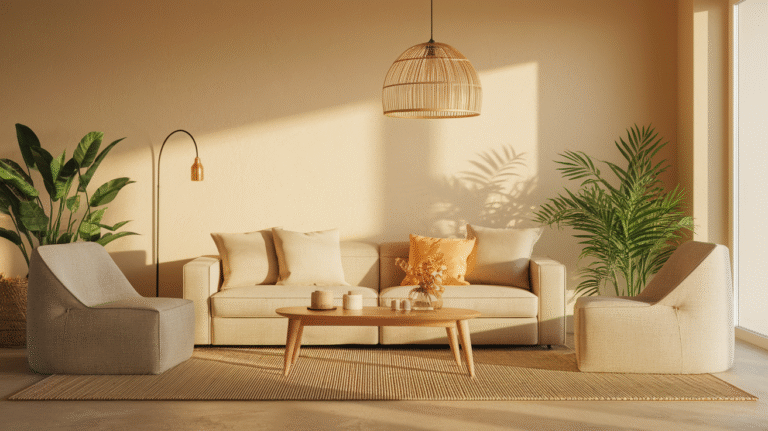
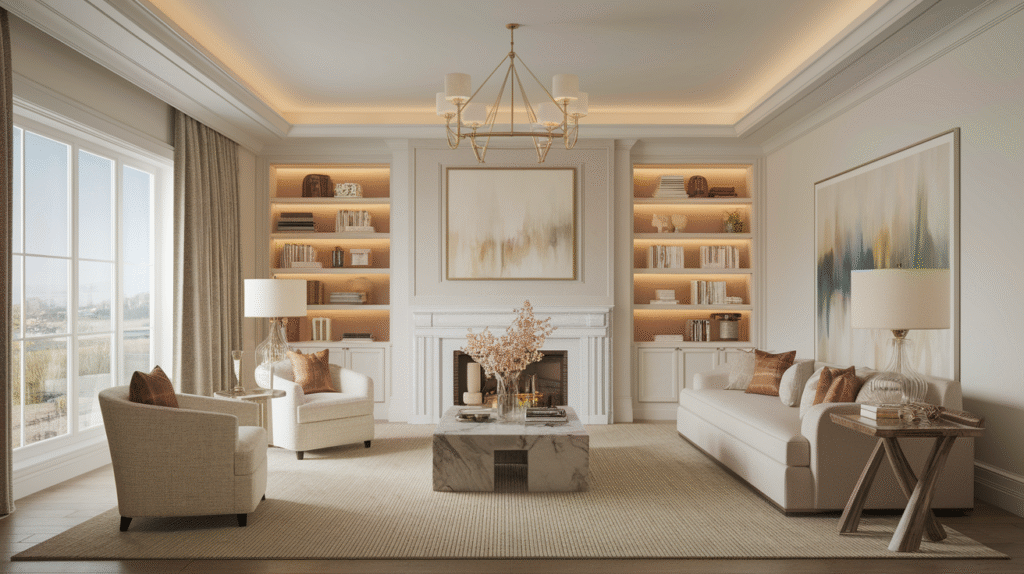
Your sofa sets the tone for the entire room. Look for low-profile designs with clean lines—arms no higher than the seat back, legs visible rather than skirted, neutral upholstery in linen or textured cotton.
You don’t need to spend $3,000. IKEA’s Kivik series, Article’s mid-range options, or even Target’s threshold line deliver the aesthetic for $800-1,500.
The key is avoiding overstuffed, high-backed traditional sofas or ultra-modern designs with chrome legs.
Coffee tables should work as hard as they look good. Opt for designs with lower shelves for book storage, drawers for remote controls, or lift-top mechanisms that create laptop-friendly surfaces.
Natural wood finishes—whether light oak or medium walnut—fit seamlessly. Round or oval shapes soften rectangular rooms, while rectangular tables with rounded corners split the difference.
Seating beyond the sofa adds flexibility without crowding. Floor cushions stack in a corner when not needed and pull out for guests. Poufs double as footrests and extra seating.
A single minimalist accent chair in a natural material like rattan or wood with linen cushions provides visual interest. You don’t need matching sets—in fact, the slight variation adds character.
Space-Saving Layouts for Small Living Rooms
Small spaces demand smart furniture placement. Float your sofa away from walls, even just 12 inches, and the room instantly feels larger.
This creates circulation space and prevents that “pushed against the walls” cramped feeling. In a 10×12 room, a 72-inch sofa floated with a slim console table behind it delivers more functionality than an 84-inch sofa crammed against the wall.
Multi-functional pieces earn their keep in tight quarters. An ottoman with hidden storage holds blankets and board games while serving as a coffee table with a tray on top.
Nesting tables tuck away when you need floor space for yoga or kids’ play, then pull out for entertaining.
A daybed or futon-style sofa in Japandi aesthetic transforms your living room into a guest room instantly.
The Japanese concept of “ma”—negative space—becomes your secret weapon. Western design tries to fill every corner, but Japandi celebrates space as a design element.
That bare corner isn’t something to fix with another plant stand. It’s breathing room that makes your space feel larger and calmer. Embrace it.
Styling Tips for Larger Spaces Without Clutter
Open-plan living rooms need intentional zones to avoid feeling like empty warehouses. Create a conversation area with your sofa and chairs, a reading nook with a floor lamp and cushioned bench, and perhaps a small workspace.
Define these zones with area rugs—each zone gets its own rug, which visually separates spaces without walls.
The challenge in large rooms is avoiding the “empty showroom” look while maintaining minimalism. Anchor pieces solve this problem.
A substantial sofa grounds your seating area. A large-scale piece of art (or a gallery wall of 3-5 pieces maximum) anchors a wall.
An oversized plant in the corner draws the eye. These statement pieces fill visual space without clutter.
Scale matters enormously in large rooms. Tiny furniture scattered around looks lost and makes the room feel even bigger.
Choose appropriately sized pieces—a sectional instead of a loveseat, a 48-inch round coffee table instead of a 30-inch square one, floor-to-ceiling curtains rather than window-length panels. Larger pieces in fewer quantities deliver the chic sophistication Japandi is known for.
The Finishing Touches: Décor, Lighting & Greenery
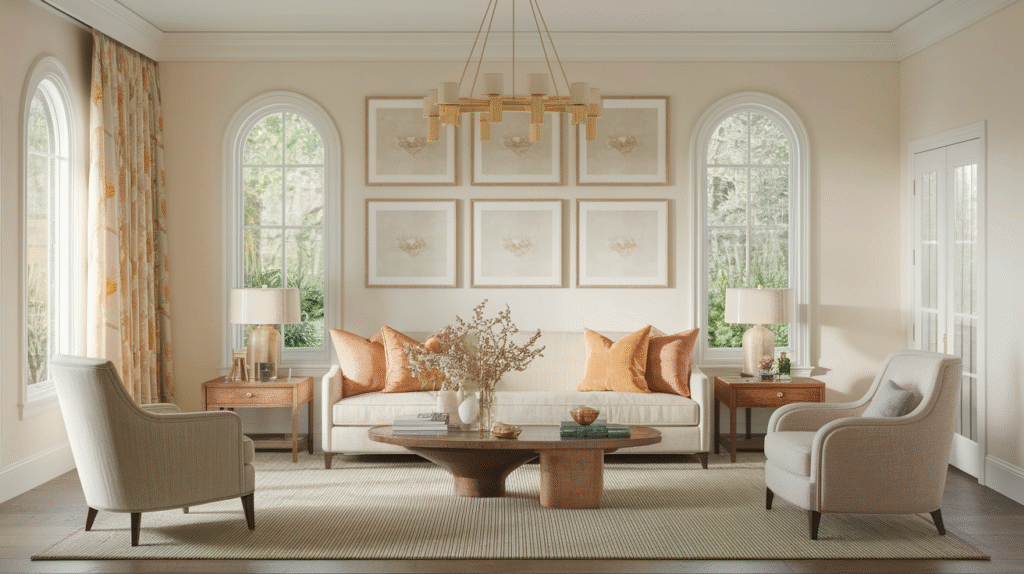
Curated Décor That Tells Your Story
Gallery walls in Japandi spaces follow strict rules: 3-5 pieces maximum, unified by similar frames or a cohesive color story.
Arrange them in clean geometric patterns—a horizontal line, a grid, or a balanced asymmetrical arrangement.
Each piece should have breathing room around it. This restraint creates stunning impact because each piece gets the attention it deserves.
Ceramics and pottery bring authentic Japanese influence affordably. Local pottery studios, Etsy shops, and even HomeGoods carry handmade-looking pieces for $20-60.
Look for organic shapes, muted glazes, and visible imperfections that embody wabi-sabi. A collection of three vases in varying heights, all in neutral tones, creates more visual interest than a dozen tchotchkes scattered around.
Natural and abstract art complements the aesthetic beautifully. Botanical prints in simple wood frames, abstract landscapes in muted colors, or black-and-white photography all work.
Avoid busy patterns, bright colors, or anything too literal. A single large-scale piece (30×40 inches or bigger) makes more impact than multiple small prints and costs roughly the same when you factor in framing.
Lighting Strategies for Effortless Ambiance
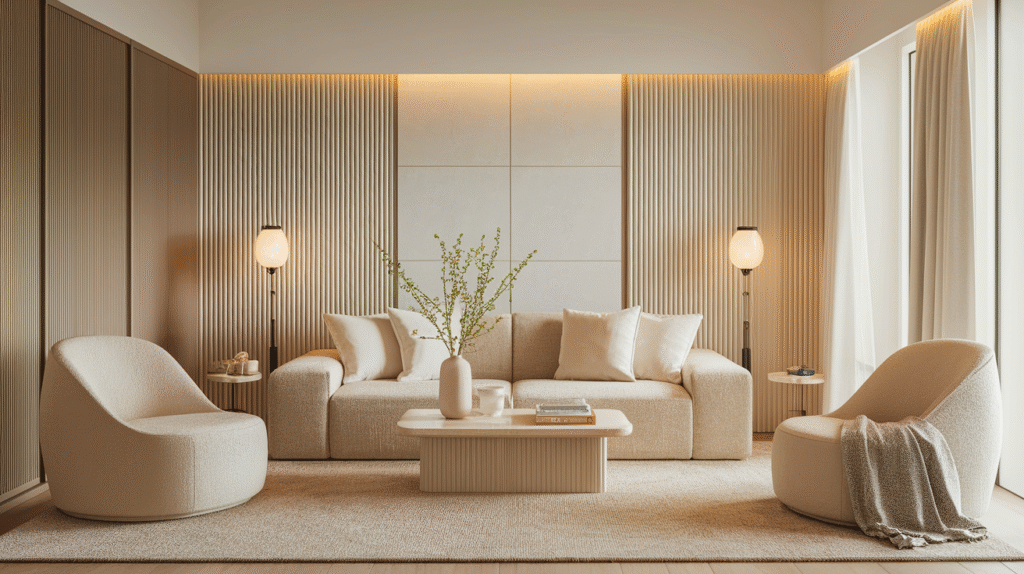
Layered lighting transforms your space from flat to dimensional. Ambient lighting—your overhead fixture or recessed lights—provides general illumination.
Task lighting—a floor lamp by your reading chair, a table lamp on your desk area—serves functional needs. Accent lighting—LED strips behind floating shelves, a small spotlight on artwork—adds drama.
Paper lanterns and woven pendants deliver instant Japandi style for $50-150. IKEA’s Regolit pendant at $15 punches way above its price point.
These fixtures diffuse light softly, creating the warm glow that makes spaces feel inviting. Hang them at varying heights in open spaces or use a single statement pendant over your coffee table.
Bulb temperature matters more than most people realize. The 2700K-3000K range produces warm white light that mimics evening sunlight—cozy and flattering.
Anything above 3500K starts feeling clinical and cold. Dimmable LED bulbs let you adjust brightness throughout the day, creating energizing light for morning coffee and ambient glow for evening relaxation. This simple switch costs under $30 and transforms your room’s mood instantly.
Bringing Nature Indoors the Japandi Way
Low-maintenance plants suit real life better than Instagram-worthy but finicky varieties. Snake plants tolerate neglect and low light. Pothos vines grow enthusiastically in various conditions.
Bamboo brings authentic Japanese influence with minimal care. Bonsai trees make stunning focal points if you’re willing to learn basic care—they’re more forgiving than people think.
Natural branches and dried elements offer zero-maintenance greenery. Collect interesting branches on walks (or buy them at craft stores), arrange them in a tall ceramic vase, and you’ve got a statement piece that lasts months.
Dried pampas grass, eucalyptus, or wheat stalks bring texture and movement. These elements cost $15-40 and never need watering.
Placement strategies matter as much as plant selection. A large floor plant (fiddle leaf fig, rubber plant, or monstera) anchors a corner without cluttering it.
Smaller plants on floating shelves at varying heights create visual interest. Avoid the temptation to put plants on every surface—three well-placed plants beat a dozen scattered around. Group them in odd numbers (1, 3, or 5) for pleasing asymmetry.
Bringing It All Together: Your Japandi Transitional Action Plan
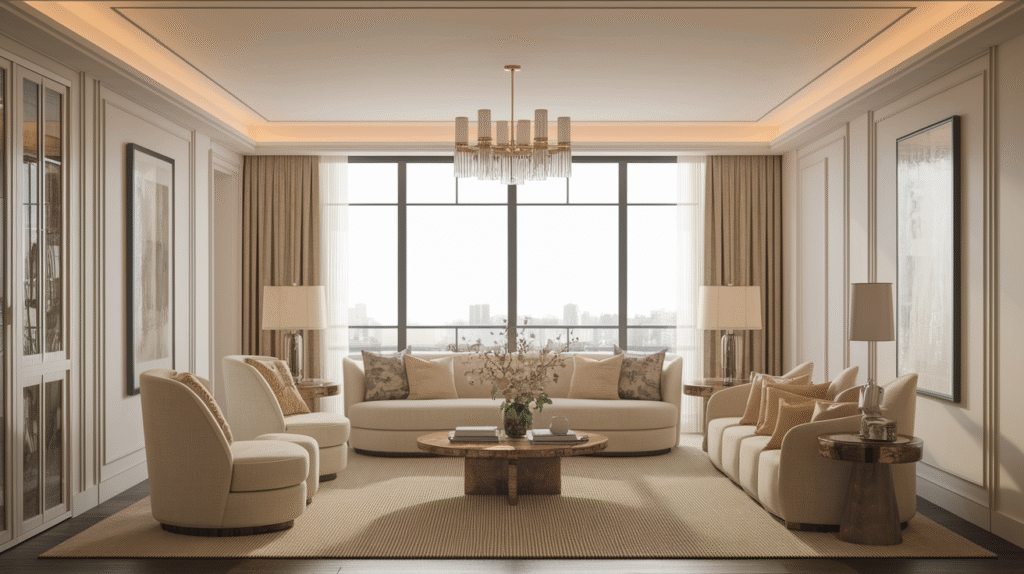
You now have everything you need to create a living room that feels like an expensive designer space without the expensive designer price tag.
The beauty of Japandi transitional style lies in its flexibility and forgiveness—you can’t really mess it up as long as you follow the core principles.
Start with your neutral foundation. Paint walls in warm white, or if you’re renting, invest in a large neutral area rug that establishes your color story.
This foundation costs $200-400 but transforms your entire space and works with whatever furniture you add later.
Next, invest in fewer, quality pieces rather than filling every corner. One solid wood coffee table beats three particle board pieces.
A well-made linen sofa lasts a decade and stays stylish the entire time. Buy the best you can afford, even if it means living with less initially.
Your space will feel more intentional and sophisticated with four perfect pieces than fourteen mediocre ones.
Embrace negative space as a design element, not something to fix. That empty corner isn’t calling out for another plant stand or side table.
It’s creating the visual calm that makes Japandi spaces so restorative. Western design trains us to fill every gap, but Japanese and Scandinavian approaches understand that emptiness has value.
Mix Scandinavian warmth with Japanese restraint for perfect balance. If your space feels too cold, add textiles—another throw, extra cushions, a cozy rug.
If it feels cluttered, remove pieces rather than rearranging them. The sweet spot sits somewhere between stark minimalism and cozy maximalism, and you’ll find it by adjusting gradually.
Remember that this style evolves with you—it’s forgiving and flexible. Your Japandi space today can absorb new pieces as your life changes.
A baby means adding storage baskets in natural materials. A new hobby means incorporating it into your décor authentically.
The transitional aspect ensures your space never looks dated because it blends timeless elements.
The most important thing? Start somewhere. Pick one principle from this guide and implement it this weekend.
Declutter your coffee table to three items. Swap your bright throw pillows for neutral ones. Add a single plant. Small changes compound into dramatic transformation.
Your living room should support your life, not complicate it. Japandi transitional design delivers that support beautifully—spaces that calm your mind, accommodate your reality, and look absolutely stunning without trying too hard.
Ready to transform your space? Start with your biggest pain point. If your room feels chaotic, remove half your décor items.
If it feels cold, layer in natural textiles. If it looks dated, swap out one furniture piece for a clean-lined alternative.
One change creates momentum for the next, and before you know it, you’ll have the serene, sophisticated living room you’ve been craving.
The exquisite Japandi transitional mash-up isn’t just a design style—it’s a more intentional way of living. Welcome home to your new sanctuary.