If you’re craving a kitchen that feels like a calming sanctuary rather than just another room in your home, Japandi design delivers exactly that.
This style merges the clean-lined minimalism of Japanese aesthetics with the cozy warmth of Scandinavian hygge, creating spaces that are both beautiful and deeply functional.
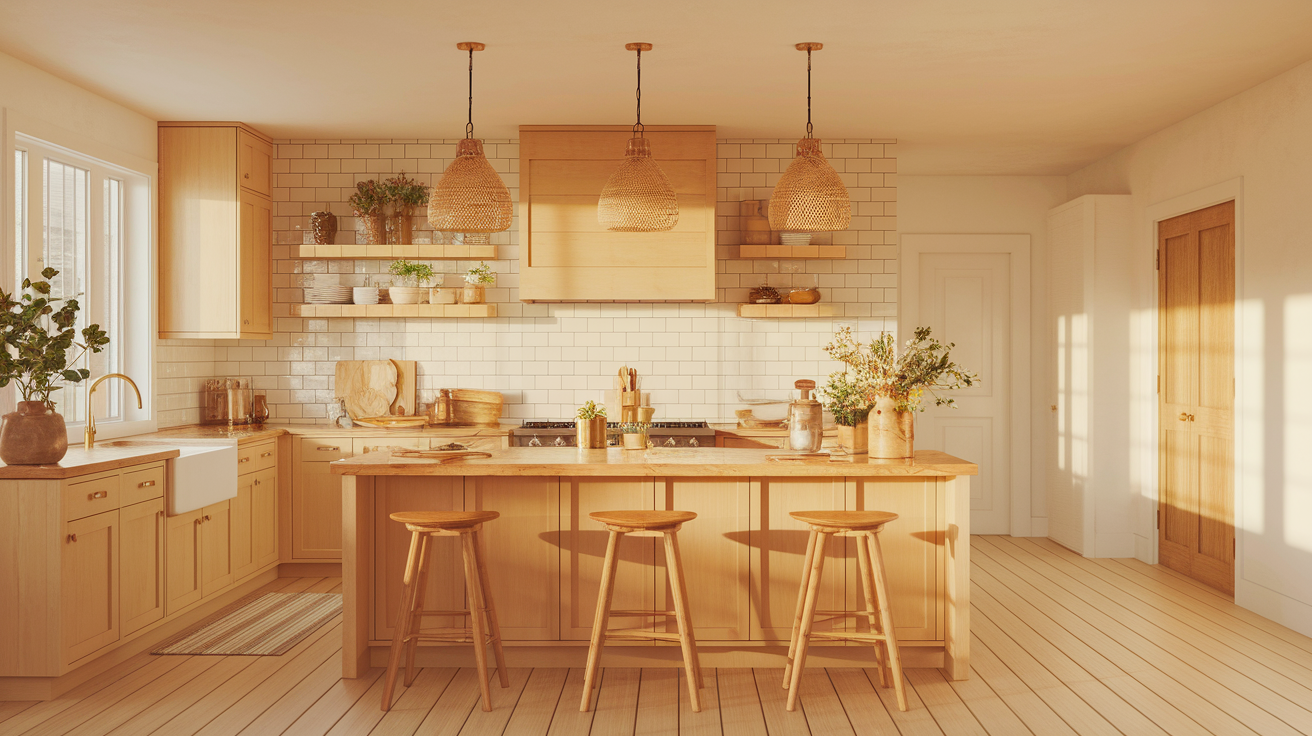
Light oak becomes the hero material in this design approach—and for good reason. Its honey-toned grain brings natural warmth without overwhelming your senses, while its versatility lets you build a kitchen that feels both modern and timeless.
Here’s what makes this combination so powerful: Japandi philosophy embraces wabi-sabi (finding beauty in imperfection) alongside hygge (creating cozy contentment).
Your kitchen becomes more than a place to cook—it transforms into a space that actually reduces stress rather than adding to it.
I’m sharing 13 practical ideas that you can implement right now, whether you’re planning a complete renovation or simply refreshing your existing space. These aren’t complicated designer secrets—they’re straightforward approaches that work in real homes with real budgets.
The best part? You don’t need to tackle everything at once. Even one or two changes create noticeable impact, shifting your kitchen toward that peaceful, purposeful aesthetic you’ve been scrolling through on Pinterest.
Let’s explore how light oak cabinetry, thoughtful color choices, and carefully selected materials come together to create a kitchen that genuinely improves your daily life.
Understanding the Essential Elements of Light Oak Japandi Kitchens
The Magic of Light Oak in Japandi Design
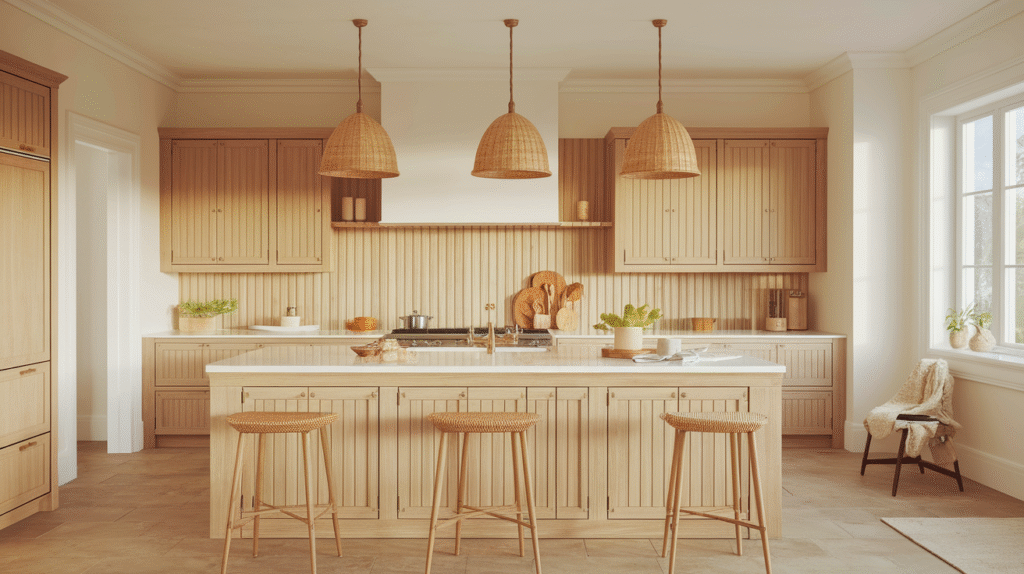
Light oak sits at the perfect intersection of Japanese and Scandinavian design traditions. Both cultures have long histories of working with natural wood, respecting its grain patterns and organic variations rather than trying to hide them.
The beauty of light oak lies in its subtle presence. Unlike darker woods that demand attention or white cabinetry that can feel sterile, light oak provides gentle warmth. Its golden undertones catch natural light throughout the day, creating a living quality that shifts as morning becomes afternoon becomes evening.
The grain patterns in oak add crucial texture to minimalist spaces. Japandi design strips away excess decoration, which means the materials you do include need to carry visual interest. Oak’s natural variations—the cathedral patterns, the ray flecks, the subtle color shifts—provide exactly that without requiring additional ornamentation.
This wood works seamlessly across both design traditions. Japanese craftsmen have used oak for centuries in furniture and architectural elements, appreciating its durability and honest character. Scandinavian designers similarly embrace light woods for their ability to brighten spaces during long, dark winters while maintaining connection to nature.
The Perfect Japandi Color Palette
Your color foundation starts with neutrals: soft whites, warm creams, gentle grays, and those natural wood tones from your light oak elements. These colors create the calm backdrop that defines Japandi spaces.
But neutral doesn’t mean boring. You’ll add depth through strategic use of darker accent colors—charcoal gray, matte black, and deep chocolate browns. These darker tones ground your space and create visual anchors that prevent the design from feeling washed out.
Think about how these colors interact with your light oak cabinetry. White walls make the oak feel warmer and more prominent. Soft gray walls create a cooler, more contemporary feel. Cream walls blend seamlessly for an envelope of warmth.
Earthy colors complete the palette. Terracotta, sage green, warm taupe, and soft clay tones all complement light oak beautifully. These colors reference the natural world—exactly what Japandi design aims to bring indoors. Use them sparingly in textiles, pottery, or small decorative elements.
Key Design Principles That Define the Style
Balance sits at the core of Japandi philosophy. You’re not choosing between minimalism and coziness—you’re finding the sweet spot where both exist together. Your kitchen needs clean lines and uncluttered surfaces, but it also needs warmth and livability.
Quality over quantity becomes your mantra. Rather than filling your kitchen with numerous items, invest in fewer pieces that are exceptionally well-made. One beautiful wooden cutting board displayed on your counter beats five mediocre ones hidden in a drawer.
Natural materials and organic textures create the sensory experience that makes Japandi kitchens so appealing. Wood, stone, ceramic, linen, cotton—these materials feel good to touch and look at. They age gracefully rather than looking worn out.
Functionality drives every decision. Beauty without purpose doesn’t fit this aesthetic. Your gorgeous light oak cabinets need to actually store your items efficiently. Your stunning concrete countertop needs to withstand daily food prep. Form follows function, but both matter equally.
Cabinet and Storage Solutions That Combine Beauty with Function
Light Oak Cabinetry: Your Foundation for Success
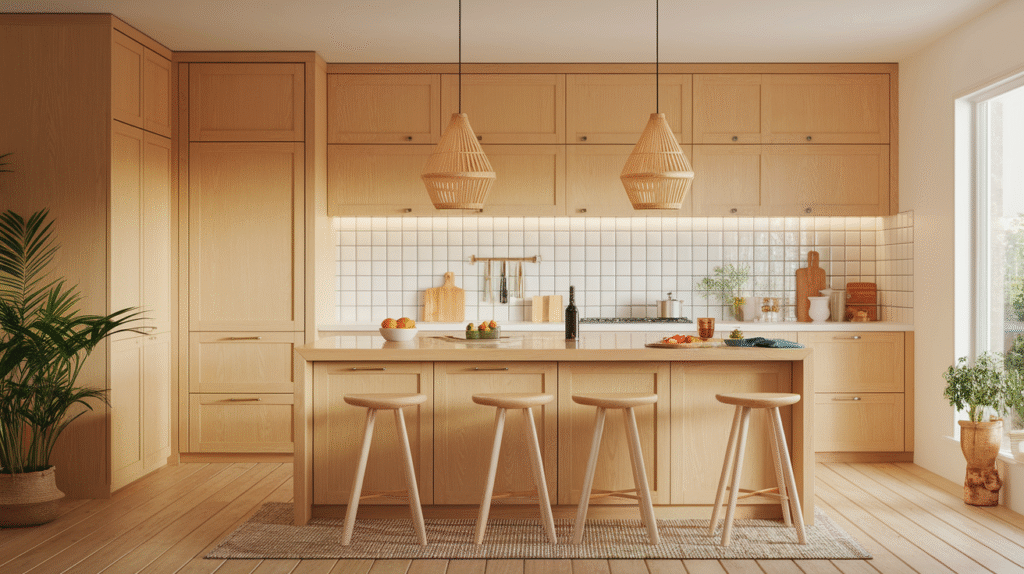
Flat-panel cabinet doors are your go-to choice for authentic Japandi style. These simple, unadorned doors—sometimes called slab doors—feature no raised panels, no decorative molding, no unnecessary details. Just clean, straight lines that showcase the beautiful oak grain.
The hardware question matters more than you might think. Handle-free cabinets with push-to-open mechanisms create the most seamless look, letting your oak surfaces flow uninterrupted. If you prefer physical handles, choose minimalist options: slim horizontal pulls in matte black or brushed brass, or simple leather pulls for added warmth.
Mixing finishes adds sophisticated depth to your design. Pair your light oak cabinets with matte white uppers or lowers. The contrast highlights both materials—the oak feels warmer against the crisp white, and the white feels cleaner against the organic wood.
Consider the grain direction on your cabinet doors. Vertical grain creates height and elegance. Horizontal grain emphasizes width and calm. Most light oak cabinets feature vertical grain, but mixing orientations on different elements (like an island versus wall cabinets) adds subtle visual interest.
The finish on your oak matters tremendously. Matte or satin finishes align with Japandi aesthetics better than high-gloss options. You want to see the wood’s natural character, not a reflective shine that looks overly processed.
The Versatile Pantry: Smart Storage Made Beautiful
Hidden pantries maintain your minimalist aesthetic while providing essential storage. A floor-to-ceiling pantry cabinet with light oak doors blends seamlessly into your cabinetry, revealing organized shelving only when needed.
The multifunctional pantry does double duty—storing dry goods while housing small appliances, serving pieces, or even a coffee station. Design it with adjustable shelving, pull-out drawers, and dedicated zones for different categories. This organization keeps your main counters clear and peaceful.
Open shelving works in Japandi kitchens when you’re thoughtful about what you display. Use light oak floating shelves to showcase a carefully curated collection: matching ceramic bowls, a few beautiful glasses, potted herbs, or wooden serving boards. The key word is “curated”—display only what genuinely deserves to be seen.
Pull-out systems hidden behind those clean oak cabinet fronts make daily life easier. Deep drawers with dividers for pots and pans, pull-out spice racks that maximize narrow spaces, and corner solutions that make every inch accessible—these organizational tricks keep clutter from accumulating.
Creating Harmony with Two-Tone Kitchen Designs
Two-tone kitchens add dimension without sacrificing the calm Japandi vibe. The most effective approach pairs light oak with another neutral tone rather than introducing bold colors.
Light oak upper cabinets with white or cream lowers create an airy, open feeling. This combination works especially well in kitchens with limited natural light, as the white base cabinets reflect light upward while the oak adds warmth at eye level.
Alternatively, place your light oak on the lower cabinets and use white uppers. This grounds your kitchen and makes the wood feel substantial. It’s particularly effective if you have light-colored flooring—the oak base provides visual weight.
For a more dramatic approach, pair light oak with deep charcoal gray or matte black. Use the darker color sparingly—perhaps just on a kitchen island or a single wall of cabinets—while light oak dominates the rest of the space. This creates a striking focal point while maintaining overall balance.
Concrete elements integrated with light oak cabinetry bring industrial-meets-organic appeal. A concrete panel on your island front paired with light oak perimeter cabinets, or concrete open shelving against oak cabinetry walls—these combinations feel modern yet grounded.
Surfaces, Finishes, and Materials That Complete the Look
Countertop Choices That Complement Light Oak
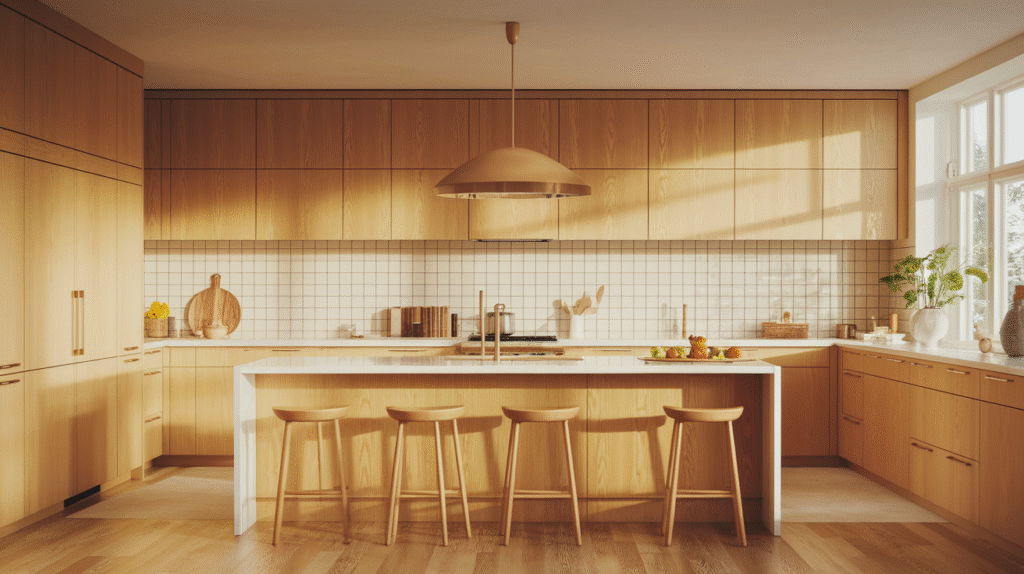
White marble countertops create elegant contrast against light oak cabinetry. The cool white stone with its subtle gray veining provides visual relief from the warm wood tones. Carrara marble offers classic appeal, while Calacatta delivers more dramatic veining for a statement look.
The pairing works because both materials share an honest, natural character. Neither tries to be something it isn’t—the marble shows its veining, the oak shows its grain. This authenticity aligns perfectly with Japandi principles.
Concrete countertops deliver modern edge while maintaining organic warmth. The matte, slightly textured surface of concrete feels handcrafted and unique. Its neutral gray tones complement light oak beautifully, creating a sophisticated balance between industrial and natural.
Concrete works particularly well on kitchen islands, where it becomes a textural focal point. Pair it with wood countertops on your perimeter cabinets for an interesting material mix that still feels cohesive.
Butcher block or wood countertops create complete natural warmth when you want a kitchen that feels entirely organic. Using a slightly different wood tone than your cabinets—perhaps a richer walnut or a lighter maple—provides subtle distinction while maintaining the wood-on-wood aesthetic.
Wood countertops require more maintenance than stone options, but many people find the tactile pleasure and visual warmth worth the extra care. They’re especially appealing in cooking zones where you’re actually prepping food, as they’re naturally antimicrobial and gentle on knife blades.
Flooring Options That Ground Your Japandi Kitchen
Light wood flooring creates seamless flow with light oak cabinetry. Choose flooring in a similar tone but slightly different undertone—if your cabinets lean golden, select flooring with gray undertones, or vice versa. This prevents the space from feeling monotonous while maintaining tonal harmony.
Wide-plank flooring in light oak or white oak emphasizes the natural material and creates a more contemporary look than narrow strips. The wider boards show off the grain patterns and make spaces feel larger.
Concrete floors bring modern minimalist vibes to Japandi kitchens. Polished concrete in light gray tones provides cool contrast to warm oak cabinets while maintaining the natural material palette. The smooth, monolithic surface emphasizes simplicity and makes the space feel larger.
Concrete floors work especially well in open-plan spaces where the kitchen flows into living areas. The continuous floor surface unifies the space while the cabinetry materials define different zones.
Natural stone tiles in neutral tones—soft gray limestone, warm beige travertine, or subtle cream marble—ground your kitchen with organic texture. Large-format tiles minimize grout lines and maintain the clean aesthetic, while the stone’s natural variations add visual interest without pattern or color.
Backsplash Ideas: Simple Yet Striking
Classic white subway tiles deliver clean lines and timeless appeal. The rectangular shape emphasizes horizontal lines that make kitchens feel wider, while the white surface reflects light and creates breathing room around your oak cabinets.
Stack your subway tiles vertically instead of the traditional brick pattern for a more contemporary twist that still honors the simplicity of Japandi design. Use minimal grout—ideally white or light gray—to keep the surface as seamless as possible.
Natural stone backsplashes in soft, earthy tones create textural interest while maintaining the neutral palette. Limestone, marble, or even slate in lighter tones adds organic variation that complements light oak beautifully.
Consider large-format stone slabs for your backsplash to minimize grout lines and create a more monolithic, intentional look. The fewer seams and interruptions, the calmer the overall effect.
Wood-look tiles or shiplap bring added warmth when you want a fully organic feel. Using wood elements on your backsplash—whether actual wood treated for kitchen use or realistic porcelain tiles—creates a cocooning effect that emphasizes the natural material palette.
Paint your shiplap in soft white or cream to prevent the space from feeling too wood-heavy, or embrace the wood-on-wood aesthetic with a clear finish that shows the natural grain.
The Perfect Finishing Touches: Details That Make the Difference
Bringing Nature Indoors with Plants
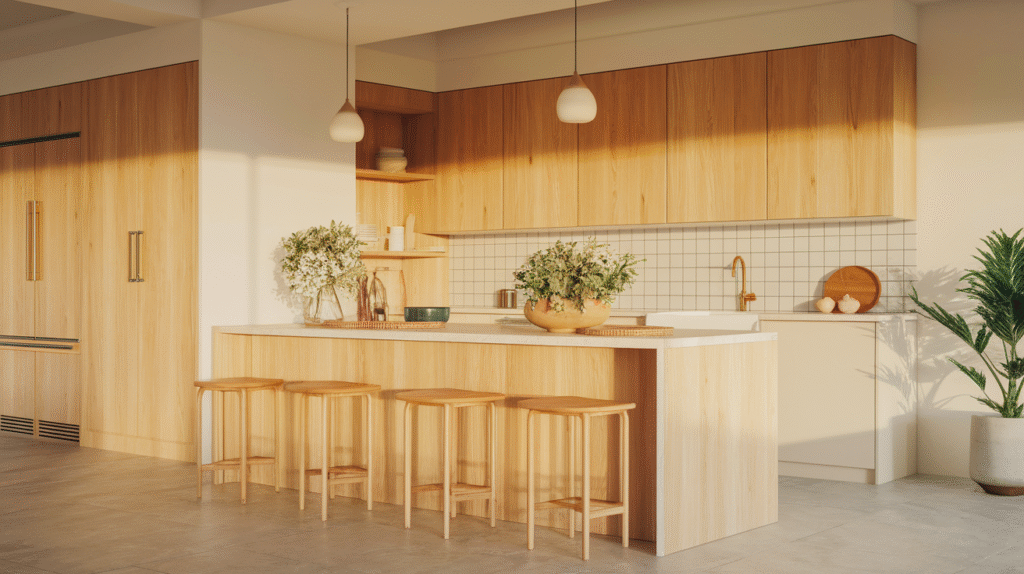
Plants are non-negotiable in Japandi kitchens—they’re the living connection to nature that makes these spaces feel alive rather than sterile. The good news? You don’t need a green thumb to succeed.
Pothos plants thrive in kitchens with their trailing vines and easy-care nature. Place one on top of your upper cabinets or on a floating shelf, letting the vines cascade down for organic movement. They tolerate various light conditions and forgive occasional neglect.
Snake plants add architectural interest with their upright, sword-like leaves. Their sculptural form fits the minimalist aesthetic perfectly, and they’re nearly indestructible. A single snake plant in a simple ceramic pot becomes a living sculpture on your counter or in a corner.
Fresh herbs bring both beauty and function to your Japandi kitchen. A small collection of basil, rosemary, and thyme in matching ceramic pots on your windowsill provides fresh ingredients while adding green life to your space.
Simple ceramic or concrete planters in neutral tones let the plants themselves shine. Avoid busy patterns or bright colors—stick with matte white, soft gray, natural terracotta, or raw concrete finishes that complement your overall palette.
Strategic placement matters more than quantity. One beautiful plant in the perfect spot beats five plants scattered randomly. Consider your windowsill for herbs, open shelving for trailing plants, and island corners for architectural specimens.
Lighting That Enhances the Natural Warmth
Pendant lights in natural materials reinforce the organic aesthetic while providing essential task lighting. Wicker or rattan pendants over your island add texture and cast beautiful shadow patterns. Bamboo fixtures bring subtle Asian influence, while light wood pendants echo your cabinetry.
Choose pendant shapes that lean simple and geometric—spheres, cylinders, or gentle bell shapes—rather than ornate or overly decorative designs. The fixture should enhance your space without demanding all the attention.
Black metal fixtures create modern contrast that grounds your design. Matte black pendant lights, track lighting, or even a simple black industrial fixture adds necessary visual weight and prevents the space from feeling too soft or washed out.
The combination of black metal with light oak has become iconic in Japandi design because it works so effectively. The dark fixtures pop against light cabinets while maintaining the minimalist aesthetic.
Maximize natural light through thoughtful window treatments—or better yet, minimal treatments. Sheer linen curtains filter light gently while maintaining privacy. Simple roller shades in natural fabrics disappear when raised. The goal is bringing in as much natural light as possible while maintaining the soft, calm atmosphere.
Under-cabinet lighting makes your light oak cabinets glow from within while providing essential task lighting for food prep. Choose warm LED strips that enhance the golden tones in your oak rather than cool lights that fight against them.
Hardware, Fixtures, and Accessories
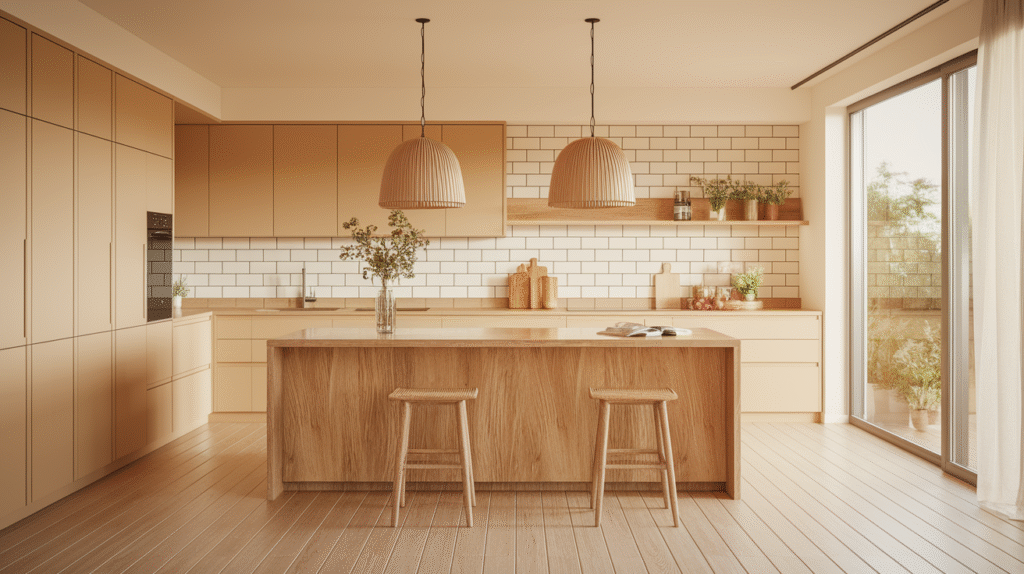
Matte black faucets and fixtures serve as effective focal points in light oak Japandi kitchens. The dark metal creates necessary contrast and visual anchors, preventing the space from feeling too light or undefined.
Choose faucets with clean, simple lines—no ornate curves or decorative elements. A single-handle pull-down faucet in matte black combines function with aesthetic appeal. Match your sink to your faucet for cohesive design.
Wooden cutting boards and utensils function as decorative elements when thoughtfully displayed. A beautiful oak or walnut cutting board leaning against your backsplash, a ceramic crock holding wooden spoons and spatulas—these everyday items become part of your design when they’re beautiful enough to leave out.
This approach embodies Japandi philosophy perfectly: the items you use daily should be beautiful, and beautiful items should serve a purpose. No purely decorative clutter, no hiding away everything functional.
Minimal decorative objects with clear purpose complete your space. A single ceramic vase with fresh branches, a wooden bowl filled with lemons, a handmade pottery piece that holds your keys—these small touches add personality without creating visual chaos.
Textiles bring essential softness to your kitchen. Linen tea towels in natural tones draped over your oven handle, a cotton runner on your island, a simple jute or cotton rug in front of your sink—these fabric elements add warmth and tactile interest while remaining firmly in the neutral palette.
Choose textiles with subtle texture rather than bold patterns. A waffle-weave tea towel, a ribbed cotton runner, a chunky jute rug—the texture provides visual interest while maintaining the calm aesthetic.
Bringing Your Light Oak Japandi Kitchen to Life
You now have 13 comprehensive ideas for creating a light oak Japandi kitchen that actually improves your daily life. This design approach isn’t about following rigid rules or achieving Pinterest perfection—it’s about building a space that feels peaceful, functions beautifully, and reflects your personal style within a framework of simplicity and natural materials.
The most essential elements? Start with quality light oak cabinetry featuring clean lines and minimal hardware. Build your neutral color palette around those warm wood tones. Choose natural materials for your surfaces—stone, concrete, or wood countertops, simple backsplashes, and organic flooring. Then layer in the finishing touches: plants that bring life, lighting that enhances warmth, and carefully selected accessories that serve real purposes.
Remember that Japandi style embraces wabi-sabi—the concept of finding beauty in imperfection. Your kitchen doesn’t need to look like a magazine spread. A few dishes in the drying rack, a cookbook left open on the counter, the natural patina that develops on your wood surfaces over time—these real-life elements make your kitchen genuinely yours.
Your Action Plan: Three Easy First Steps
Ready to begin your transformation? Start here:
First, declutter your countertops and open shelving. Remove everything that doesn’t serve a clear purpose or bring you genuine joy. This single step immediately moves you toward Japandi aesthetics and costs nothing.
Second, introduce natural elements. Add one or two plants in simple neutral pots. Display a beautiful wooden cutting board. Swap colorful kitchen towels for natural linen ones. These small changes shift the entire feel of your space.
Third, evaluate your color palette. If your walls or accessories introduce colors that fight against the calm neutral aesthetic, consider simple swaps. Paint is inexpensive and transformative. Replacing a few colorful items with neutral alternatives costs little but creates significant impact.
Mix and match these ideas to create a space that’s uniquely yours. Take what resonates, leave what doesn’t, and trust your instincts about what makes your kitchen feel like a peaceful retreat. The goal isn’t copying someone else’s design—it’s creating a kitchen where you actually want to spend time, where cooking feels less like a chore and more like a meditative practice, where the space itself helps you start and end each day with a sense of calm.
Your light oak Japandi kitchen awaits. Start with one change today, and watch how it transforms not just your space, but how you feel in it.