You walk into a room and immediately feel your shoulders relax. The space breathes. Every piece serves a purpose, yet nothing feels cold or sterile. This is the magic of Japandi design—and you can absolutely create it in your own home.
Japandi blends Japanese minimalism with Scandinavian warmth, creating spaces that are both calming and inviting.
I’m sharing 13 proven decor looks that transform ordinary rooms into peaceful sanctuaries. The best part?
You don’t need a massive budget or a complete renovation. These ideas work with what you already have, adding thoughtful touches that make a dramatic difference.
Whether you’re decorating a studio apartment or a family home, these looks give you the blueprint for achieving that effortless, timeless aesthetic everyone craves. Let’s dive into the essential principles that make Japandi work, then explore specific room-by-room transformations you can start today.
Understanding the Japandi Aesthetic: Your Complete Guide to This Amazing Style
What Makes Japandi Design So Special?
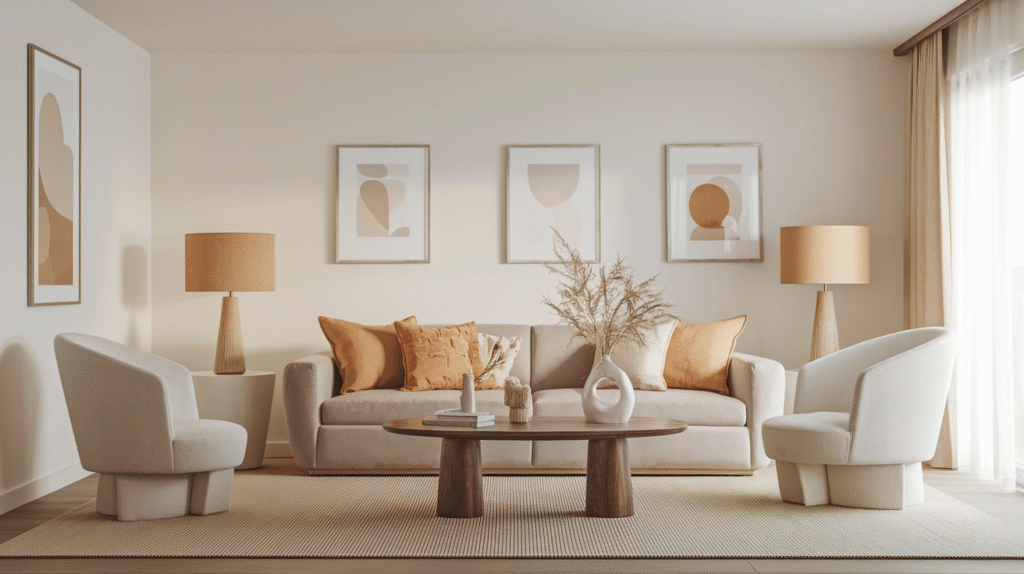
Japandi marries two design philosophies that complement each other perfectly. The Japanese concept of “wabi-sabi” teaches us to embrace imperfection and find beauty in natural materials as they age. Scandinavian “hygge” brings cozy comfort and functional simplicity. Together, they create spaces that reduce stress while increasing functionality.
Unlike stark minimalism that can feel cold, Japandi adds warmth through natural textures and organic shapes. Unlike maximalist styles that overwhelm, it keeps only what matters. This balance makes it perfect for modern living—you get a designer look that’s actually easy to maintain.
The difference between Japandi and other minimal styles? Intention. Every object earns its place through beauty, function, or meaning. You’re not just removing clutter; you’re curating a space that reflects calm and purpose.
The Essential Elements of Japandi Decor
Natural materials form your foundation. Wood, stone, linen, and bamboo bring the outdoors inside, creating instant warmth. Choose oak, walnut, or teak furniture that showcases beautiful grain patterns. Add ceramic vases with organic shapes. Layer linen throws over cotton bedding. These materials age gracefully, developing character over time.
The color palette stays soft and neutral: warm beiges, soft greys, creamy whites, and deep earth tones. You can add muted accents—sage green, terracotta, or dusty blue—but keep them subtle. This restraint creates visual calm that lets you actually relax in your space.
Clean lines meet organic shapes throughout Japandi interiors. Your sofa might have straight edges, but you’ll balance it with a round coffee table. Rectangular shelving pairs with curved ceramic bowls. This interplay between structure and softness keeps rooms from feeling too rigid or too chaotic.
Why Japandi Is Perfect for Your Lifestyle
Maintaining a Japandi home takes minimal effort. With fewer decorative objects and smart storage solutions, cleaning becomes quick and simple. Everything has its designated place, so clutter doesn’t accumulate.
This style works beautifully in any size space. Studio apartment? A platform bed with built-in storage and floating shelves maximizes every inch. Family home? Multi-purpose furniture and open floor plans create flow without sacrificing function.
Budget-conscious decorators love Japandi because quality beats quantity. Instead of filling shelves with cheap accessories, you invest in a few stunning pieces. A handmade ceramic vase or a solid wood coffee table becomes a focal point that elevates your entire room.
13 Simple Japandi Decor Looks to Transform Your Space
Looks 1-4: Living Room Serenity
Look 1: The Curated Shelf Display
Start with low-profile wooden shelving in light or medium wood tones. Instead of cramming every shelf, display carefully chosen ceramics with space between each piece. A handmade vase here, a smooth stone there, a small plant in a simple pot. This breathing room creates visual calm while showcasing items you truly love.
Look 2: Statement Art Against Neutral Walls
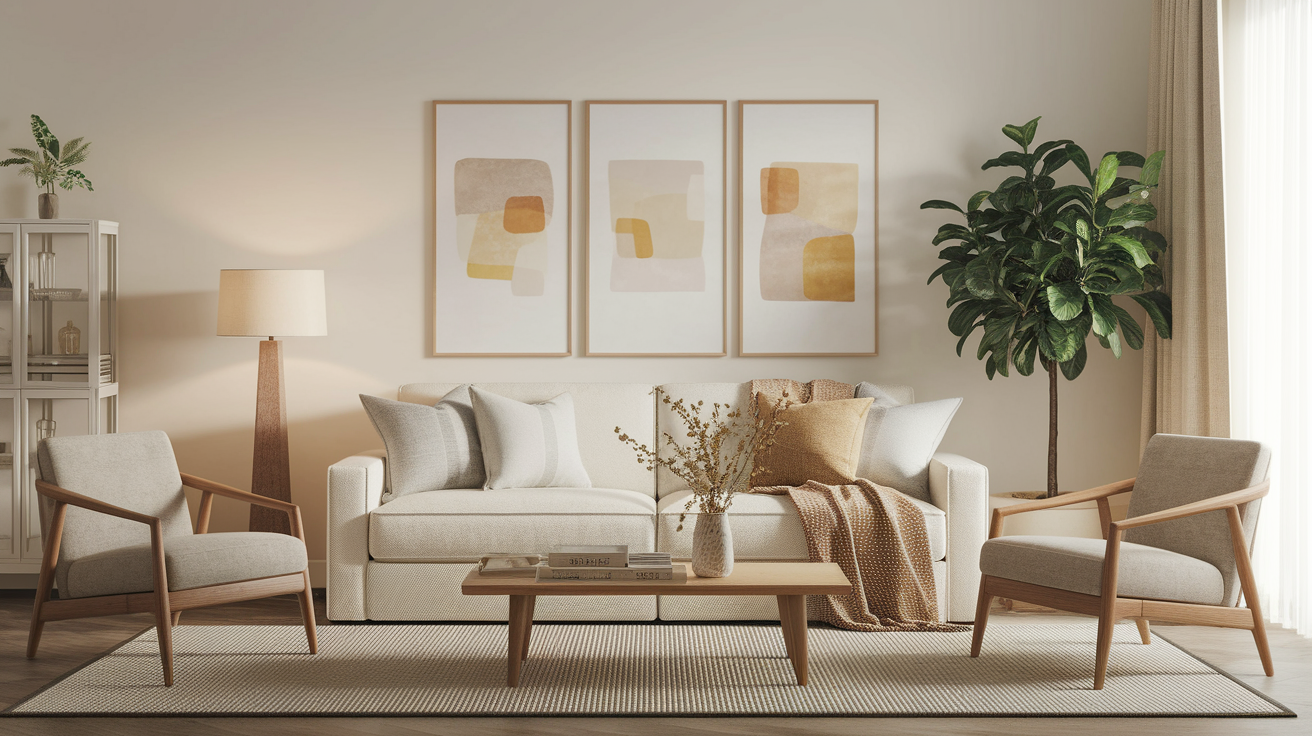
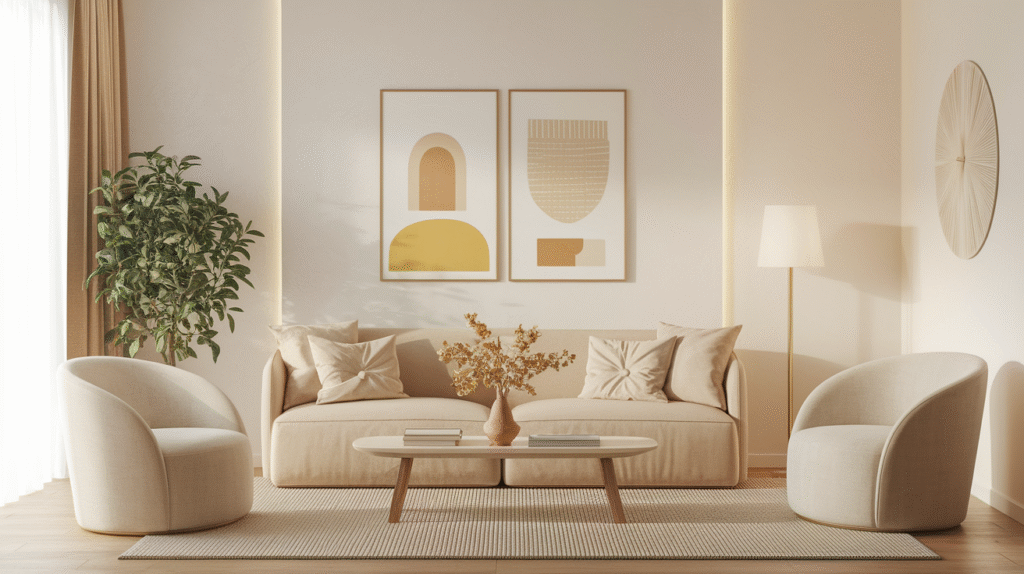
Paint your walls in soft beige or warm grey, then hang a single statement art piece. Choose something with clean lines or natural imagery—think abstract landscapes or minimalist botanical prints. The neutral backdrop lets the art shine without competing for attention. This approach delivers dramatic impact with minimal investment.
Look 3: Textured Foundation
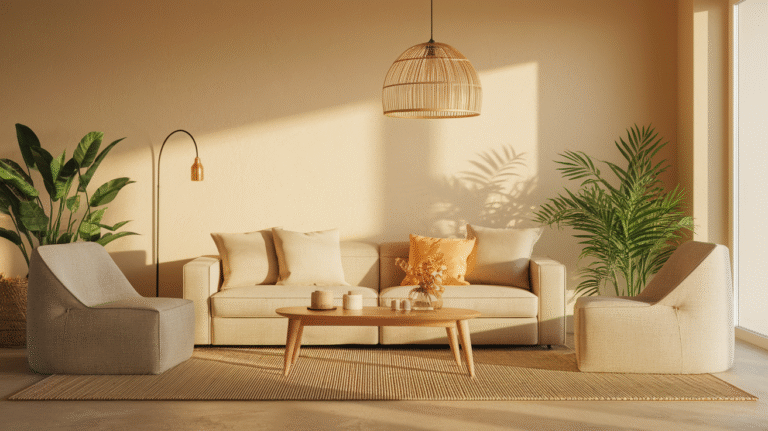
Anchor your seating area with a natural fiber rug in jute or wool. Place a simple coffee table in light wood on top—oval or round shapes work best. The rug adds warmth and defines your space, while the organic table shape softens the room’s geometry. Add a ceramic tray or wooden bowl as your only coffee table accessory.
Look 4: Cozy Seating with Pop of Color
Choose curved, plush seating in muted tones for your main sofa—soft beige or warm grey creates a neutral base.
Then add a single accent chair in deep burgundy or terracotta against your neutral backdrop.
This strategic color placement adds personality without overwhelming the space. Balance warm and cool neutrals throughout, mixing wooden elements in varying tones for depth.
Looks 5-8: Bedroom Tranquility
Look 5: The Platform Bed Sanctuary
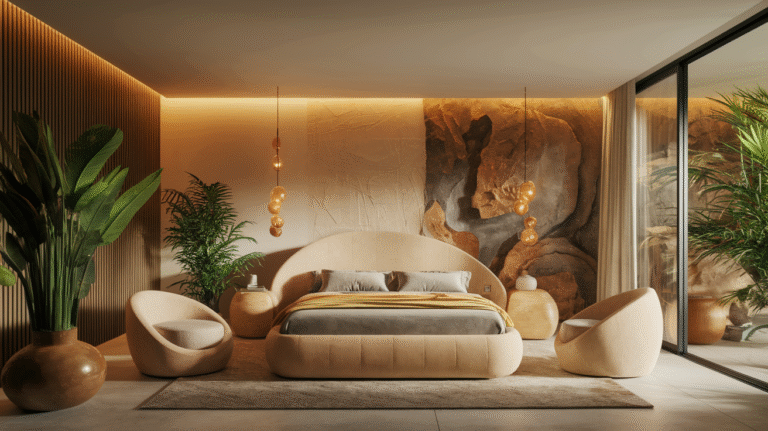
A platform bed with clean lines in natural wood becomes your bedroom’s foundation. Choose designs with built-in storage underneath to eliminate bulky dressers.
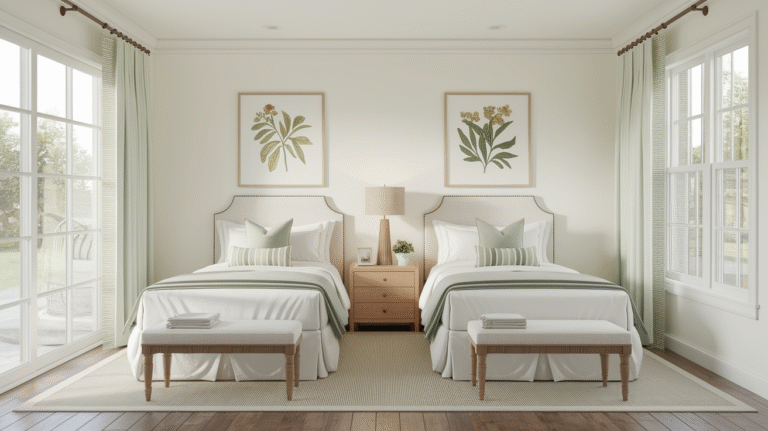
Dress the bed with soft linen bedding in whites, beiges, or soft greys. Layer cotton sheets under a linen duvet, adding a wool throw at the foot for texture. This creates a cloud-like retreat that invites peaceful sleep.
Look 6: Minimal Nightstand Styling
Your nightstands should feature only essentials: a ceramic lamp with soft lighting, a single decorative object (maybe a small vase or smooth stone), and whatever book you’re currently reading.
That’s it. This restraint keeps your bedroom feeling serene rather than cluttered. Floating shelves work beautifully here, creating storage that disappears into walls.
Look 7: Textural Wall Interest
Above your bed, hang a woven wall hanging or simple art piece. Natural fiber wall hangings add texture without color chaos. Alternatively, choose minimalist art with organic shapes or muted tones. This single focal point draws the eye without overwhelming your peaceful space.
Look 8: Natural Elements Collection
Incorporate organic shapes throughout your bedroom furniture—curved headboards, rounded mirrors, oval trays. Add river stones or smooth pebbles as decorative elements on your dresser or windowsill. Place indoor plants in simple ceramic pots on floating shelves or your nightstand. These natural touches connect your bedroom to the outdoors, promoting deeper relaxation.
Looks 9-11: Kitchen and Dining Harmony
Look 9: Open Shelving Display
Replace upper cabinets with open shelving in natural wood. Display your beautiful everyday items—ceramic dishes, wooden cutting boards, glass containers. Everything visible should be both functional and attractive. This approach forces you to keep only what you love and use regularly. Store less attractive items in lower cabinets with clean hardware in muted metal finishes.
Look 10: Natural Material Kitchen
Choose natural wood cabinetry paired with stone or wood countertops. The muted color palette—think soft whites, warm beiges, natural wood tones—creates calm in a space that can easily feel chaotic. Everything has its designated place through organized drawers and hidden storage. Your counters stay clear except for a few beautiful essentials like a ceramic container for utensils or a wooden cutting board.
Look 11: Dining Simplicity
Your dining table should be simple wood in light or medium tones. Mix seating styles—wooden chairs with linen cushions, or a wooden bench on one side with chairs on the other. This creates visual interest while maintaining cohesion through complementary materials. Your centerpiece stays minimal: a single vase with fresh branches, or a ceramic bowl with seasonal fruit. Nothing more.
Looks 12-13: Multifunctional Spaces
Look 12: The Functional Home Office
Create a workspace with a clean-lined desk in natural wood and ergonomic seating that doesn’t sacrifice style. Look for chairs with simple silhouettes in neutral fabrics. Keep desk accessories minimal—a ceramic pen holder, a small plant, a simple lamp. Everything else gets stored in drawers or on floating shelves. This setup promotes focus while maintaining your home’s aesthetic flow.
Look 13: The Organized Entryway
Transform your entryway with a simple bench that includes storage underneath for shoes. Add wall hooks in muted metal finishes for coats and bags. Place a small ceramic tray or wooden bowl on the bench for keys and essentials. This functional setup keeps clutter contained while welcoming you home with calm rather than chaos.
Easy Ways to Incorporate Japandi Elements Into Your Existing Home
Start With Your Color Palette
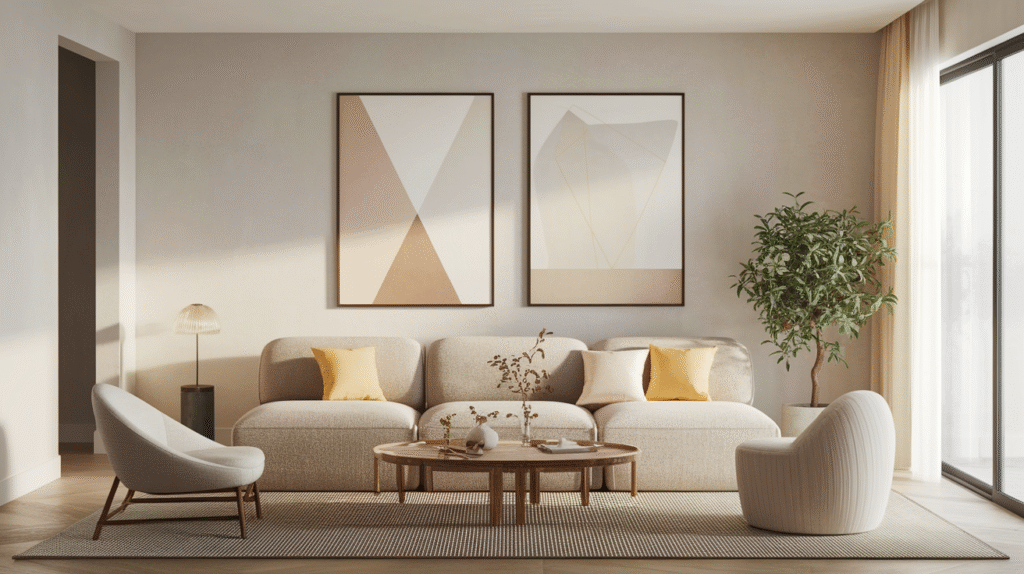
You don’t need to repaint everything at once. Start with one room, choosing soft neutrals as your base. Warm beige works beautifully in living spaces, creating coziness. Soft grey suits bedrooms, promoting relaxation. Creamy white opens up smaller spaces like bathrooms or entryways.
Add depth through earthy accents without overwhelming your neutral foundation. A sage green throw pillow, soft terracotta ceramic vase, or muted blue wall art introduces color while maintaining tranquility. Stick to 2-3 accent colors maximum across your entire home for cohesion.
The quick update that makes the biggest difference? Paint your walls in one consistent neutral tone. This creates flow between rooms and provides the perfect backdrop for natural wood furniture and organic accessories.
Master the Art of Thoughtful Decluttering
The “one in, one out” rule maintains minimalism effortlessly. When you bring home a new decorative object, remove something else. This prevents accumulation and forces you to truly consider whether each item deserves space in your home.
Curate decorative objects by choosing meaningful pieces over many pieces. That handmade ceramic bowl from your trip holds more value than five mass-produced items. Display what tells your story or brings you genuine joy. Everything else gets donated or stored away.
Storage solutions keep clutter hidden but accessible. Invest in beautiful baskets for living room blankets, drawer organizers for kitchen utensils, and under-bed storage for seasonal items. When everything has a designated home, maintaining order becomes automatic.
Choose the Right Materials and Textures
Natural wood types that work best include oak for its beautiful grain and durability, walnut for rich warmth, bamboo for sustainability, and teak for timeless appeal. Mix wood tones carefully—stick to 2-3 maximum throughout your space. Too many different woods create visual chaos.
Incorporate ceramics through handmade pieces when possible. They bring character and imperfection that mass-produced items lack. Look for organic shapes, muted glazes, and visible craftsmanship. A single stunning ceramic vase makes more impact than a shelf full of generic accessories.
Textile choices create warmth without clutter. Linen brings natural texture and breathability—perfect for bedding, curtains, and throw pillows. Cotton offers softness and easy care for everyday use. Wool adds cozy warmth through throws and rugs. Jute grounds spaces through natural fiber rugs that define seating areas.
Balance Minimalism With Coziness
The proven formula: 70% minimal, 30% cozy touches. Your space should feel open and uncluttered, but not cold or sterile. Those cozy touches—a chunky knit throw, plush floor cushions, soft lighting—prevent the “showroom” feeling that pure minimalism sometimes creates.
Add softness strategically. Drape a linen throw over your sofa arm. Layer floor cushions in natural fabrics near your coffee table. Place a sheepskin rug beside your bed. These textural elements invite you to relax and actually use your space rather than just admire it.
Avoid the cold feeling by including essential warmth elements: warm-toned wood instead of only light wood, soft lighting instead of only bright overhead lights, and natural textiles instead of only hard surfaces. Your home should embrace you, not intimidate you.
Complete Shopping and Styling Tips for Your Japandi Transformation
Where to Find Amazing Japandi Pieces
Budget-friendly retailers that nail the Japandi aesthetic include IKEA for simple furniture basics and storage solutions, H&M Home for affordable linen textiles and ceramics, and West Elm for mid-range furniture with clean lines. Target’s Threshold line offers surprisingly good natural fiber rugs and wooden accessories at accessible prices.
Investment pieces worth the splurge include your sofa (you use it daily, so quality matters), your bed frame (solid wood lasts decades), and your dining table (it anchors your entire dining space). These foundational pieces carry your entire design, so buying quality pays off long-term.
DIY options for creative decorators include making your own wall hanging from natural rope or fabric, refinishing thrift store furniture in light wood stains, creating your own floating shelves from solid wood planks, or arranging collected stones and driftwood as free natural decor.
The Essential Japandi Shopping List
Furniture must-haves:
- Low-profile sofa in neutral fabric with clean lines
- Simple coffee table in light wood (round or oval preferred)
- Platform bed with storage or floating frame
- Minimal dining table in natural wood
- Floating shelves or low-profile bookcase
Decorative essentials:
- Ceramic vases in organic shapes and muted tones
- Natural fiber baskets for hidden storage
- Minimal art with natural imagery or abstract designs
- Indoor plants in simple ceramic pots
- Wooden or ceramic bowls and trays
Lighting that creates ambiance:
- Paper lanterns for soft, diffused light
- Simple pendant lights in natural materials
- Ceramic table lamps with linen shades
- Floor lamps with wooden bases and neutral shades
Quick Styling Tricks for Instant Japandi Vibes
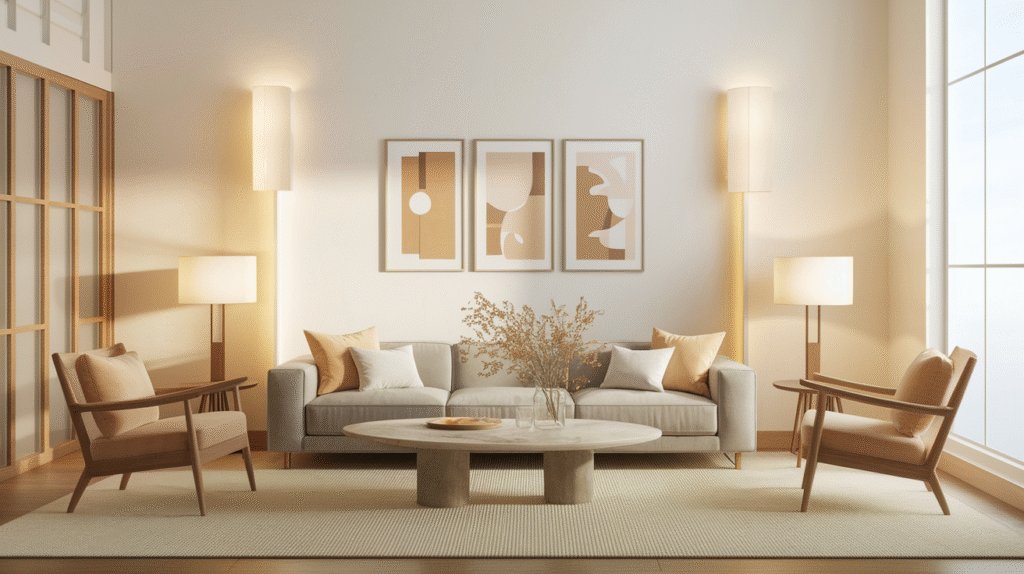
The “less is more” placement strategy means leaving surfaces mostly bare. Your coffee table holds one tray with a candle and small plant—not a collection of coasters, magazines, remotes, and random objects. Your shelves display items with generous space between them. This breathing room creates visual calm.
Create visual balance using both symmetry and asymmetry. Symmetry works for bedside tables (matching lamps and minimal styling on each side). Asymmetry works for living room seating (sofa on one side, two chairs on the other). This mix keeps rooms feeling balanced without being boring.
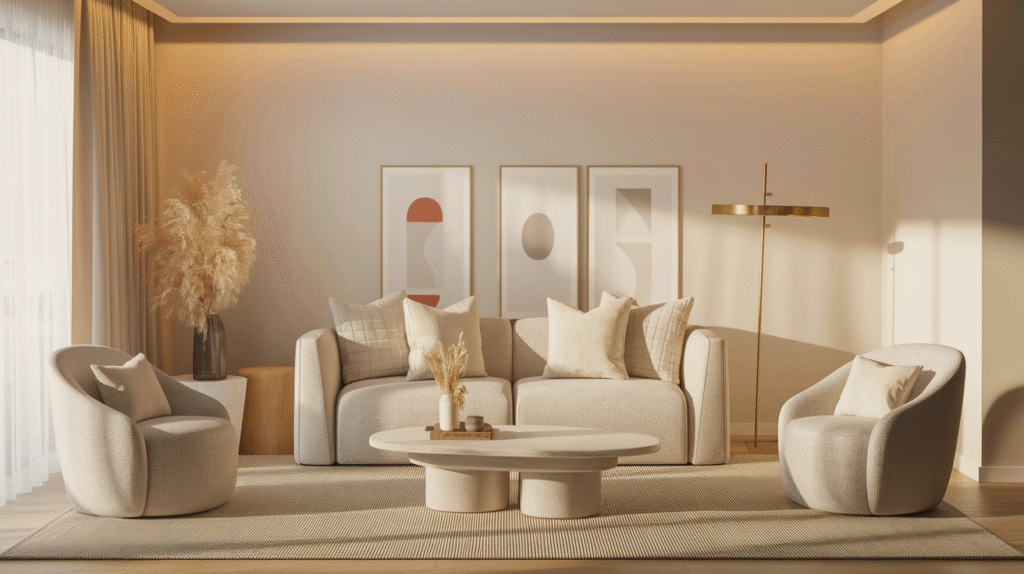
Layer textures without adding clutter by varying your materials within your neutral palette. A linen sofa, wool throw, jute rug, and wooden coffee table create rich texture while maintaining minimalism. Each piece serves a function while contributing to the overall aesthetic.
Common Mistakes to Avoid
Going too minimal loses warmth and personality. Your home should reflect you, not look like a sterile hotel. Include meaningful objects, family photos in simple frames, and personal touches that make the space yours.
Mixing too many wood tones creates visual chaos. Stick to 2-3 wood tones maximum throughout your home. Light oak and medium walnut work beautifully together. Adding cherry, pine, and dark mahogany creates confusion.
Neglecting lighting leaves rooms feeling flat. Natural light matters—keep window treatments minimal to maximize daylight. Add ambient lighting through multiple sources at different heights rather than relying on harsh overhead lights. Soft, warm bulbs create the cozy atmosphere Japandi requires.
Over-decorating surfaces defeats the entire purpose. Embrace negative space. That empty wall section isn’t waiting for more art—it’s providing visual rest. Those bare shelves aren’t incomplete—they’re allowing your few displayed items to shine.
Your Path to Peaceful, Minimal Living Starts Now
Japandi design delivers the perfect balance of minimalism and warmth for peaceful, functional living. You don’t need to transform your entire home overnight. Start with one room, one corner, or even one shelf. Apply these 13 looks as inspiration, adapting them to your space and budget.
The beauty of Japandi lies in its flexibility. Your version might lean more minimal or more cozy depending on your lifestyle. Maybe you need that extra seating for family gatherings, or perhaps you crave maximum openness. The principles remain the same: natural materials, neutral palette, thoughtful curation, and functional beauty.
Focus on quality over quantity as you build your Japandi home. One stunning ceramic vase beats five mediocre ones. A solid wood coffee table that lasts decades beats a cheap alternative you’ll replace in two years. Natural materials over synthetic, meaningful objects over decorative clutter.
Which room will you transform first? Start there. Clear the clutter, choose your neutral palette, add natural materials, and watch your space become the peaceful sanctuary you’ve been craving. Your calm, beautiful home is waiting—and it’s more achievable than you think.